Defining Quality in Sink and Table Solutions
◆ Key Takeaway
Quality in decontamination sinks and reprocessing tables extends beyond appearance to durability, adaptability, and long-term performance. Defining quality means non-porous, corrosion-resistant materials for infection prevention, built-in capacity for future expansion, protective design features, and easy serviceability, so equipment supports staff, protects processes, and stays relevant as standards and workflows evolve.
When evaluating decontamination sinks and prep and pack workstations, “quality” is often reduced to what we see and feel: stainless steel construction, clean welds, or a polished finish. But in SPD and GI, quality is more than surface level. True quality is how equipment performs over time, supports your team, and protects your process.
It’s about durability, adaptability, serviceability, and, most importantly, how well your equipment reinforces best practices. Quality is truly a mosaic that needs to be observed and appreciated by all sterile processing and GI professionals.
Quality is Built for Infection Prevention
In decontamination and prep areas, materials matter.
High-quality equipment is:
- Non-porous and easy to clean.
- Resistant to corrosion, staining, and microbial harboring.
This isn’t just about durability, it’s about creating and maintaining an environment that can withstand frequent cleaning from abrasive chemicals, heavy equipment, and resistant to pitting.
While ANSI/AAMI doesn’t directly cite stainless steel as the premier material choice, other materials, such as laminate, can flake and delaminate as it wears away over time. Plastic or aluminum surfaces rarely withstand the beating from heavy rigid containers. Stainless steel meets the performance recommendations as set forth in the standards:
“Work surfaces… should be constructed of nonporous materials that can be easily cleaned and decontaminated.” ANSI/AAMI ST79 2017, Section: 3.3.6.1.2
Quality Grows; It Doesn’t Diminish Over Time
Most departments are dynamic entities; workflows, staff, equipment, and requirements change often. Quality has a time component to it, and its ability to keep something relevant and purposeful is important.
Quality systems that contribute to longevity include:
- Built-in electrical to add capacity, instead of just draining it.
- The ability to add lighting, magnification, or accessories for future needs.
- The opportunity to expand functionality without replacing entire workstations or sinks.
Standards evolve. Technologies advance. Equipment that meets today’s needs and tomorrows changes signifies a quality that doesn’t diminish.
Decontamination Sinks Need Special Care
Sinks are some of the most abused pieces of equipment in SPD and GI. Between frequent cleanings, the banging of heavy instrumentation, the bioburden load processed in their basins, and the consistently wet environment, sink quality matters.
High-quality sink systems specifically address these areas. They may:
- Have smarter plumbing features that consider height-adjustability. Most plumbers have never worked with height-adjustability equipment, so discuss accordingly!
- Heightened weight capacity on lifters or structural elements; fully filled basins can add hundreds of pounds to equipment.
- Corrosion-resistant materials when working with treated water, like reverse osmosis or deionized water.
Built-in Protection that Preserves Quality
Quality is as much about preventing damage and issues as how a table or sink looks when new. Well-designed systems protect their own inherent value.
- Replaceable/repairable components where damage is expected, such as protective covers on glass components, or removable replaceable bulbs instead of hardwired electrical. It’s also worth giving consideration to items that get dirty, often. Volume indicator stickers in basins are a great example.
- Overflow prevention, which reduces not only slipping & flooding risks, but protects the sink itself and helps prevent sticks and pokes.
- In-built wire management, which protects staff and the equipment from shortened or cut wires.
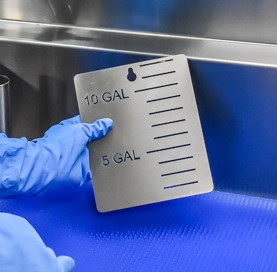 Removable volume plates are a cleanable alterantive to etchings or stickers. |
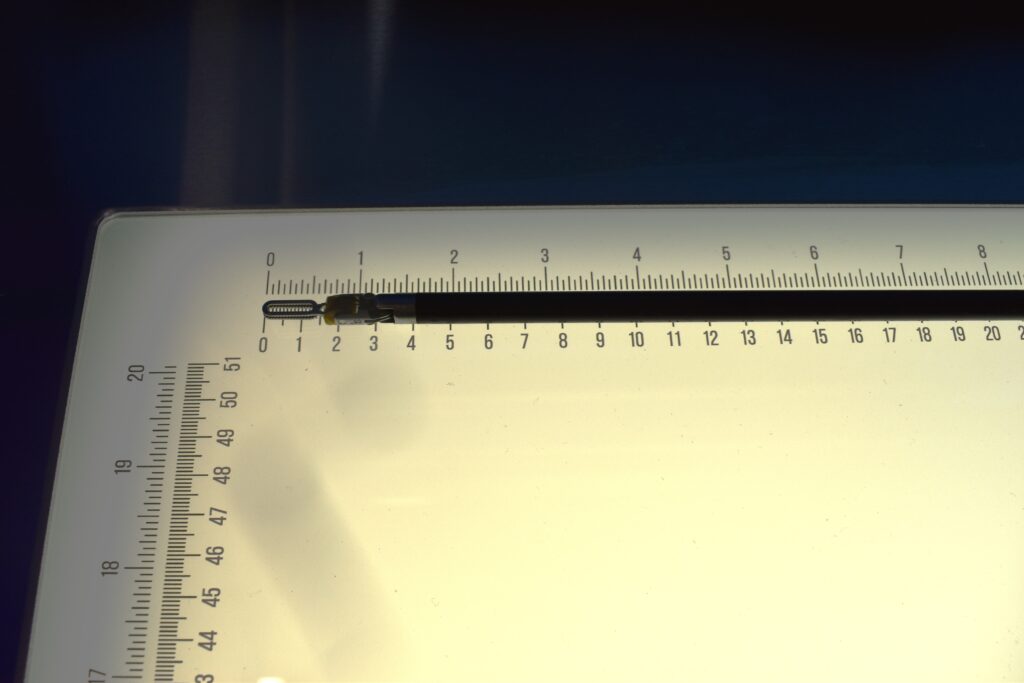
A built-in acrylic cover acts like a phone case, protecting glass from scratches. Features that come ‘pre-protected’ aid in long-term quality. |
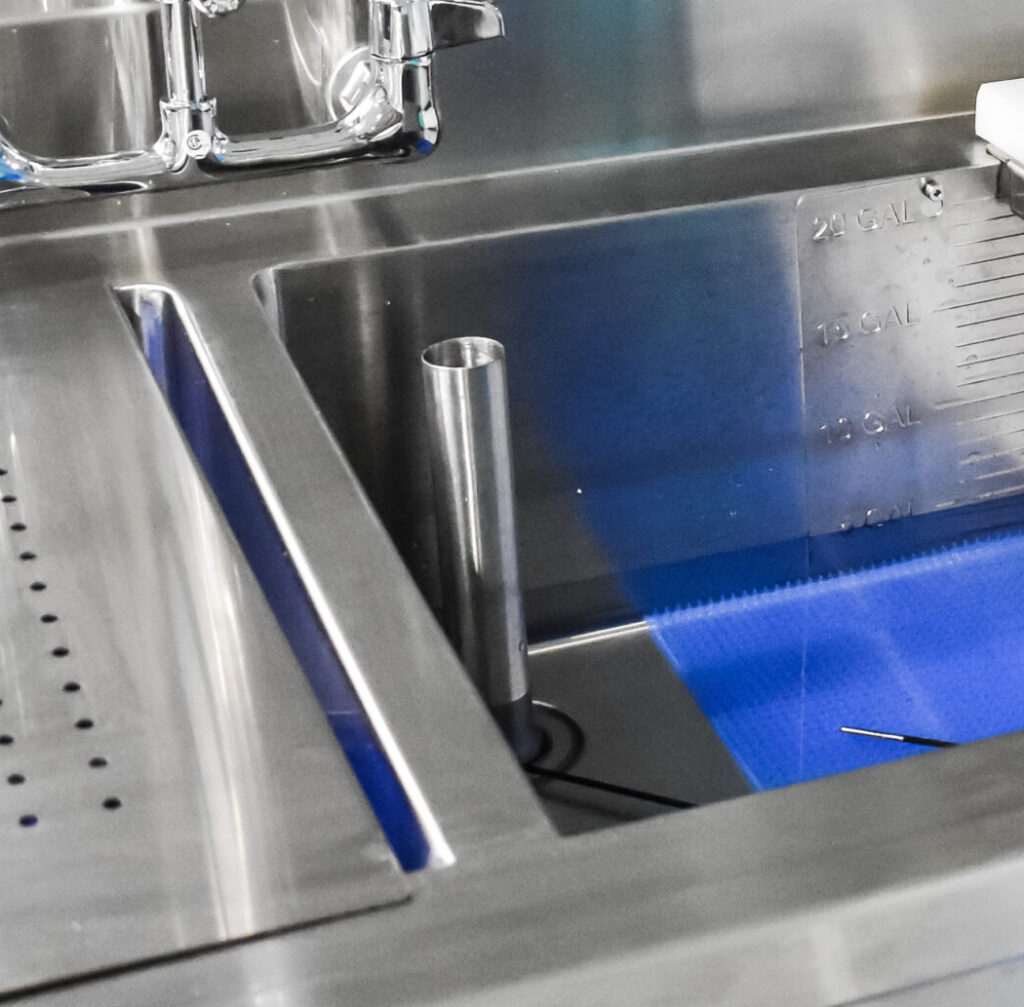 Built-in overflow drains remove the risk of flooding and water damage. |
When Things Stop Working: Serviceability
A ‘lost productivity’ timer starts in most sterile processing and GI Manager minds when a sterilizer, AER or piece of equipment goes down. Regular maintenance is important preventative care, but during downtime, equipment needs to get fixed immediately.
High-quality equipment is sometimes simple. Components which can be easily accessed, replaced by someone without an engineering degree, remedied in a timely manner to reduce reliance on specialized technicians. Departments can finally operate on their own schedules again, and get moving, fast.
Warranties also matter. Verify how long warranties last for items which are used often. Things that ‘move’ or articulate are at frequent risk of servicing needs. Consider height-adjustable lifter systems. Hydraulic lifter systems need frequent preventative maintenance, while electro-mechanical ones are much more durable, and have longer warranty periods.
Quality, when evaluated beyond surface-level features, includes durability, longevity, serviceability, safety, and so much more. By evaluating quality through a multi-dimensional lens, it unlocks the full story of where purchasing dollars go, and how those dollars perform over time. Each investment for SPD and GI departments must perform and reinforce the importance and dignity in reprocessing work.
Looking to evaluate how your current decontamination sinks or assembly workstations meet our criteria of high Quality? Download our Quality Workflow Report Card to get an honest performance report!
RELATED PRODUCTS
PureSteel™ Ergonomic WorkStation
PureSteel™ Endoscopy Sink
PureSteel™ Robotics WorkStation