Workflow Quality Report Card
Evaluate Your Workflow with Confidence
Not sure how well your sinks and workstations support safe, efficient reprocessing? This practical checklist helps you assess the strength of your workflow, identify risks, and prioritize improvements.
Use this tool to evaluate:
• Infection prevention readiness
• Workflow adaptability and future growth
• Sink performance and structural reliability
• Damage prevention safeguards
• Serviceability and downtime readiness
With a simple check = 1 point scoring system, you can quickly determine whether your workflow supports efficiency, reliability, and long-term performance.
Download Checklist
What Decontamination Sinks Should Have
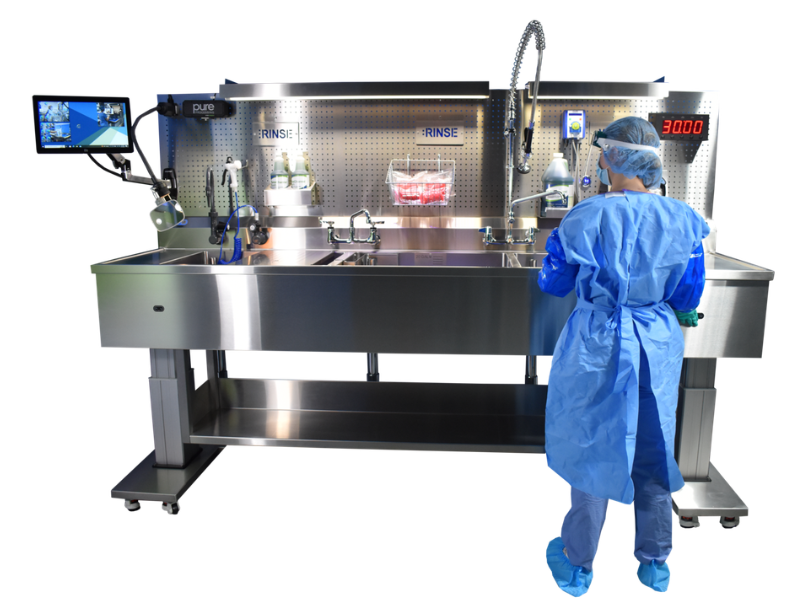
Your sink system plays a central role in infection prevention and daily workflow reliability. This section of the checklist evaluates whether your sinks are built to withstand constant wet conditions, support staff ergonomics, and adapt to future workflow demands.
Inside the checklist, you’ll evaluate whether your sinks include:
- Non-porous, corrosion-resistant surfaces that support effective cleaning and infection prevention
- Reliable structural performance that holds up under constant wet use and full operational loads
- Height-adjustable functionality supported by proper plumbing and mechanical design
- Compatibility with treated water systems such as RO or DI water
- Overflow protection and replaceable high-wear components that reduce downtime risk
- Protected wiring and organized components that minimize hazards and maintenance issues
- Adaptability features that allow lighting, accessories, and tools to be added without replacing the sink
- Serviceable components that can be maintained or replaced without extended downtime
What Sterile Processing Workstations and Tables Should Have
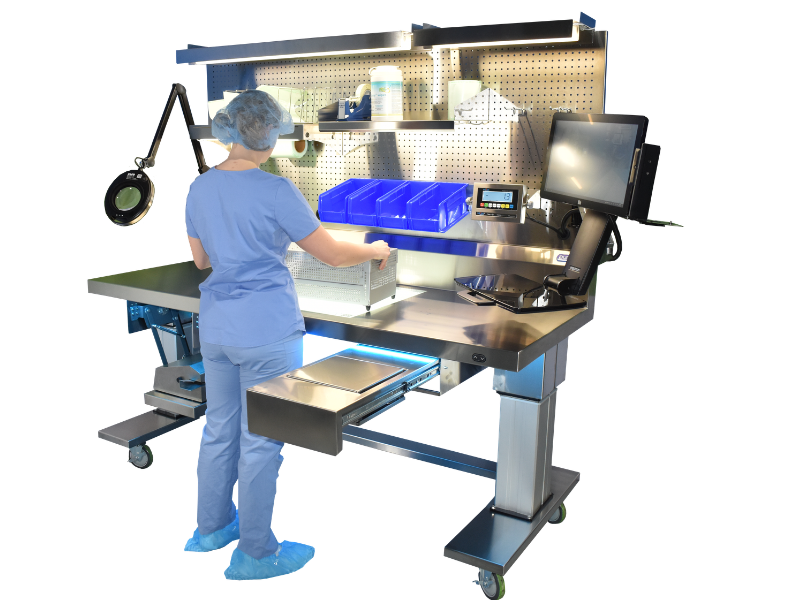
Workstations and prep tables support inspection, assembly, and workflow organization. This section of the checklist evaluates whether your tables are built to support workflow flexibility, staff productivity, and future growth.
Inside the checklist, you’ll evaluate whether your workstations include:
- Non-porous, durable surfaces that withstand repeated cleaning and daily wear
- Built-in electrical capacity to support lighting, magnification, and inspection tools
- Flexible workspace design that supports changing instrument sets and increasing volume
- Expandable configurations that allow accessories and workflow tools to be added over time
- Structural durability that supports long-term use without workspace degradation
- Easy-to-clean components that reduce contamination risk and simplify maintenance
- Serviceable features that allow repairs and upgrades without disrupting workflow
- Workflow-supportive design that helps maintain organization and reduce interruptions