Fighting the Clock to Reprocess Flexible Endoscopes
◆ Key Takeaway
Properly reprocessing a flexible endoscope takes roughly 50 to 120 minutes per scope and cannot be safely rushed. Immediate point-of-use pre-cleaning, thorough manual cleaning, and at least ten minutes of forced-air drying are essential. Common bottlenecks include delayed pre-cleaning, equipment availability, inadequate drying, and inconsistent manual brushing.
Properly cleaning and reprocessing endoscopes is essential to the safety and proper treatment of patients. Endoscopes must function as intended to aid in diagnosis and must be free of microorganisms for each procedure to prevent adverse events such as infection.
In busy endoscopy departments, time is everything. Endoscopy departments are tasked with turning over endoscopes (sometime more than once a day) efficiently in order to keep procedures moving. Procedure scheduling, staffing levels, and procedure volumes all place pressure on reprocessing teams to move quickly. When it comes to flexible endoscope reprocessing, speed is important, but compliance is non-negotiable. Proper cleaning and disinfection require a series of essential steps and skipping or cutting any part of the process can lead to infection risk.
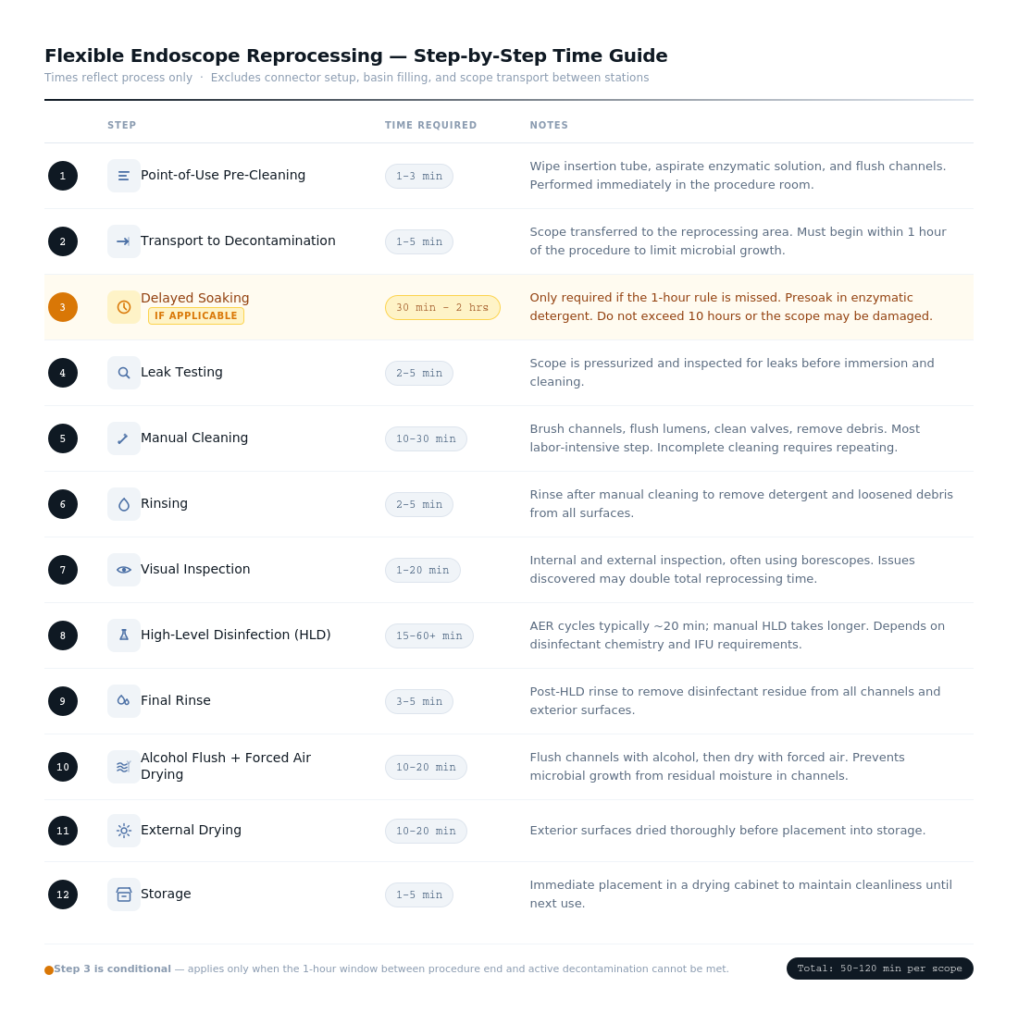
So how long does it actually take to properly reprocess one flexible endoscope? The answer depends on workflow, equipment, and scope type, but most facilities should expect a total cycle time of approximately 50 to 120 minutes per scope.
Why Timing Matters in Endoscope Reprocessing
Industry standards such as ANSI/AAMI ST91 and CDC guidance emphasize that successful reprocessing is not just about completing steps, but making sure each step is addressed for the required amount of time, in a timely manner.
Pre-cleaning At Point-of-Use
Point-of-use pre-cleaning should be done immediately after the scope is removed from the patient. Delays can allow soil and bioburden to dry inside channels, making manual cleaning more difficult and increasing the risk of residual contamination.
Thorough Drying Before Storage
Internal drying is also essential to prevent microbial growth. Endoscopes should be thoroughly dried using at least 10 minutes of forced air after reprocessing. Moisture left behind in channels can create an environment favorable for bacteria and microbes to grow; the longer they remain, the more difficult it is to clean.
A Further Review of Reprocessing Time
While no single guideline publishes an exact minute-by-minute total, the typical workflow includes various steps. Please note that these are process times and not indicative of time spent to attach connectors, fill basins, move the scope from basin to basin, etc. All of these factors add time.
Overview
Where Bottlenecks Can Exist
While automation helps with the process, nothing can replace manual cleaning. Brushing and flushing channels are required and essential steps in virtually every IFU.
That means throughput can be affected by:
- Available technicians and their competencies
- Manual cleaning consistency
- Scope complexity
- Drying workflow
- Delays between use and cleaning
Where Facilities Often Lose Time
Many facilities are impacted by disruptions and delays. Common occurrences include:
- Scopes sitting too long before pre-cleaning
- Bottlenecks waiting for sinks or AER availability
- Inadequate drying methods
- Rework caused by missed cleaning steps
- Manual brushing processes that vary by technician
The Risk of Shortcuts
When departments are under pressure or face disruptions and delays, shortcuts often appear in the form of shortened drying, rushed manual cleaning, or delayed bedside pretreatment. A recent article in The American Journal of Infection Control states that departments can reduce infection risk and enhance patient safety by performing risk assessments and implementing proactive strategies to improve quality in facilities 1.
Reprocessing a flexible endoscope is not a simple wash, rinse and repeat task. It’s a complex, multi-step infection prevention process that typically requires 50–120 minutes per scope when performed correctly.
Facilities looking to improve productivity should look for opportunities to:
- Reduce delays to pre-cleaning
- Standardize manual cleaning workflows
- Improve drying consistency
- Eliminate sink and equipment bottlenecks
- Support staff with tools that improve efficiency without compromising outcomes
While a departments strive for efficient equipment turnover, speed and efficiency must work concurrently with safe, validated processes that protect patients and support outcomes for the healthcare facility.
Do you have ideas or a need to improve your department’s turnover time on flexible endoscopes? Manual Cleaning | Pure Processing to see our solutions and see how you can save time while delivering optimal cleaning compliance.
Works Cited
Endoscope processing effectiveness: A reality check and call to action for infection preventionists and clinicians
American Journal of Infection Control, 2025; 53, 785-793
RELATED PRODUCTS
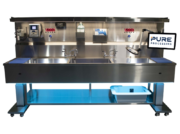
PureSteel™ Endoscopy Sink
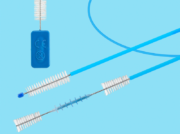
SuperDART® ONE PASS™ Brush w/SmartSTOP™
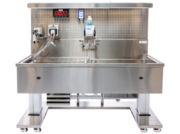
PureSteel Immersion Sink™