From Decision to Done: A Practical Roadmap for Merging GI and SPD
◆ Key Takeaway
Merging GI endoscope reprocessing with a sterile processing department works best as a sequenced eight-step roadmap rather than a simultaneous overhaul. Key steps include providing dedicated sterile processing education first, restructuring management and space, cross-training staff with appropriate compensation, and adopting tracking systems that embed reprocessing protocols for compliance.
Our Voice of the Customer (VOC) council recently took on the question of combining flexible endoscope reprocessing with sterile processing. After the call, we sat down with Marc Finch, 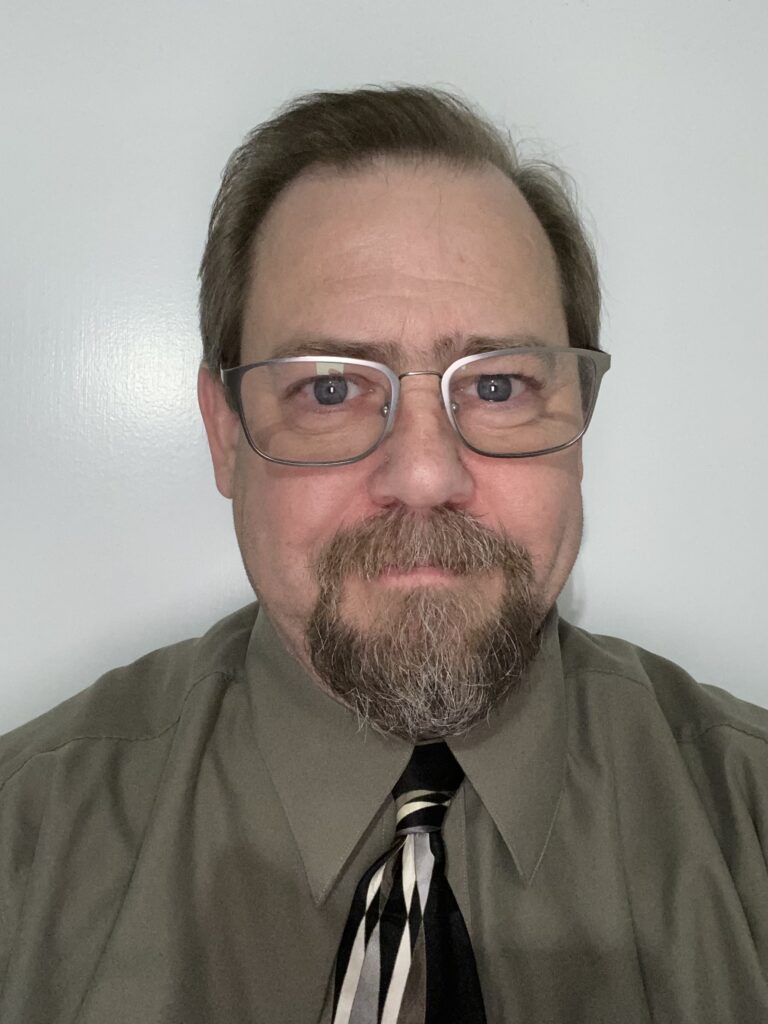 Senior Surgery Management Consultant and Interim Sterile Processing Director, to map out what the actual work of merging looks like once a facility decides to do it.
Finch believes one of the biggest reasons facilities never merge is that the project looks like a mountain of work from the outside. His honest answer is that it is a lot of work up front, but once the pieces are in place, the department runs more efficiently and you have more people who can actually do the work. Here is the sequence he would follow.
Start With Education
Before anything else, you need an education plan and a dedicated educator who specializes in the sterile world. Finch is firm that you cannot run this off an OR educator who dabbles in sterile processing on the side. There is too much happening in the operating room, and too much changing in reprocessing standards, for that to produce proper education. If a facility is serious about treating sterile processing as a real discipline, it needs a real educator behind it.
Assess Your Footprint
Look hard at the physical space you have. If you are building a new facility, you plan for the merged model from the very beginning and design the space around it. If you are working with an existing building, the central question is whether you can rebuild your GI or scope reprocessing area right next to SPD. Sometimes the answer is yes. Sometimes, like a hospital Finch worked in that was built against a mountain, expansion would mean eating into the parking lot, and that is a non-starter. Knowing which situation you are in shapes everything that follows.
Hire With the Model in Mind
If you are staffing a new or restructured department, recruit for the merged reality from the start. That means hiring people with the capacity to learn more than one job, while still planning for the specialists and leads you will always need. Finch’s point is that you build the team you want on purpose, rather than inheriting a set of silos and trying to break them down later.
Get Compensation Right
Versatile, cross-trained staff are valuable, and the pay has to reflect it. Finch ties this directly to recruiting: the people who can flex across roles exist, but you have to compensate appropriately to attract and keep them. Underpay for the capability and you will not be able to build the team the model depends on.
Know Your Volumes and Staffing
Look at the case volume in both GI and SPD, and map the full-time staff needed to cover all the work. This is standard facility planning, but it becomes the basis for the decisions ahead, including how many sinks and how much equipment you actually need once the two caseloads share the same space.
One Room, or Restructure First
Here is the key nuance. Under one umbrella does not always mean one physical room on day one. If you are not landlocked, the goal is to build out scope reprocessing and HLD right there inside the department, and your plan steps toward that. If you genuinely cannot co-locate, you start with the management structure instead: restructure the org chart so both areas report to the same leadership, operate that way, and keep working toward shared space down the line. As Finch put it, it is a management mindset first.
Choose a Vendor That Can Customiz
Vendor selection is part of facility planning, not an afterthought. Finch’s test is simple: a sink company that only offers a handful of fixed models and cannot customize is of limited use to a project like this. You need a partner who looks at your needs and builds to them, especially when you are fitting equipment into an awkward or undersized space.
He pointed to a project where a small ambulatory surgery center had a two-bay sink and genuinely needed a three-bay setup in a tight footprint. The right vendor came in, built a sink that fit both the instruments and the space, including a spot niched partly into a wall, and then installed it. Other companies had told him their standard platforms simply would not fit. The lesson is to look for a vendor who can customize the build, supply the accessories to connect equipment like channel flushing aids, and make the setup flexible enough to reconfigure quickly between heavy GI days and heavy SPD days. Then train your own people to make those changes safely, because the vendor is not going to come back every time you reconfigure a bay.
Turn On the Tracking System
This is one of the quietest wins in the whole project. When GI is separate, it often is not on a tracking system at all. Bringing it under SPD usually means adding GI to a system that is already there, and most modern tracking platforms already include an endoscope module alongside steam sterilization. In many cases you are essentially turning it on and then working with the vendor to make sure every reprocessing step for each scope is built in.
The compliance payoff is significant. Just as a tracking system holds a recipe for assembling a tray, it can hold the step-by-step reprocessing recipe for a scope, and the technician has to check off each step as they go. You can even set hard stops so a scope cannot move into the drying cabinet until every required step is met.
“Now that we know what can be trapped inside of a scope, it makes it so you pretty much have to follow the IFU of that scope, because it is built right into that GI module in the tracking system.”
No safeguard is perfect. Someone determined to check boxes without doing the work can still get around it, though that is a different problem and probably a short-lived employee. As a safe method, the gates are a real improvement, and the compliance gain is itself an argument for merging.
Final Thoughts
Merging GI and SPD is a real project, and Finch would be the first to say so. But broken into steps, it stops looking like a mountain. Educate first, understand your space, hire and pay for versatility, know your volumes, decide between co-location and restructuring, pick a vendor who builds to your needs, and integrate the tracking system. Do that, and you end up with a department that runs more efficiently, complies more reliably, and has more people who can do the work than you started with.
About: Voice of the Customer Committee
The Voice of the Customer Committee is a panel of healthcare and instrument reprocessing professionals who have graciously donated their time to share their expertise and guidance on current challenges faced by the instrument reprocessing community. Through sharing their insights, experiences, and best practices, we have been given the opportunity to share these findings with our readership. We’d like to thank our VOC members for their outstanding input and insights, as well as their time! Thank you for your continued partnership, and all you do.
RELATED PRODUCTS
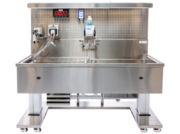
PureSteel Immersion Sink™
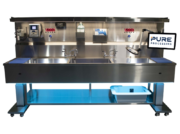
PureSteel™ Endoscopy Sink

PureSteel™ EZ Gate Hinge™ Pegboard