The Case for Bringing GI and SPD Under One Umbrella
◆ Key Takeaway
Consolidating GI endoscope reprocessing under the sterile processing department creates a single point of contact for reprocessing, concentrates high-level disinfection expertise instead of burdening clinical staff, and reduces space needs through flexible multi-purpose bays. It also expands HLD to other equipment and improves retention, though it requires initial investment.
Our Voice of the Customer (VOC) council recently met to talk through an organizational question that has been coming up in recent years: should a facility keep its GI scope reprocessing separate from sterile processing, or should both live  under one department? Following the call, we sat down with Marc Finch, Senior Surgery Management Consultant and Interim Sterile Processing Director, to dig into the benefits and the trade-offs of bringing the two together.
In a lot of hospitals, GI reprocessing sits off on its own, often reporting up through a nurse manager who is excellent at patient care but was never trained in high-level disinfection. Marc’s position is direct. In small and medium facilities especially, your sterilization and HLD experts belong together, and the workflow for the rest of the hospital gets simpler when there is one place to go. Here is how he makes that case.
One Place to Go
When everything that touches sterilization and high-level disinfection lives in one department, the rest of the hospital stops guessing. The OR knows where to go. The endo suite knows where to go. ENT, the clinics, and anyone running a TEE probe all answer to the same group. Marc calls it the standardization of movement, and it removes a daily source of confusion: this gets reprocessed here, that goes over there, and the quick stuff goes somewhere else entirely.
Even when you create teams inside the department, it is still one front door. If the usual endo person is out for the week, nobody has to track down a substitute. A single point of contact can redirect the work and confirm coverage, because there are several cross-trained people who can step in.
The Expertise Problem
This is where keeping GI separate tends to break down. Marc described a facility he is in now where the GI department stands completely apart, and the nurse manager over it knows the clinical side cold. She knows how to use the scope and she knows the bedside clean method. What she does not know is everything that comes after.
“She does great with the clinical aspect of taking care of the patient. But when it comes to the actual high-level disinfection of the scope, and all the different types of scopes used in a GI lab, that is another thing on her plate to learn.”
Put HLD under management that already understands the flow of the work and the applicable standards, and you are not asking a clinical leader to become an HLD expert on top of running patient care. You are letting people who do this work all day own the part they were trained for.
A Smaller Footprint
Real estate inside a hospital is precious, and a merged design uses less of it. Marc walked through the math. Run GI on its own and you might put in two dedicated bay sinks over there, plus a full setup in SPD over here. Plan it as one area from the start and you can often do the same volume with fewer total sinks, because the same equipment flexes between caseloads.
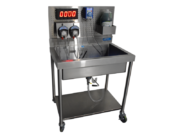
His own preference is to build every bay as a full reprocessing bay rather than dedicating one set to GI and one to everything else. On a slow endo day, those bays absorb SPD work. On a heavy endo day, staff are already used to having the full setup in front of them. With the right sink, you can drop a cover over a bay when you are running scopes, which opens up the length you need for longer instruments. The point is versatility: the room does more than one job.
Expanding the Umbrella
Marc would pull anything that requires high-level disinfection under the same roof, not just GI scopes. TEE probes, ENT scopes, the clinics, even off-site reprocessing all answer to one group. He gave the example of X-ray, where TEE probes get used and require HLD. Rather than making an X-ray tech responsible for that disinfection, the central department owns it: assign someone to go where the probes are used, or have the probes brought to SPD and returned when they are ready.
There is a retention angle here that benefits everyone. The X-ray tech did not sign up to do high-level disinfection. The endo nurse wants to focus on the patient. Centralizing HLD lets each of those specialists concentrate on the work they were actually trained to do, which is better for them and better for the patient.
“You have the expert trained to do X-rays taking X-rays. You have the nurse clinician concentrating on the patient. Then you have your sterile processing people, who should be experts by certification, in a central location doing the HLD and sterilization. You let your subject matter experts do that work.”
The Long View on Cost
Merging is not free. The upfront investment in education, space, and structure is real, and Marc is candid that the first phase usually costs more. The argument is about the long run. Once you stop duplicating two departments, the savings show up, and the program gets stronger: better education, a better relationship with the OR and the endo suite, and far less of the siloed scramble that wastes time every day.
He framed the alternative bluntly. If a facility keeps treating sterile processing as the people who just wash the dishes, it will keep having failures, and those failures cost money. Treating reprocessing as the discipline it is, with proper management and education behind it, is what makes the merged model pay off.
Final Thoughts
Bringing GI and SPD together is not about reshuffling an org chart for its own sake. It is about putting the right expertise in one place, simplifying the path for everyone who depends on reprocessed devices, and building a program that holds up over time. For a lot of small and medium facilities, that is a stronger setup than running two separate worlds and hoping they stay in sync.
Worth noting: under one umbrella does not always mean one physical room on day one. If a facility is landlocked and cannot co-locate, the first move is restructuring management so both areas answer to the same leadership, then working toward shared space over time. We will dig into that roadmap in a companion post.
About: Voice of the Customer Committee
The Voice of the Customer Committee is a panel of healthcare and instrument reprocessing professionals who have graciously donated their time to share their expertise and guidance on current challenges faced by the instrument reprocessing community. Through sharing their insights, experiences, and best practices, we have been given the opportunity to share these findings with our readership. We’d like to thank our VOC members for their outstanding input and insights, as well as their time! Thank you for your continued partnership, and all you do.
RELATED PRODUCTS
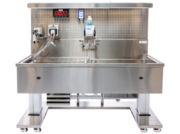
PureSteel Immersion Sink™
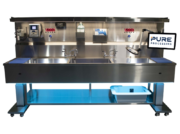
PureSteel™ Endoscopy Sink
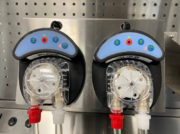
FlexiPump™ Independent Flushing System