The True Price to Pay For Endoscope Damage
◆ Key Takeaway
Endoscope damage costs healthcare facilities between $500 for minor repairs and over $8,000 for major ones, plus loaner fees, staff time, and procedure delays. Distal tip damage accounts for 45% of failures, and roughly 85% of all damage is preventable through proper equipment, handling, and workflow design.
Flexible endoscopes are among the most valuable and most vulnerable instruments in any healthcare facility. A single colonoscope costs $30,000 – $60,000 to acquire and they accumulate risk for 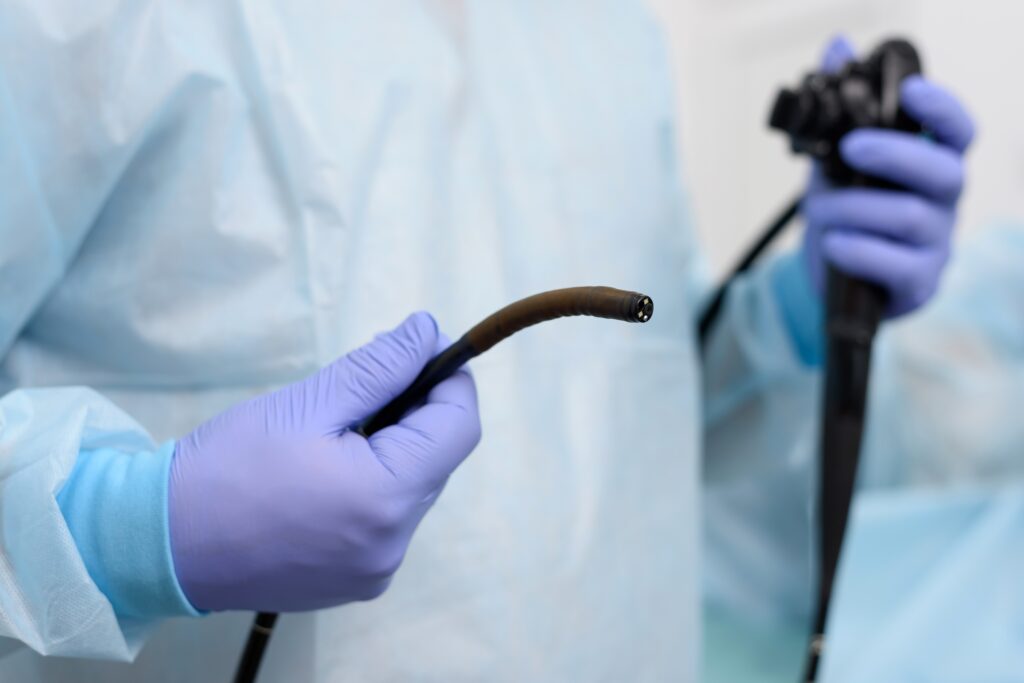 damage the second they are handled. Accidental bumps during transport, improper handling at the decontamination sink, damage within the channels accumulated through regular use and over-coiling in undersized basins all go towards increasing endoscope damage.
For GI departments already operating under budgetary and volume pressures, the financial and operational toll of endoscope damage can be substantial. The thing is, 85% of damage is preventable3. Understanding where that damage originates and what it truly costs is the first step toward preventing it.
The Price to Pay
At the individual scope level, repair costs vary significantly by damage type. Even relatively minor surface damage starts at $500 per incident; major fluid invasion events can exceed $4,300 (Ofstead et al., 2024)1. The table below illustrates a range of costs:
| Repair Cost | Operational Impact | Bending section leak / tear | $500 – $1,500 | Scope out of service; backlog risk | Instrument channel perforation | $800 – $2,000 | Reprocessing failure; patient safety risk | Fluid invasion | $1,500 – $3,000+ | Internal component damage; extended downtime | Imaging / optics failure | $1,500 – $3,500+ | Extended downtime; possible full replacement | Distal tip impact damage (45% of cases) | $1,000 – $3,000+ | High-frequency, often entirely preventable | Major OEM-level repair | $5,000 – $8,000+ | Multi-week downtime; loaner costs accumulate |
Where Damage Happens Most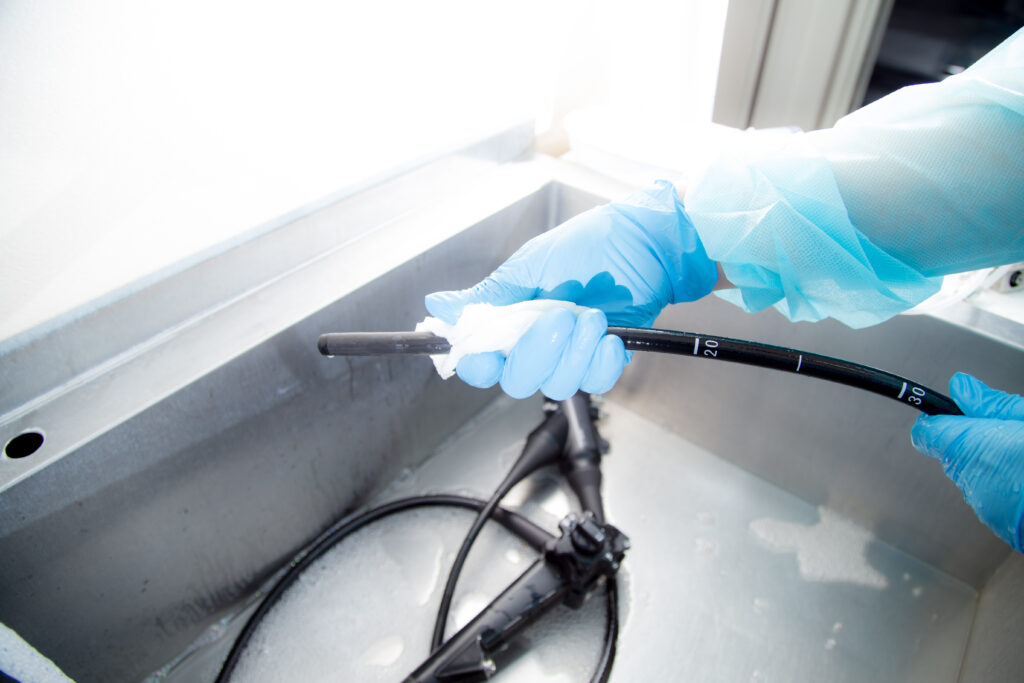
Distal tip damage is a major contributing factor. According to a report in Gastroenterology & Endoscopy News, nearly 45% of all endoscope damage occurs at the distal tip3 the most fragile and most expensive part of the scope to repair.
A primary driver of distal tip damage is impact: scopes dropped, set down carelessly, or transported without adequate protection from strikes against surfaces and countertops. In many cases, the damage is entirely preventable and the consequences are immediate.
Fluid invasion is another leading contributor to high-cost repairs. It most commonly occurs when a scope’s outer sheath has a pinhole or micro-tear that goes undetected before immersion in enzymatic solution or disinfectant. Once fluid enters the internal components, the damage often requires significant repair or replacement.
Preventative Measures
Making proactive investments to avoid or reduce the instances of issues, is key to mitigating more costly, reactive fixes. One study by Cori Ofstead and Associates (2024) found that implementing borescopes into their departments saw a $476,000 reduction in repair costs1. While specific to borescope adoption, this study highlights that implementing solutions to ensure quality processes makes a significant impact in mitigating risks.
The Departmental Ripple Effect
The true cost of endoscope damage extends far beyond the repair invoice. When a scope goes out of service, the consequences cascade through the entire department.
The Additional (Complete) Costs for One Damaged Endoscope4
- Repair invoice: $1,000–$8,000+ depending on damage type
- Loaner / rental fees: up to $600/day — as much as $18,000/month
- Expedited repair premium: +50% added to standard repair rates
- Staff administrative burden: consuming nearly 9 hours of staff time2
Procedure delays and cancellations: revenue loss, rescheduling overhead, patient experience impact
Take these costs across five endoscopes, and repairs quickly burden GI budgets:
| Scopes Damaged | Estimated Cost Per Scope | 2 Week Rental Per Scope | Total Repair Price | 5 | $5,000 | $8,400 | $67,000 |
This example highlights the need to prevent avoidable damage where possible. Not only is there a high cost associated, but that is now 5 scopes out of rotation and that impacts procedure schedules.
The majority of repair costs are caused by handling errors, rushed reprocessing steps, inadequate sink ergonomics, and missed inspection opportunities. Investing in the right equipment to mitigate these errors is not an optional quality improvement, it is a financial and operational imperative.
The human element in manual reprocessing is another risk factor. Each manual touchpoint (every carry, every brush pass, every basin transfer, every act of staging and coiling) introduces variance. And variance introduces risk.
The manual reprocessing environment introduces multiple high-damage moments that structured equipment and workflows can address:
- Insufficient staging space forces scopes onto countertops or improvised surfaces, increasing contact and impact risk
- Lifting scopes between wash and rinse basins, the highest-risk single moment in manual cleaning, exposes instruments to contact with sink edges, faucets, and hard surfaces
- Over-coiling in undersized basins creates bending stress
- Low-visibility working conditions create contact risks and cause technicians to miss damage during required visual inspection
Reducing Damage Starts with the Right Environment
GI staff cannot eliminate all risks, but they can reduce them by optimizing the tools and workflow conditions around them.
These recommendations can include:
- “Sinks should be deep enough to allow complete immersion of the endoscope to minimize aerosolization. The size of the sink should be adequate (i.e., a minimum of 16 inches x 30 inches) to ensure that the endoscope can be positioned without tight coiling”- AAMI ST91 4.3.2
- Consistent pre-immersion leak testing before any enzymatic or disinfectant immersion, as required by ST91 7.4.1
- Smooth inter-basin transfer mechanisms, eliminating the highest-risk manual lift in the reprocessing workflow
- “Lighting of the recommended illuminance should be placed above the sink and counter area so that personnel can adequately perform inspection activities as the endoscope is processed…”- AAMI ST91 4.3.2
- Ergonomic design “…enabling a person of average size to work comfortably without undue strain…” – AAMI ST91 4.3.2
Facilities that implement structured preventive maintenance programs, combining equipment investment with protocol discipline can see repair cost reductions.
When departments can avoid repairs and their compounding costs, scopes are able to stay in rotation to address the growing procedure volumes, thus patient care is improved.
Want to learn about solutions that can protect your flexible endoscopes? Come see our SuperDART® ONE PASS™ Brush with SmartSTOP™ and our PureSteel™ Immersion Sink and request a consult.
Sources & References
- Ofstead, C.L. et al. (2024). “Impact of Borescope Inspections on Endoscope Repair Frequency and Costs.” Biomedical Instrumentation & Technology, 58(4), 88–98. https://array.aami.org/doi/10.2345/0899-8205-58.4.88
- Mahawongkajit, P. et al. (2022). “Effects of basic endoscopic handling and care training on GI endoscopy logistics.” Endoscopy International Open, 10(01), E56–E61. org/10.1055/a-1630-6403
- O’Rourke, K. (June 2019). “Avoiding the Broken Endoscope Blues.” Gastroenterology & Endoscopy News. https://www.gastroendonews.com/In-the-News/Article/06-19/Avoiding-the-Broken-Endoscope-Blues/55148
- Hidden Burden of Equipment Failure in Endoscopy. (2022). PMC. ncbi.nlm.nih.gov/articles/PMC9761334/
- ANSI/AAMI ST91:2021. Flexible and Semi-Rigid Endoscope Processing in Health Care Facilities. org
- Costs Involved in Compliance With New Endoscope Reprocessing Guidelines. (2024). Clinical Endoscopy, 57(4). e-ce.org/journal/view.php?number=7845
- Acknowledging the Gaps in Endoscope Reprocessing. (2025). American Journal of Infection Control. org/article/S0196-6553(25)00290-1/fulltext
- Endoscope Reprocessing: Human Factors & Automation. (2020). PubMed. ncbi.nlm.nih.gov/20679783/
RELATED PRODUCTS
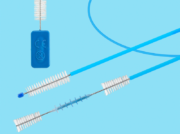
SuperDART® ONE PASS™ Brush w/SmartSTOP™
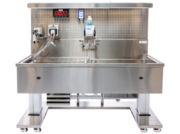
PureSteel Immersion Sink™
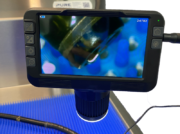
PureClear™ 10x Magnifier