The High Price of Sharps Injuries
◆ Key Takeaway
Sharps injuries carry steep costs for sterile processing departments, with single needlestick incidents averaging about $5,000 directly and $10,000 in workers’ compensation. Bloodborne pathogen transmission can reach hundreds of thousands per case, driving a national burden estimated between $118 million and $1 billion annually. Prevention relies on safety-engineered devices and ergonomic workspaces.
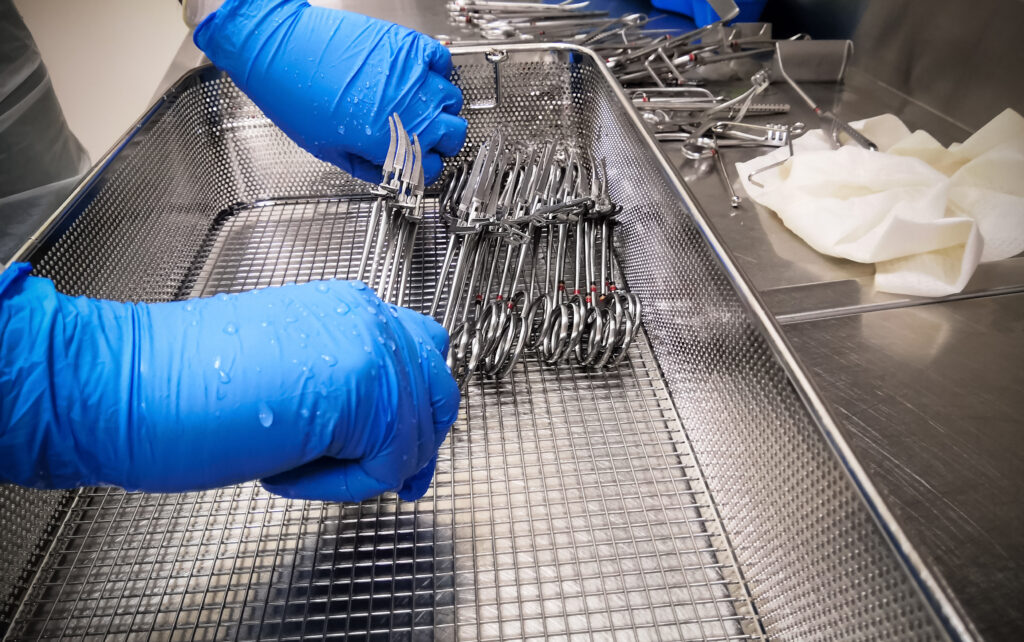
Sterile processing technicians operate in one of the most hazardous positions within a health system: Decontaminating, inspecting, and repackaging surgical instruments that create frequent exposure risks to sharp instruments such as scalpels, needles and even sutures that could be hiding among the gross material. This hidden danger is a risk for staff, along with a financial one for the facility.
According to the CDC, 385,000 sharps-related injuries occur every year among hospital-based healthcare personnel.1 Roughly 25% of those injuries happen to the downstream workers like SPD technicians and custodial staff. That’s nearly 96,000 sharps injuries per year in U.S. hospitals alone.
Those numbers likely aren’t the full story. OSHA and the CDC both note that an estimated 50% of sharps injuries go unreported, driven by fear of reprisal, the burden of paperwork, and the perception that a minor cut is not a significant incident.3 For SPD professionals, the toll is documented in their own words: the 2025 SPD State of the Industry Survey found that 17% of sterile processing professionals reported having been injured at some point during their career, with punctures and cuts from sharps ranking as the leading cause.4
What One Injury Actually Costs
The financial reality of a single sharps injury is sobering. Daniels Health’s 2025 cost analysis places the inflation-adjusted direct cost of a needlestick, covering laboratory testing, medical evaluation, post-exposure prophylaxis (PEP), and follow-up counseling at approximately $5,000 per incident.5 Workers’ compensation claims average around $10,000. And that is assuming the exposure does not result in transmission of a bloodborne pathogen.
When transmission does occur, the numbers escalate sharply. Hepatitis C, which carries a roughly 1.8% transmission risk per needlestick, requires direct-acting antiviral treatment that can cost $24,000 to $95,000 or more. Lifetime monitoring compounds with testing and doctor’s visits to about $200,000. HIV, with a transmission risk of 0.2–0.3% per percutaneous exposure, can generate lifetime treatment costs exceeding $500,000 to $1 million. Litigation, when long-term illness or employer negligence is established, can reach seven figures.5
Per Infection Control Today, a study conducted by non-profit Safe in Common, estimates the total annual burden of needlestick injuries at $118 million to $1 billion or more, depending on how indirect and long-term infection costs are counted.6 As their research notes: approximately 1,000 transdermal injuries per day in U.S. hospitals adds $1 billion in unnecessary annual costs and these costs are largely preventable.
Key Financial Figures: Sharps Injuries in SPD
| Cost Category | Estimated Cost | Direct cost per incident (labs, eval, PEP, follow-up) | ~$5,000 | Average workers’ compensation claim | ~$10,000 | Lifetime treatment — occupational HCV infection | $200,000+ | Lifetime treatment — occupational HIV infection | $500K–$1M+ | Litigation payout ceiling (disability / long-term illness) | Up to $1M+ | Estimated annual national burden (U.S. hospitals) | $118M–$1B+ |
Preventative Measures are Key
Sterile processing departments have a mission of protecting patients and they risk exposure to pathogens in their work to achieve this goal. Facilities have a responsibility to protect their staff while achieving optimal safety outcomes for patients. There are post-exposure processes in place such as, in accordance with OSHA’s Bloodborne Pathogens Standard (29 CFR 1910.1030), employers are legally required to provide post-exposure management, including PEP treatment, at no cost to the employee.9
Preemptive processes are essential in protecting and mitigating costly exposures as well. There are measures in place in many facilities to protect against sharps exposures, including point-of-use sharps disposal, detailed reporting tools, education that benefits the safety of all staff and consistent use of safety-engineered devices and equipment. One component is reducing the handling of instruments to reduce exposure risk:
- Equipment should allow for multiple instruments to be staged and moved at once.
- Equipment should have ergonomic benefits, such as reducing lifting and carrying.
- Workspaces should allow for safe handling and reduce reaching or excessive foot traffic
- Lighting is key. Improving lighting in basins, at prep tables and around quality stations may help reduce the likelihood of sharps injuries.
The cost of a sharps injury in SPD is not just a line item on a workers’ compensation report. It involves the health of a technician, the stability of a department, the continuity of surgical case flow, and the culture of safety that either protects or exposes the people whose work makes every surgery possible.
References
- CDC — Sharps Safety Program Resources. gov/infection-control/hcp/sharps-safety/index.html
- STERIS IMS — Safety in the Sterile Processing Department: Sharps Injuries. steris-ims.com/blog/safety-in-the-sterile-processing-department-sharps-injuries/
- CDC / OSHA — NORA Stop Sticks: Sharps Injuries. Approximately half or more of sharps injuries go unreported. cdc.gov Stop Sticks: Sharps Injuries
- Pure Processing — The Cost of Commitment: Injuries in SPD. 2025 SPD State of the Industry Survey. 2025 SPD Report: Executive Summary | Pure Processing
- Daniels Health — The Cost of a Needlestick Injury (November 2025). com/knowledge-center/cost-needlestick-injury
- Infection Control Today — Prevention of Needlestick Injuries Can Save U.S. Healthcare System More Than $1 Billion Annually. com
- Daniels Health / AOHP — EXPO-S.T.O.P. Fill the Gap Survey 2019-2023. com/knowledge-center/expo-stop-survey-reveals-sharps-injury-prevalence
- AORN Guideline for Sharps Safety Evidence Table (citing ISC EPINet 2023). org — Sharps Safety Evidence Table (PDF)
- OSHA — Bloodborne Pathogens Standard, 29 CFR 1910.1030. gov/laws-regs/regulations/standardnumber/1910/1910.1030
RELATED PRODUCTS
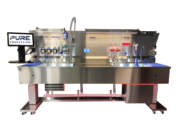
PureSteel™ Inline Sonic System

QuickSonic™ Sink System
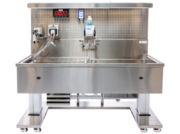
PureSteel Immersion Sink™