Does Your Equipment Help or Hinder Your Process?
◆ Key Takeaway
Sterile processing equipment either supports operations or obstructs them as case volumes and instrument complexity rise. Placement and departmental flow, multi-functional redundancy, consistent user-friendly design, and protective ergonomic features determine whether equipment reduces or adds strain. Five evaluation questions help departments assess whether their equipment genuinely enables efficient, safe workflows.
Sterile processing departments are managing more volume, more complex instrumentation, and tighter staffing. In that environment, your equipment is either an asset or an obstacle. Complex instrument design, number of cases, emergency cases and scheduling changes all impact the efficiency. The question departments need to ask is: Is your equipment helping and supporting your team, or getting in the way of your ability to turnover instrumentation?
Key areas that impact this are:
- Where is equipment located and what is the department layout?
- Is your equipment able to perform multiple functions; such as act as an additional soaking station, even if primary function needs to be serviced?
- Does your equipment create hazards for the departments such as spills and aerosols?
- Does your equipment provide consistent, confident outcomes without having to repeat processes or cut corners to meet time constraints?
- Does equipment take keep the process moving or are there gaps and pauses that impact time?
- Does equipment support staffing levels and the varying competencies across the team?
The Challenge Is Already Here
Instrument complexity exists. There are fine serrations, narrow lumens, intricate box locks and more that all need to be addressed for the safety of patients. Compounding this is that case volumes keep rising. Manual cleaning, the first and most critical step in decontamination, is inherently variable. Technique differs by person. Fatigue degrades consistency over a shift. Pressure drives shortcuts.
This isn’t just a staffing problem. It’s a systems problem. When the equipment in decontamination impacts capacity, or performs only one function, it amplifies other challenges your team could face.
Location: Does your equipment go with the flow?
Departments generally cannot be built out or up so everything needs to work with the space. If there isn’t a logical flow or equipment is added later, away from related equipment, a single cleaning cycle can require multiple points of contact and foot travel: manual cleaning at the sink, carry to the sonic, load, unload, carry back. This can create hazards for instrument handling, as well as staff with the opportunity to trip or drop instruments. Foot traffic and instrument contact points are inefficient and preventable risks.
Functionality: Single-Purpose Equipment Creates Gaps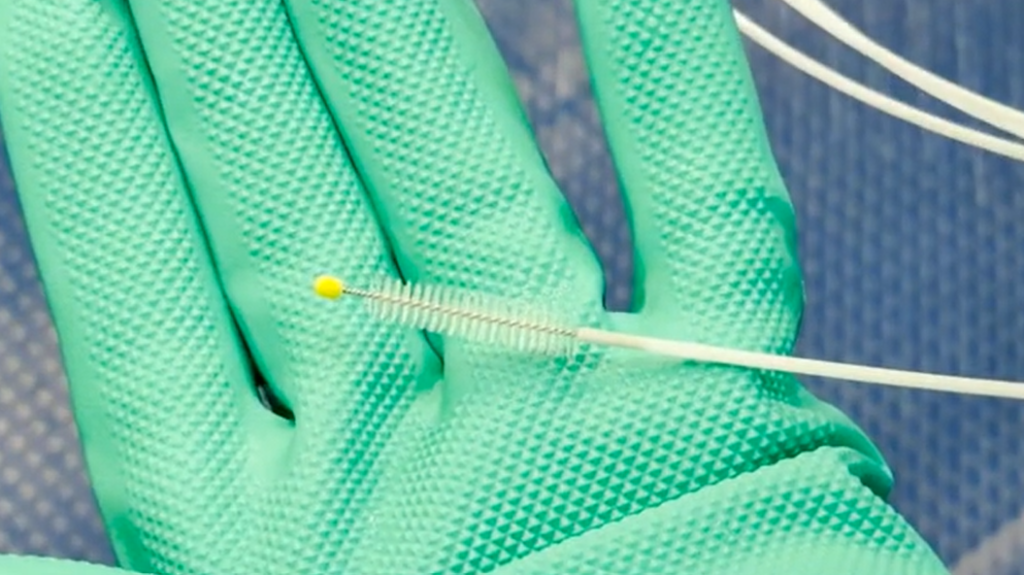
Decontamination workflow is a chain. When one link goes offline for service, the entire room absorbs the impact. Counter space disappears and other sinks take on overflow. This now means there is a bottleneck and instrument pileups.
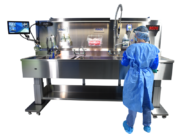
What if you had equipment that could do more? A unit that is capable of soaking and mechanical cleaning for example, keeps the workflow moving and incorporates multiple functions to address various requirement to achieve cleaning compliance. This is how you create operational resilience.
What happens when a specific piece of equipment need servicing? Equipment will need inevitably need maintenance and repair over time. The other sinks and workstations tend to absorb the work and entire workflows are now slowed. If you have equipment that can perform multiple functions, even if servicing is needed, then you can pivot without having to pause, avoid bottlenecks and promote efficiency among the staff and process.
Usability: Consistency Regardless of Who’s on Shift
Lumen cleaning efficacy depends on speed, pressure, and technique. Time and repetition impact this efficacy. A technician with wrist strain or fatigue works differently than a technician who just started at the station. A newer hire will have different experience when it comes to pressure, speed, inspection, and technique than a veteran. That variance affects cleaning quality, compliance, and patient outcomes.
Outcomes should not vary. Equipment should be easy to use with simple features that deliver optimal impact, regardless of experience of the person at the helm. Equipment should have ergonomic functions that adjust to staff needs and having programmable features that can quickly meet all IFU’s without losing consist positive outcomes. This is where staff will feel supported and pauses or compliance issues can be reduced.
Increased Capacity Promotes Higher Turnover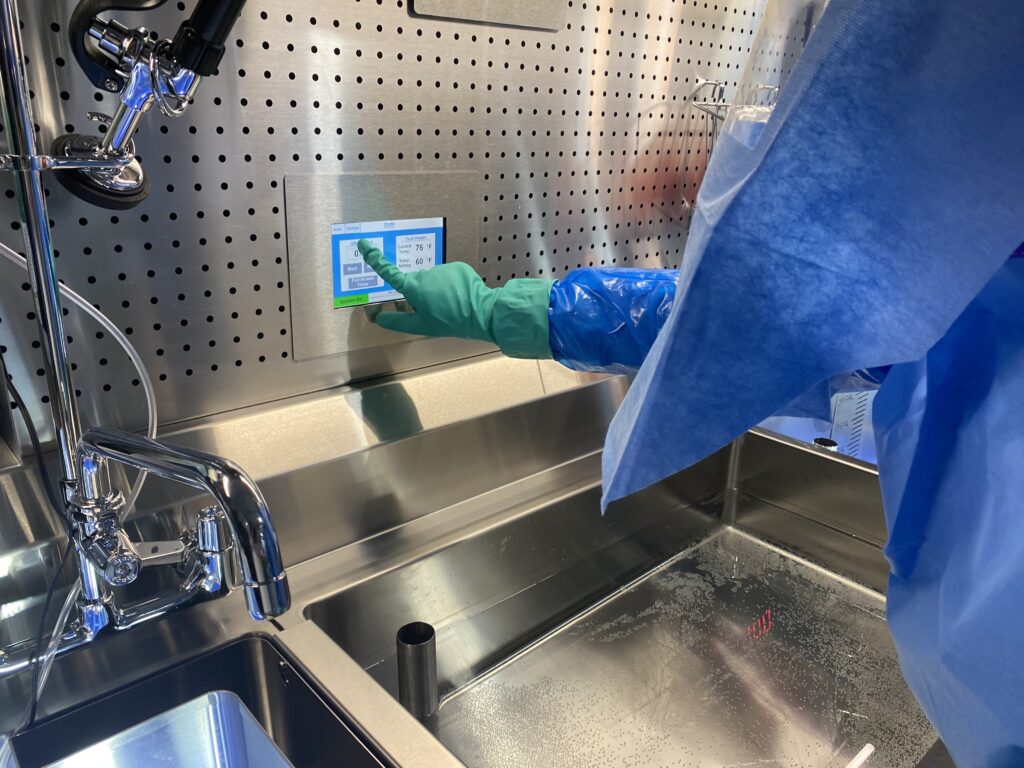
As volumes grow, equipment needs to be able to absorb as much as it can to keep instrumentation moving and back in rotation for use. Does your equipment require multiple manual steps? Can you guarantee that the current process is consistent throughout the day? Are you losing workspace due to build-up or slowdowns?
All this impacts throughput. Equipment should fit with your workflow and not take up the space that is needed to perform tasks. If you lose counter space, this can create bottlenecks through the department. If there has been an influx of equipment, you need to be able to pivot to address more quickly, without lost compliance. Consider tools and equipment that require less manual time, can address multiple instruments at once and can provide the same level of performance consistently throughout the day and on numerous instruments at once.
Safety: Removing Hazards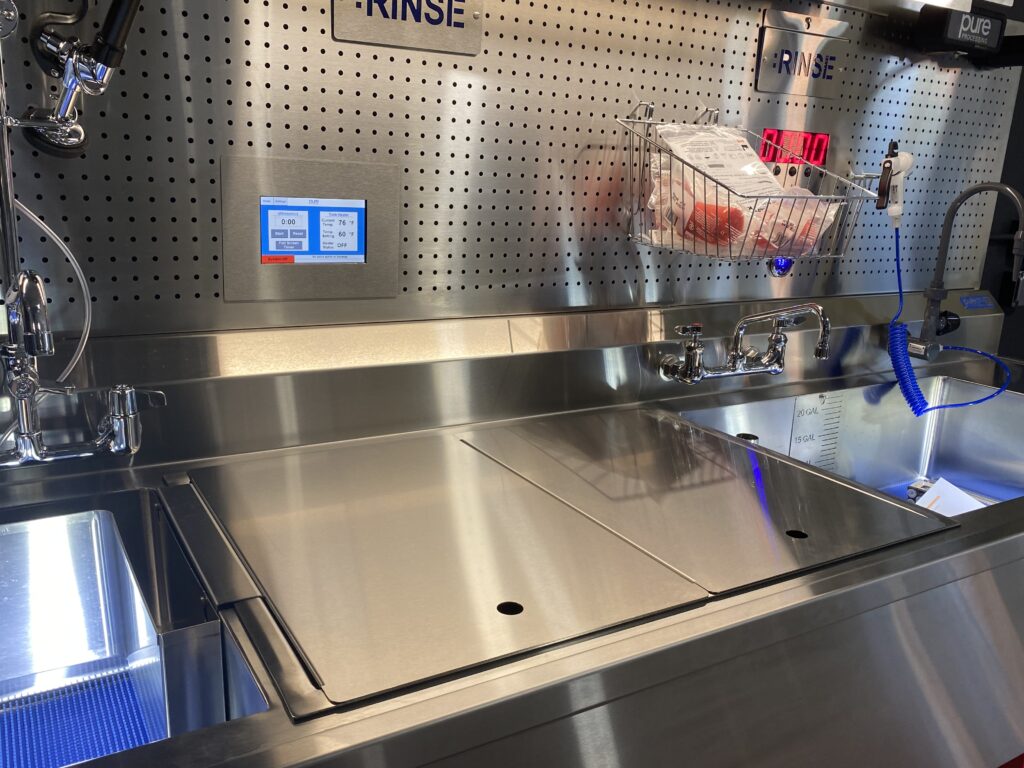
Every unnecessary handling event is an unnecessary risk. Aside from sharps, aerosols create exposure, splashes can create slipping risks and non-adjustable equipment can create strain or injury to staff.
Equipment should be designed to not just protect patients, but protect the technicians doing the work to protect patients. Reducing handling of instruments, removing exposure by have protective lids and have features that prevent overfilling and splashing, protect staff from injury, which negatively impacts facility finances and department throughput.
Ask These Questions About Every Piece of Equipment in Your Room
- Can it perform more than one function when its primary use is offline?
- Does it deliver the same results regardless of which technician is operating it?
- Does it achieve compliance the first time or do I need assurances?
- Does it protect staff from the hazards of the job?
- Does it fit into the workflow as it actually runs?
Equipment that cannot meet these questions is actively making a hard process harder, straining staff, slowing turnover, and widening compliance gaps in the department.
The right solutions fit directly into the workflow, do more than their primary function, address any IFU requirement to drive optimal compliance, and keeps staff protected from the hazards that come with the work. That’s not more equipment. That’s smarter equipment.
If you have any of these questions above and found this information helpful, please check out our Ultrasonic Sink Solutions.
The following sources helped inform the information in this blog:
Works Cited
- Kimsey, J. (2024, April 8). How to successfully plan for space, equipment, staff, and workflows in sterile processing departments. Infection Control Today, 28(2). https://www.infectioncontroltoday.com/view/how-to-successfully-plan-space-equipment-staff-workflows-sterile-processing-departments
- Natarus, M. E., Shaw, A., Studer, A., Williams, C., Dominguez, C., Mangual, H., Olmstead, J., Westmoreland, K., Gill, T., Wellington, W. Z., Wheeler, D. S., & Ida, J. B. (2025). Optimization of a sterile processing department using Lean Six Sigma methodology, staffing enhancement, and capital investment. The Joint Commission Journal on Quality and Patient Safety, 51(1), 33–45. https://doi.org/10.1016/j.jcjq.2024.10.006
RELATED PRODUCTS
PureSteel™ Inline Sonic System
QuickSonic™ Sink System
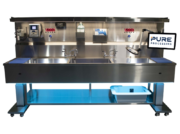
PureSteel™ Endoscopy Sink