
Staffing Challenges: Best Practices for Getting New Teammates Up & Running

In December 2024, Pure Processing’s Voice of the Customer Committee met to discuss a topic that’s never out of style in sterile processing:staffing & retention challenges. Jessica Hatch, Sterile Processing Manager at Confluence Health’s Central and Marus Campuses and VOC Member, agreed to extend the VOC conversation with us to dive deeper into effective ways to get new teammates off the ground and contributing to the department’s goals. Having onboarded eight new teammates over the last year, she has faced and overcome a number challenges regarding onboarding and training. She’s identified a number of best practices to help growing departments make the most of a new employee’s training.

Assessing New Teammates

Hatch explained that earlier in her career, it was customary to assess new hires with a survey about one month into their training. These assessments are essentially check-ins designed to gauge how people were feeling in their role and whether on pace with learning objectives.

When Hatch opted to move the first of these check-ins to one week into training rather than after 30 days, she discovered something surprising. New hires weren’t feeling confident in their learning objectives and needed more guidance in their initial first week of training. She explained:

“And then I started [an assessment] at the first week and the feedback that I got is they were massively overwhelmed.”

By checking in on new hires earlier in the training process, Hatch found that she could modify training programs and pacing to better meet their needs and offer clarity.


Existing Teammates Are Critical

Hatch also found that getting current teammates on board with training strategies is a critical component to their success. Your existing team

will likely play an important role in the training of new teammates, so ensuring they understand newly introduced training policies, pacing, and methods will help them assist and train new hires in a way that’s aligned with your goals.

Failing to fill them in or not getting their buy-in related to training practices can cause them to inadvertently undermine your training objectives for new teammates. They may teach them ‘old’ ways of doing things and potentially cause confusion as to how certain tasks need to be executed to ensure positive outcomes.


Structure Leads to Success

Structure is a key to success in most circumstances, and that is certainly the case in sterile processing departments. Creating a well-structured training program that clearly outlines weekly training objectives and how to complete them gives a new teammate a clear understanding of their manager’s expectations, as well as sets personal expectations and what they can anticipate working on and learning in a given week.

A well-structured training regimen also helps new teammates determine how their learning material relates to their key competencies, and how it will factor into their day-to-day work within the department.

Structure isn’t only critical in your training program. A clear structure within your department’s organizational hierarchy is also crucial. New hires will undoubtedly have many questions throughout the first few months. Knowing who they can go to for clarity and answers ensures that they overcome hurdles in an efficient, effective way. It can also keep you out of the weeds! When a manager is out of the office, knowing who to go to with questions helps a new teammate immensely.


Create Department Champions

Training within sterile processing departments covers a lot of different topics, tasks, methods, and information, often more than one person can adequately cover with a new hire while still doing their job effectively. Giving one teammate the job of training a new hire can lead to them losing effectiveness in their role and burning out trying to cover everything their teammate needs to know.

Hatch has overcome this challenge with an idea that came about in the December VOC call: creating department champions. As Hatch explained:

“I’ve been creating champions on specific topics by approaching my Tech 3’s and asking them to identify what topic they are most knowledgeable on and having them become the champion of that topic in the department.”

These are not champions in an arena; these are topical champions, people that are tasked with knowing all the ins and outs of specific tasks and processes within a department. Having dedicated teammates associated with specific aspects of a department allows a new hire to get in-depth, practical guidance from their teammates while maintaining the same level of enthusiasm and practical guidance throughout.

Having new hires learn from a variety of existing teammates also has the added benefit of introducing them to the rest of the team in an organic way, improving their integration into the team.


Communication is Key

Effective communication and the clarity it facilitates is key to a new hire’s success. Clarity through communication not only helps a new teammate understand what’s expected of them, but also what they can expect of their teammates and manager. Open lines of communication and openness to regular, candid exchanges between teammates and their managers help new hires overcome hurdles and challenges as they arise, rather than waiting until the ‘appropriate’ time, potentially wasting valuable training time.

Communication needs to go both ways, though. Hatch explained that it’s important for managers to be reflective and communicative about their shortcomings and acknowledge when they make mistakes. Demonstrating that it’s alright to make mistakes in your department, so long as you own them, encourages teammates to share when they’ve made mistakes, or ask for clarity before a mistake might be made.


Conclusion

When it comes to staffing, there are plenty of moving parts that add complexity and difficulty. Finding candidates is one challenge, but getting new hires off the ground and contributing to the success of your department is different challenge entirely.

Using the best practices identified by Hatch can help you streamline your onboarding and training processes, while simultaneously making those processes more effective for your team and continuing to refine them. The sooner teammates begin contributing to the department’s success, the better off the whole team is!

Interested in other VOC content? Click here to see all of our VOC blogs and content!


About: Voice of the Customer Committee

The Voice of the Customer Committee is a panel of healthcare and instrument reprocessing professionals who have graciously donated their time to share their expertise and guidance on current challenges faced by the instrument reprocessing community. Through sharing their insights, experiences, and best practices, we have been given the opportunity to share these findings with our readership. We’d like to thank our VOC members for their outstanding input and insights, as well as their time! Thank you for your continued partnership, and all you do.

Staffing Challenges: Four Tips on Improving Culture to Retain Great Teammates

Debra McGinnis-Peterson

In December 2024, Pure Processing’s Voice of the Customer Committee met to discuss a topic that’s never out of style in sterile processing: staffing and staffing challenges. Debra McGinnis-Peterson, Sterile Processing Manager at Children’s Wisconsin, spent some additional time with Pure Processing following the VOC conversation to elaborate on her journey working to enhance culture and build morale to improve retention rates in her sterile processing department. On this journey, she learned some valuable lessons that can help other SPD managers embarking on a similar journey towards improvement.


Tip One: Be Reflective About Your Leadership Style

McGinnis-Peterson led with something she considered critically important to fostering a culture that retains great teams: a manager’s openness to self-reflection and introspection. She explained, “There have been times I’ve needed to think about and change my approach to leadership.”

Adjusting your leadership style can come in a variety of ways, a few expressed by McGinnis-Peterson included:

  • Develop your soft skills: This includes things like a manager’s adaptability, openness to new ideas, communication, etc. McGinnis-Peterson took advantage of various online courses to get insights on how further develop her own soft skills.
  • Assume positive intent: It can be easy for a manager to fall into the habit of thinking that certain actions, such as not following a specific process or SOP, are malicious or deliberate. McGinnis-Peterson explained the importance of always assuming your team has positive intent and tactfully exploring what the root cause of actions or mistakes might be.
  • Be persistent: Changing your approach to your leadership style is likely to feel a bit odd at first and it’s easy to fall back into your old ways. Being deliberate and persistent about the changes you make to your leadership style will help those changes become the norm, and something your teammates can come to expect and appreciate about you.


Tip Two: Find Ways to Show Gratitude

In sterile processing, there’s often something worth stressing over, whether it’s increased volume, a certain piece of equipment going down, or a teammate unexpectedly calling out for the day. This chaos and stress can create an environment solely focused on conquering the next task or problem, with the people involved being put on the backburner. McGinnis-Peterson put it succinctly:

“Everyone remembers the bad things. They rarely remember or acknowledge the good things.”

McGinnis-Peterson explained that going out of your way to demonstrate gratitude and appreciation for the work and efforts of your team is a key component to maintaining morale and fostering a culture that retains great employees. She found several ways the whole team can show appreciation, including a gratitude board, callouts at team huddles, in-the-moment comments while working, encouraging teammates to express appreciation to each other, as well as using Pure Processing’s Citations for Being Awesome as a fun way to acknowledge success of her team.

These small changes can have a considerable impact on your team and morale in your department, ultimately helping you retain great teammates.


Tip 3: Listen To Your Team

McGinnis-Peterson put an emphasis on a specific question she tries to ask often: “What can I do for you?”

Retaining a great team requires listening to them and understanding their needs. Managers need to make sure that they know what their team needs to be successful and deliver it for them. And they’re not all material; they include having a sense of belonging, understanding their role, feeling heard, a sense of team, etc.

A few questions to help managers gauge whether their team feels their needs are being met might include:

  • Do you feel like your opinion matters?
  • Do you have a sense of purpose in your role?
  • Do people acknowledge your good work?
  • Do you have the materials you need to do your job?
  • Do you know what’s expected of you in your role?
  • Do you feel like you have the opportunity to learn and grow?

Beyond questions about fulfillment in their role and the physical materials needed to do their job, it’s also important for managers to ask for input from their teams. This can include something unrelated to the work in the department, such as ways to improve the break room or lounge, or something directly related to SPD, such as what kind of training and education the team thinks would be beneficial.

Creating accessible ways to share basic department needs is also very helpful, McGinnis-Peterson explained. She put up two “wish list” whiteboards in her department; one in the break room, and one out in the department (what additional instruments are needed). These give her team the ability to share what they need easily, while also allowing her to keep a running list of what the department needs. She’s then able to prioritize and begin finding ways to fulfill the requests. These boards also provide a way for visitors to the department to get a brief look at all of the items required to keep the department operating smoothly.


Tip Four: Be Patient

Cultural and management style adjustments can provide long-term benefits, McGinnis-Peterson explained. To fully realize positive, sustained cultural change in a department, you need to keep at it. It took a little over a year and a half for her to see cultural changes she wanted to make in her department take hold and become habit. It took nearly three years to get the culture and morale of her department to the gold standard she was aiming to achieve. “It’s all about how much you put into it”, she explained.

There are some things that just take time to iron out on a journey to retool a departments culture; that there might be some staff members that aren’t interested in cultural changes and are inhibiting the team. It might also take a team some time to feel empowered enough to begin offering feedback and helping to build a new culture in your department. These hurdles take time but are worth it.


Conclusion

A great culture is a fundamental aspect of retaining a great team. While some aspects of cultural change can be difficult (and require a manager to be critical of themselves on occasion!), others can be very gratifying. Creating an atmosphere where your team proactively acknowledges wins and support each other through challenges brings benefits that a manager couldn’t achieve on their own. Further, tapping into your team’s industry knowledge and departmental needs can help you prepare them, and the department, for continued success and growth as your facility’s needs evolve.

You’ve spent the time finding and training great people, spending the time and effort to keep them is well worth it.

Interested in other VOC blogs and content? Click here to explore them!


About: Voice of the Customer Committee

The Voice of the Customer Committee is a panel of healthcare and instrument reprocessing professionals who have graciously donated their time to share their expertise and guidance on current challenges faced by the instrument reprocessing community. Through sharing their insights, experiences, and best practices, we have been given the opportunity to share these findings with our readership. We’d like to thank our VOC members for their outstanding input and insights, as well as their time! Thank you for your continued partnership, and all you do.

GI Volume Continues to Grow – Keeping Up Can Be Difficult

Did you know that gastroenterologists perform approximately 15 million colonoscopies a year? Colonoscopies account for up to 24% of ASC volume each year.1

In a previous blog post, Navigating Rising Demand: GI’s Response to Rising Colon Cancer Screening & Reprocessing Volume, we learned that with the recommended age for colon screening going from 50 down to 45, there was a predicted colonoscopy volume increase of up to 56%. For GI reprocessing professionals, this number is no small consideration.

This is just one factor increasing GI case volumes, resulting in reprocessing challenges that can impact quality and throughput. Nurses, technicians, scheduling teams, doctors and more will all feel the strain of this increasing case volume, and the negative impacts when reprocessing outcomes struggle to keep up.

So, what aspects of our technician’s workdays can experience the impact of increasing volume?


Compliance & Cleaning Efficacy

67% of 2024 GI Landscape report participants indicated that their department’s focus that year needed to be rooted in patient safety, including factors like IFU compliance, training & education, cleaning verification, and manual cleaning processes.

Furthermore, Ofstead & Associated recently released the 2024 Q4 data on adverse events reported to the FDA related to flexible endoscopes, demonstrating a 14% increase in 2024 compared to 2023. The continued uptick of reported events has been attributed to improved transparency and heightened awareness around flexible endoscope reprocessing. Many of the events were attributed to poor cleaning outcomes and insufficient visual inspection; factors that can be impacted by increased volume if adequate resources, such as staff and time, aren’t available.

Visual inspection can also be the source of bottlenecking as volume increases. One or two borescopes may have been sufficient before, but an increase in volume might mean another borescope is required, or that an additional technician or nurse is needed to provide dedicated visual inspection. Without appropriate visual inspection and cleaning verification tools, cleaning inadequacies can slip through the cracks and go undetected until it negatively impacts outcomes. If a department is currently seeing negative outcomes, they will only increase as volume does.


Organization

Organization takes time, diligence and consistency to maintain, and as volume increases in departments already pressed for time, maintaining organization can start to feel untenable.

Disorganization can lead to lost or misplaced supplies, as well as multiple workflows crossing over one another. Some steps may be missed entirely due to their placement in a workflow. Lack of organization, especially on a process-level can lead to confusion, oversight, and mistakes.

Overcrowded workspaces, and the disorganization that can arise within them, can also become a source of lost time, as teams spend more time looking for missing supplies, back tracking processes and maneuvering around people and obstacles.

All of these organizational challenges become amplified as volume increases. A poorly organized workflow, process, or department will become artificially bottlenecked when it’s required to do more in one shift than before.


Time Management

From the 2024 GI Landscape Report, 47.03% of participants enjoyed the fast-paced nature of GI, which may signal that increased volume is a welcomed challenge. However, with the short duration of routine GI procedures relative to other ASC activities, GI volume is already consid

Of 2024 GI Survey participants enjoy the fast-paced environment of a GI department.

erably higher than that of other procedure types. Widening the purview of preventative care can add to an already fast-paced environment and, if not well planned, can lead to skipped reprocessing steps. Cutting corners to manage limited time can result in adverse outcomes.

Has there been a time when an in-service was cancelled for postponed due to procedural volumes? It’s a natural reaction to prioritize non-immediate activities and reduce task requirements for the day when workload starts to exceed what a team is capable of.


Gastroenterology procedures are continuing to grow in volume across the United States with good reason: many GI procedures, such as colonoscopies, provide life-saving identification of cancers and other diseases earlier than ever before, helping patients and the doctors start the fight against them.

This increase in volume does have a cost, however. GI reprocessing departments, and the nurses and technicians working within them, may not have the capacity to keep up with growing volume while maintaining positive outcomes. Time management, organization, and compliance can all take a hit if departments aren’t prepared for increased volume as their healthcare facility begins scheduling more gastroenterology procedures.

Interested in exploring what GI nurses and technicians from around the country are experiencing?

Download the 2024 GI Reprocessing Landscape Report today!


Resources:

2024 GI Landscape Report

https://www.linkedin.com/posts/ofstead-%26-associates-inc%2E_here-are-the-q4-numbers-for-2024-fda-posted-activity-7282447741207621632-hG8h?utm_source=share&utm_medium=member_desktop

1 https://www.aorn.org/outpatient-surgery/article/running-a-high-volume-gi-center

Prep & Pack Your Way Into SPD Success

Sterile processing workstations are under growing pressure to meet increasing surgical case volumes, accommodating newer and larger instruments like robotics and loaners, and adherence to stricter compliance standards. From custom table solutions to full department renovations, facilities are finding innovative ways to enhance productivity, ensure compliance, and maintain organization, often in limited footprints.

At Pure Processing, we’ve collaborated with facilities across the country to implement solutions that optimize workflows and support these critical goals. Below are success stories highlighting how departments have transformed their sterile processing workstations to overcome these challenges.


Maximizing Space in a Renovated SPD

A facility in Illinois had to tackle a common challenge in sterile processing: space constraints. While expanding their sterile processing department to include a new assembly area, they knew that simply adding space wasn’t enough. Space was a precious resource, and ensuring it was

Dr. Raynetta Stansil

utilized effectively to support workflow was just as important as adding square footage.

The facility’s Director of Sterile Processing, Dr. Raynetta Stansil, DHA, MHA, ST, CRCST, CIS, CER, CHL, SME, shared her experience equipping her team with prep and pack workstations designed to make the most of their new assembly area:

“We had a space issue, so expanded our SPD department by adding an extra assembly area. One of the challenges was making sure we were utilizing the space appropriately—ordering the right amount of items, not too much and not too little. That’s where having the correct partnerships really came in.”

Dr. Stansil emphasized the importance of thoughtful workstation design:

“I was looking for a prep and pack table that was sleek, intuitive, and easy to use; something that made the most of the space we had. What really helped was the guidance I received (from my Pure Processing rep). He was incredibly helpful in explaining all the accessories I could add to the table and where I could place them. That made a big difference for me.”

Sourcing sterile processing workstations that integrate a variety of accessories is one way departments can efficiently utilize all available space. By opening up table space and moving tools to vertical or underutilized areas, workstations like the PureSteel™ Ergonomic WorkStation help create space for packing where they wasn’t any previously available. With customizable features designed to fit specific workflows, these tables not only improve functionality in tight areas, but also support technician ergonomics and efficiency in any space—large or small.

By prioritizing space-conscious solutions, one IL SPD team maximized their space and ensured long-term success in their updated department.


From Dan Hughes’ Vision to Innovation: A Customer’s Impact on Efficiency

Every great innovation starts with a problem and someone inspired to solve it. At VA Lebanon, SPS staff were looking for ways to maximize their assembly table space without sacrificing ergonomics or compliance. Enter Dan Hughes—a creative thinker and sterile processing professional whose idea would soon transform prep and pack tables for countless others in the industry.

Dan saw an opportunity to address a common challenge. Heat sealers often take up valuable tabletop space and can be awkward to work around. Recognizing the potential for improvement, he designed a solution that was as practical as it was innovative—the Hughes Seal & Stow Heat Sealer Shelf. This custom, foldable shelf provided a designated space for the heat sealer while keeping the primary workspace clear. It allowed technicians to work more comfortably, efficiently, and with less clutter, improving workflow without compromising ergonomics.

“There is less running around the department [with the addition of the heat sealer shelf]. It definitely eases some frustrations. The heat sealer has made a significant impact—streamlining motion management and keeping technicians at their stations longer, ultimately improving productivity. It’s been a fantastic product.” – Dan Hughes, BBA,NREMT,CRCST,CIS,CER,CHL


Compliance through Quality & Design

In the heart of downtown Chicago, one facility grappled with outdated, porous sterile processing workstations that raised serious compliance and hygiene concerns. The fixed-height design of these stations not only limited technician comfort but also failed to align with ANSI/AAMI ST79 3.3.6.2 standards, which specify that workstations must be constructed from nonporous materials like stainless steel and preferably height-adjustable.1

Seeking a comprehensive solution, the facility turned to PureSteel™ Ergonomic Workstations, custom-designed to navigate the building’s compact elevators while offering stainless steel durability and height adjustability to meet both infection prevention and ergonomic compliance requirements.

Once installed, the impact was transformative. The new workstations replaced the fixed-

height, porous tables with non-porous, highly durable stainless steel surfaces that enhanced safety and cleanliness. Finally, technicians could work comfortably and maintain proper posture throughout their shifts. To further streamline operations, integrated blue bins and light hood shelves optimized storage and organization, keeping tools and materials within easy reach, reducing clutter, and boosting efficiency.

Today, the facility’s prep and pack area stands as a model of compliance, durability and functionality. Designated zones for blue wrap, improved storage solutions, and ergonomic enhancements combine to support staff well-being and productivity. The reimagined workspace delivers clean, safe, and compliant operations that technicians rely on with confidence every day.


Innovative Storage Solutions

Solvita is a facility dedicated to transforming donor gifts into life-changing solutions. With meticulous care and precision, they process donated bone, tissue, and skin from deceased donors into grafts and products that save and improve the lives of millions. This important work relies on specialized custom surgical instrumentation, some of which weigh up to 30 pounds, and more. Handling these custom instruments with the utmost care is essential to ensure the safe retrieval and processing of donor gifts, honoring the lives of donors and recipients.

However, the weight and design of these instruments caused significant wear and damage to their workstations. These large, custom shaped instruments required substantial amounts of blue wrap, making adequate storage space critical to maintaining an efficient and organized workspace. The weight of the instruments may have also lead to the frequent damage on height-adjustable lifters, which were breaking often.

When Solvita sought to upgrade their workstations to better handle these challenges, they prioritized functionality, durability, and storage.

To create a solution tailored to their needs, the SPD team collaborated on designing their ideal setup using a 3D workstation builder tool. A key development was a double shelf to maximize storage capacity for blue wrap,  optimizing space for their growing workload.

Custom workstations featuring double bottom shelves were installed, along with enhancements like blue bins for efficient organization, a small light hood shelf, and UV blacklight functionality. These advanced features help staff thoroughly inspect surgical instruments for bone fragments, ensuring compliance with stringent cleaning standards and maintaining the integrity of donor gifts.

The upgraded workstations have transformed the facility’s operations with improved materials, enhanced storage, and optimized organization. Unique needs were not only powerful for staff and operations, but for honoring the integrity of delicate and rare donor gifts.


Sterile processing departments face diverse challenges—from limited space and outdated equipment to increasing demands for compliance and efficiency. Collaboration, innovative design, and customized solutions can overcome these obstacles and transform workspaces. Finding a vendor that operates as a partner to design, not just a Catalog of options, is the magic spark that solved each unique assembly challenge.


Sources:

  1. ANSI/AAMI ST79 3.3.6.2

From Vision to Victory: Using Roadmaps to Achieve Goals in SPD and GI

In our previous blog, Building Habits of Improvement: SPD Style, we explored the consequences of having poor habits, or no habits, that focus on consistent and constant improvement of a department’s practices. By now, you may have ideas for changes you’d like to make—but how do you turn that vision into a reality?

Transforming your ideas into an actionable roadmap is an important step. Below you’ll find a free resource proven among business professionals to start building a roadmap that puts ideas into reality. If you’re still figuring out which habits to prioritize, don’t worry—we’ll also share practical suggestions to help you get started.


About the Roadmap Tool

To get started, download the Practical Roadmap to SPD Success tool. This tool is based on proven business strategies designed to help teams identify areas for improvement and put together plans to apply them. Once downloaded, follow these steps:

  • Step 1: Identify some micro-upgrades and professional initiatives you would like to implement, along with the desired date you would like them fully integrated as new habits or practices.
  • Step 2: Pick one of your goals and identify the roadblocks in the way. For each challenge, list the following:
    • What is the challenge associated with the goal?
    • Why is it a challenge?
    • What can be done to remove the challenge?
  • Step 3: Write 5 steps you will take to complete your goal, in order. Write out the actions you will take to reach each of your goals.

With the Roadmap in hand, let’s explore some examples of micro-upgrades and professional initiatives to help you get started!


Examples of Micro-upgrades

In our previous blog, we listed some potential areas for improvements in endoscope reprocessing and sterile processing departments. One solution to apply improvements is investments in new technologies. Let’s break down some specific equipment you can consider implementing to start improving your department.


Automated Flushing Systems & Dosing Pumps for Automation

Automated flushing devices save time, increase efficiency, and help facilities achieve repeatable, high-quality cleaning outcomes. A value analysis of common manual flushing systems in reprocessing departments demonstrates how inefficient processes can contribute to poor cleaning outcomes and increased risks. Surgical site infections (SSIs), for example, can extend hospital stays by up to 9.7 days and increase hospitalization costs by over $20,000 per admission.1

Implementing automated flushing systems to replace syringes and spray guns enhances consistency and reliability in flushing instrument channels. Automated systems reduce the variability inherent in manual flushing, ensuring thorough removal of bioburden and debris from intricate or long channels. This consistent performance supports compliance with standards and instrument instructions for use (IFUs), improves patient safety, and reduces the physical strain on technicians.

By adopting automated systems, facilities can help mitigate these risks, streamline workflows, and ensure more consistent and reliable instrument reprocessing.

Sink Liners for Reducing Instrument Damage

It can be shocking how much money and time goes towards instrument repair. A study Cori Ofstead demonstrated that implementing routine borescope inspections significantly reduced major repair needs, cutting costs from $1,212,702 in 2022 to $724,419 in 2024—a savings of nearly $488,000. Furthermore, the mean cost per repair dropped from $4,426 to $2,337, with a concurrent increase in the number of uses between repairs from 52 to 87. 

Implementing sink liners in your department helps protect surgical instruments and endoscopes, maintaining their operating condition and minimizing costly repairs or replacements. By reducing the risk of damage from impacts, sink liners lower the likelihood of wear and premature replacements. This simple addition supports better inventory management and enhances a busy gastroenterology department’s fleet operations by reducing instrument downtime.

By implementing tools like sink liners to minimize damage, departments could experience comparable savings and optimize their overall operational budget. Pin mats may also be a solution for protecting borescope catheters.

Anti-Fatigue Mats for Ergonomic Fatigue and Injury Prevention

Implementing anti-fatigue mats in your department helps reduce discomfort caused by prolonged standing, promoting the well-being of staff. Mats provide a cushioned surface that alleviates foot, leg, and hip fatigue, ensuring employees can work more comfortably and efficiently.

Beware of mats which don’t provide anti-fatigue benefits. Many floor mats may only offer non-trip or slip benefits and may provide no ergonomic benefit at all.


Magnifier Task Lights for Surgical Instrument Inspection

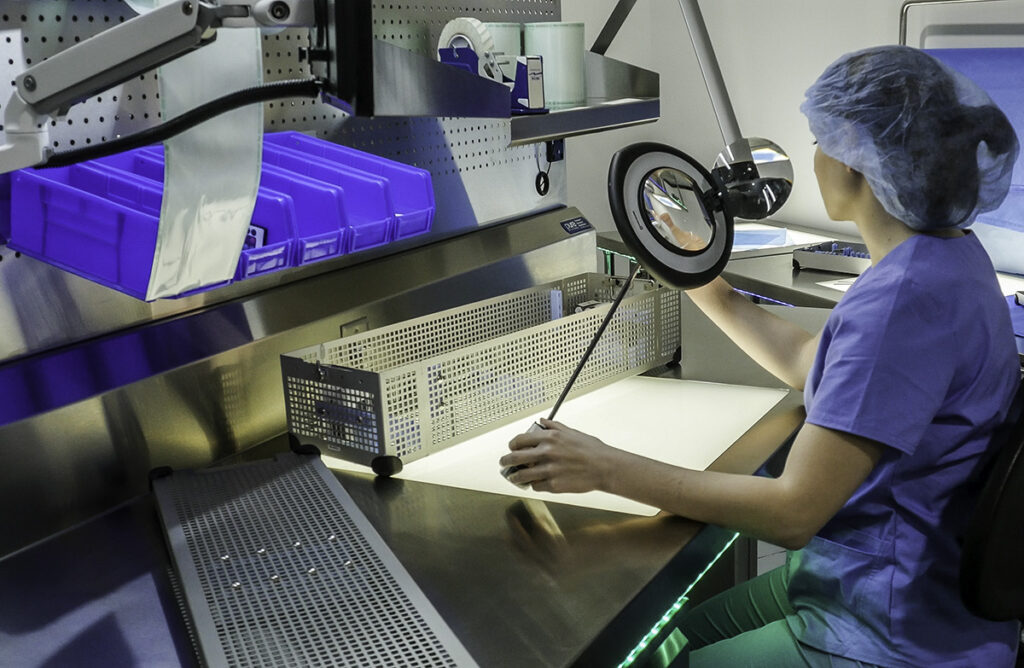
Implementing task lights with magnifiers in your department ensures optimal lighting for fine-detail inspections, reducing the risk of eye strain and improving staff performance. These lights provide focused illumination, helping technicians spot imperfections and defects that might be missed with the naked eye, reducing errors. ANSI/AAMI ST79: 3.3.5.6 and ANSI/AAMI ST91: 4.3.8 provide the necessary lighting and luminosity standards, emphasizing that proper lighting is essential for identifying bioburden, damage, and imperfections, which directly impact outcome quality.

Examples of Professional Initiatives

Improving your department doesn’t always mean making product investments; it may require self-development! Below are a couple considerations to improve professional well-being and development.

Communication

  • Huddles: Start each shift with a quick 10-minute huddle to share updates on equipment maintenance, staffing changes, or reminders about upcoming audits. Use this time to allow team members to ask questions or share concerns. Choose a cadence that works for your department & volumes.
  • Memo Boards: Create a central communication hub with a whiteboard or digital screen in the break room. Divide it into sections such as “Announcements,” “Shout-outs,” and “Important Dates” to highlight key facts.
  • Newsletters: Distribute a monthly electronic newsletter summarizing updates on policies, upcoming training, and personal recognition for outstanding work.

Training/Skills Development

  • In-Services: Partner with vendor reps to conduct regular on-site training sessions for new technologies, robotic instruments, or best practices in instrument reprocessing.
  • Live Workshops: Host quarterly hands-on sessions where technicians can practice advanced techniques, such as proper use of ATP testing for quality assurance or simulated high-level disinfection processes.
  • Continuing Education: Provide your team with online resources for free CE credits, such as the Pure Processing Education Page, or implement monthly training focused on a different ANSI/AAMI standards to keep the team compliant and informed.

Department Morale


  • Holiday Celebrations: Host a potluck during the winter holidays, with time-adjusted events for each shift, to ensure everyone can participate. Decorate the department with festive colors to reflect the season.
  • Staff Recognition: Introduce a “Technician/Nurse of the Month” program where peers nominate teammates who go above and beyond and provide the winner with a small gift.
  • Milestone Achievements: Celebrate service anniversaries with a departmental certificate, a group photo, a personalized thank-you note.

Rounding

  • Action Follow-Up: If a technician raised concerns about decontamination bottlenecks last week, follow up during rounding by showing a tangible fix, like a new cart wash schedule.
  • Pulse Check: Spend time observing the prep-and-pack team during peak hours. Ask them directly about their current challenges or tools they think could make their workflow smoother.
  • Hands-On Assistance: While rounding in decontamination, assist in troubleshooting a piece of malfunctioning equipment or help technicians manage a backup on a tray cart to ensure they don’t feel unsupported.


By combining thoughtful investments in tools and equipment with a proactive focus on team engagement, education, and morale, departments can build the habits which deliver long-term, high-quality results. Transformation doesn’t happen overnight; it’s about consistent effort and celebrating incremental victories along the way.

Start small, stay focused, and use the Practical Roadmap to SPD Success tool to guide your journey. Every step brings your department closer to operational excellence and ensures your team is ready to meet the challenges of tomorrow.

Building Habits of Improvement: SPD Style

“Quality is not an act, it is a habit.” – Aristotle

Quality is a standard measure of achievement and can be determined by a scientifically determined metric that makes something high standard. Habits are a repeatable practice we put into place to improve the quality of our routines, performance, and ultimately, improve quality.

Work fatigue and eventual burnout can arise from unaddressed gaps in our work environment. Sometimes those gaps are a small nuisance that has been festering, like unresolved repairs, or workarounds from a lack of resources. Work fatigue might also be the result of poor habits and a lack of consistent practices and upgrades. Incremental changes and upgrades can have a compounding result (Mereu & Jordan, 2024) that can improve, or hurt, our departments over time related to work fatigue and burnout. Bad habits compound over time, too.

Below we will explore two different types of work areas that can influence how our team interacts with each other and their work. There are many potential gaps which contribute to negative quality outcomes. By identifying these risks, departments can better form habits & improvements to remove them.


Micro-Issues: Wolves in Sheep’s Clothing  

Keeping up with fluctuating volume and demand is part of the daily grind in sterile processing and endoscope reprocessing departments. Gaps in processes can result in strain, inconsistent quality and staff challenges.

  • Automation: This can be automation of processes or reporting. Manual processes can be time-consuming, inconsistent and strenuous on our teams and the entire department. Think of the time dedicated to processes like syringe flushing, or the labor required to manually tally totals at the end of the month for throughput reporting. Manual labor has its time and place. The human aspect of our job is the most crucial, but eliminating manual tasks, where possible, can ease the pressure on staff, and improve engagement and outcomes. Consider the compounding effect on both the tech and quality of our throughput by focusing on manual areas of work.
  • Damage Prevention: Instruments can be both complex and delicate making them susceptible to damage. Ofstead and Associates, in a recent study, indicated the infections were also linked to endoscope with damage and residual (2024). This can lead some technicians to hesitate at the thought of reprocessing specific instruments or specialties for fear of their fragileness and potential harm when not handled and processed appropriately.
  • Ergonomic Fatigue and Injury Prevention: Ergonomics is a continuous source of discussion and consideration. ANSI/AAMI ST79 3.3.6.1.3.& ANSI/AAMI ST91 4.2.1 both address ergonomics as an injury prevention safety measure. Furthermore, 48.02% of 2024 SPD State of the Industry participants indicated that they had experienced an injury on the job ranging from chemical exposure to bodily injury including sprains, strains and fractures. With long hours and laborious tasks, ignorance of ergonomic considerations can not only injure key staff but make retention of new ones difficult. Scrutiny and distrust from administration can be a side effect of a department frequently putting its workers on worker’s compensation leaves. One neglected area compounds into multiple negative effects costing money and time.
  • Inspection Accessories:  ANSI/AAMI ST79: 3.3.5.6 & Annex D &  ANSI/AAMI ST91: 4.3.8 & Annex E provides guidance on the type of lighting, luminosity as well as visual inspection tools for internal inspection of lumened instruments.  Insufficient lighting and a lack of visual inspection tools can lead to missed damage, unidentified bioburden and false security. Much like the risk caused from damage, there is equal concern for undetected imperfections on our processes.


Professional Gaps

Professional development plays an equally influential role in the quality of our outcomes and creating positive habits, or influencing negative ones.

  • Communication: Sterile processing departments often have multiple shifts. It’s easy for announcements, process updates and key changes to become muddled over the course of the day and weeks. Inconsistent communication can lead to disorganized work, confused priorities and non-uniform processes. It’s also a ripe area for distrust to be sown amongst our teams.
  • Training/Skills Development: ANSI/AAMI Standards ST79 & ST 91 both address training and education as a requirement for onboarding and includes recommendation for incremental evaluations. (ANSI/AAMI ST91 6.3 &  ANSI/AAMI ST73 4.3) Furthermore, 52.36% of participants in the 2024 GI Landscape Report  and 45.37% of 2024 SPD State of the Industry survey participants indicated that they lack adequate training and skills development opportunities. Without consistent education and training, our teams can lose touch with best practices, new technology and time to practice improved skills sets.

  • Department Morale: It’s often been said that we spend more time with our work teams than we do with our own families. They see and/or hear of our ups and downs and help us work through high stress situations with us. Our team’s morale can be impacted by both internal or external influences and can greatly impact how they interact with each other and their work. When stress levels are high, motivation and engagement can diminish, leaving our work and quality lacking.
  • Rounding: It’s easy as leaders to unintentionally lose touch with the daily grind in the department. The missed huddle, or the forgotten follow-up that was promised can all contribute to communication and preconceived assumptions of leadership by the team. Improper follow-up and environmental awareness can result in tension, unresolved challenges and extended workarounds that impact the team’s ability to perform their task well.


Workarounds and bad habits are rampant, if you know where to look. Those bad habits compound into more significant issues, if they are left to fester. the focus on habitual improvements starts with the awareness these issues exist and assessing your department’s daily habits. Identifying current practices against desired outcomes and understanding the professional growth of your team can start the process to rectifying bad habits and getting back to a focus on quality outcomes. Never underestimate the power of that one change; it can truly alter the trajectory of your department!


References

  • https://hbr.org/2024/02/the-restorative-power-of-small-habits
  • ANSI/AAMI ST79
  • ANSI/AAMI ST91
  • 2024 SPD State of the Industry Report
  • 2024 GI Landscape Report
  • Cori L. Ofstead, Abigail G. Smart, Larry A. Lamb, and Frank E. Daniels, December 2024
  • Impact of Borescope Inspections on Endoscope Repair Frequency and Costs

Celebrating SP Week Year Round

Each year, sterile processing departments everywhere look forward to a single week, their week; SP Week.

SP Week offers the opportunity for healthcare facilities and their employees to celebrate sterile processing working in the heart of the hospital to ensure patient safety during each and every surgery.It’s difficult work that many don’t have an appreciation for, which is why dedicating a week each year is so important.

But is it really enough?

We didn’t think so! We sat down with Adrienne Hill, Sterile Processing Manager at Penn State Health – St. Joseph, the winner of Pure Processing’s 2024 SP Week photosubmission raffle, to discuss the importance of SP Week, activities, and how to carry a little bit of that SP Week energy into the rest of the year.


The Importance of SP Week

SP Week serves to drive awareness of sterile processing departments and the critical work that gets done within them. “It gets our department out there for people to see”, Hill explained.

This awareness isn’t limited to sterile processing-adjacent departments. Everyone, from doctors to surgical techs to nurses, and even members of senior leadership, celebrate the sterile processing

team during SP Week. This is important not only because SPD teams deserve to be acknowledged, but also because other areas of the hospital need to understand why sterile processing is such a critical part of operations.


SP Week Activities

It’s one thing to celebrate and verbally express appreciation, but it’s also important to show teams their appreciation through actions. This can come in a variety of forms, such potlucks, organized lunches, vendor visits and more.

But it’s not all food! SP Week serves as an excellent time to set aside for things like education, team bonding, and more than a little bit of fun. Hill explained a unique activity they opened up to anyone in the hospital to try out:

“We put together a mock heavily soiled case cart that was a mess. We actually shaved up red paper to simulate blood and we sprayed the pre-cleanse all over the inside of the cart. Then we had a piece of paper next to it that asked participants to name the six things that are wrong with this case cart and what is the right way. If they got it right, then they would win a prize.”

This activity, open to other departments, highlighted just how much sterile processing teams need to know and how critical their attention to detail is. It was safe to say that participants from outside of SPD had a tough time.

A few other activities SPD teams could consider doing in their departments include:

  • Wrap contests
  • Word searches
  • “About me” cards to help teams get to know each other better
  • Live or on-demand education sessions from an educator or vendor
  • Dedicated times for technicians to complete CE-accredited content
  • Scavenger hunts
  • For more ideas, check in with vendors (like Pure Processing) for pre-made activities your team can take advantage of!

Managers can also take additional steps to show their team how much they appreciate them, as Hill outlined:

“I wrote thank you cards to everybody, the team gets goodies from vendors, we put together little gift bags. I bought everybody little notebooks that they can write in, and inside of them it said: ‘Always know what you do matters.’”


SP Week All Year

It’s clear that SPD teams appreciate having a week dedicated to their work and profession each year, but supervisors, managers, directors and other leaders can take steps to make teams feel appreciated all year long. Here are some of the ideas discussed:

  • Make the department festive for holidays
  • Schedule monthly potlucks
  • Encourage socialization during downtime to help teams get to know each other better
  • Use daily huddles to acknowledge your team’s good performance
  • Encourage feedback from your team so they know they’re heard
  • Find fun ways to recognize individuals for going above and beyond
  • Surprise SP Week activities: every now and then, surprise your team with the kind of activity that normally only happens during SP Week, like wrap contests or scavenger hunts.

These steps don’t always need to be time consuming, either. Hill explained that it’s often the little things that let people know they’re seen:

“You know, even just keeping the break room stocked with things like paper plates, or coffee, or snacks; just the small things that they shouldn’t have to do or worry about, especially for the off-shifts that don’t have a cafeteria they can go to. Maybe writing those thank you notes a little more often. Call out birthdays and let people know that you care about them.”

Hill also added, “Try to find ways to spend time together outside of the department and get to know each other better. I know people have lives outside of the department and some aren’t interested in spending personal time with coworkers, but for those that are, try to help make it happen.”


Conclusion

We all look forward to SP Week every year. On the vendor side, we love celebrating the sterile processing teams keeping everyone safe and finding new ways to demonstrate our appreciation. For those in departments, doing the work, there’s a ton of reasons to celebrate SP Week.

As Hill explained, however, that sense of appreciation and excitement doesn’t need to be limited to a single week each year. Sure, it can’t be lunches and activities every day, but the things that make SP Week special, those moments of appreciation, bonding, and fun, can happen anytime of the year. You just need to start!

Interested in exploring other ways to show your team appreciation? Check out Appreciation: The Key to Retention

Endoscope Reprocessing: 3 Reasons Your Endoscope Manual Cleaning Practices Are Failing

The complexity and advancements in flexible endoscopes designs have expanded our preventative and diagnostic care in healthcare today, but it hasn’t been without challenges and strain, especially on our sterile processing and endoscope reprocessing teams.

Ofstead & Associates consolidated and released summarized data this past quarter that showed yet another increase in MAUDE database reporting on flexible endoscope adverse events in 2024 Q31. Findings also suggest that flexible endoscopes are ranked as the highest risk factor for healthcare associated infections compared to other semi-critical medical devices3 (Benowitz, 2020).

As the professionals who are responsible for reprocessing flexible endoscopes, it is crucial to understand the “why”: what are the challenges and reasons failures happen in our reprocessing cycle? Understanding these challenges and identifying opportunities to address them positively supports our teams and improves preventative and diagnostic care in our healthcare facilities.


Reason #1: Obscured or Overlooked Damage

Flexible endoscopes, just like any other medical device, are subject to generalized wear and tear. Long working channels are a challenge to not only clean but also inspect for quality cleaning measures. Bends, scratches and other imperfections within the channel wall can lend to biofilm formation; undetected bioburden can often be passed over with just a traditional bristled brush.

Consequently, we learn that brush bristles or elastomer discs alone cannot effectively clean and adapt to each channel condition. One material over the other is also a contributor to effectiveness. A validation study has shown that a combination of bristles and squeegee methods provides a more comprehensive and repeatable clean in flexible endoscope channels.

Additionally, what can appear as a small “imperfection” can prove to be costly, from loose parts and cracks to damaged seals, each one has the potential to harbor bacterial, viral or fungal growth resulting in cross contamination and pathogenic transmission.


Reason #2: Biofilm

Biofilm can formulate within minutes under the right conditions. Biofilm poses a risk not only patient safety, but also the ability to effectively clean and disinfect our medical devices. Biofilms are directly linked to hospital acquired infections (HAI) and surgical site infections (SSI) with originating sources that include medical devices4 (Milliard et al, 2023).

It has also been long understood that despite close adherence to endoscope manufacturer instructions for use (MIFU), there are still risks of biofilm and pathogen transmission relating to outbreak4 (Benowitz, 2020). This lends to the fact that despite improved efforts to reduce complications, there is still gaps in the process to consider.

Reason #3: Education, Competency & Situational Awareness

Education has many arms in medical device reprocessing, some of which include:

  • Standards-based reprocessing practices
  • Flexible endoscopy knowledge
    • Scope anatomy
    • Scope functions & use
    • Manufacturer IFU
  • Reprocessing equipment & supply knowledge
  • Outbreak awareness, study results and reporting

Awareness, competency and evaluation not only justify the need for robust reprocessing, but also the empowerment of our professionals to understand the weight and impact of their role. Providing resources to extend their knowledge and awareness may improve performance, but truesustainable advancements come in a two-part form that also includes resources and tools necessary to achieve quality outcomes.


Reprocessing failures are being identified as more than a failure to comply with all steps in a process. Failures in the manual cleaning process can lend to the survival of pathogens even after the disinfection of flexible endoscopes5 (Kenters, 2015). There are many contributing factors including damage, drug-resistant biofilm, and inadequate instructions for use.

As we become aware of the larger picture and the full scope (pun intended) of what it takes to safely and effectively reprocess endoscopes, it is our responsibility to perform the due diligence to improve and correct practices for the safety of our teams and our patients.


Interested in digging further into endoscope manual cleaning? Check out:  Endoscope Manual Cleaning: The Challenges that Impact Our Effectiveness


References:

  1. https://www.linkedin.com/company/ofstead-&-associates-inc.?trk=public_post_embed_feed-actor-image
  2. Ofstead CL, Buro BL, Hopkins KM, Eiland JE, Wetzler HP, Lichtenstein DR. Duodenoscope-associated infection prevention: A call for evidence-based decision making. Endosc Int Open. 2020 Dec;8(12):E1769-E1781. doi: 10.1055/a-1264-7173. Epub 2020 Nov 17. PMID: 33269310; PMCID: PMC7671768.
  3. Benowitz I, Moulton-Meissner HA, Epstein L, Arduino MJ. The Centers for Disease Control and Prevention Guidance on Flexible Gastrointestinal Endoscopes: Lessons Learned from Outbreaks, Infection Control. Gastrointest Endosc Clin N Am. 2020 Oct;30(4):723-733. doi: 10.1016/j.giec.2020.06.009. Epub 2020 Aug 1. PMID: 32891228; PMCID: PMC7962740.
  4. Maillard JY, Centeleghe I. How biofilm changes our understanding of cleaning and disinfection. Antimicrob Resist Infect Control. 2023 Sep 7;12(1):95. doi: 10.1186/s13756-023-01290-4. PMID: 37679831; PMCID: PMC10483709.
  5. Kenters N, Huijskens EG, Meier C, Voss A. Infectious diseases linked to cross-contamination of flexible endoscopes. Endosc Int Open. 2015 Aug;3(4):E259-65. doi: 10.1055/s-0034-1392099. PMID: 26355428; PMCID: PMC4554517.
  6. https://www.linkedin.com/company/ofstead-&-associates-inc.?trk=public_post_embed_feed-actor-image

4 Process Trends in GI and SPD & What You Need to Know

The one thing we can always count on working in reprocessing departments? Something is changing and evolving. Standards are amended, new studies are published, technical information reports (TIRs) transition to standards among many other changes and recommendations that keep our world in a state of constant development.

There are several improvement recommendations that create a more robust process in sterile processing and endoscope reprocessing from decontamination to prep & pack. Efficiency and safety are at the crux of medical device reprocessing updates and expansions. However, these changes are not always easily implemented and take consideration when it comes to space, location and cost prioritization.

Reprocessing steps are becoming more nuanced and regulated as we become more aware of gaps and the growing complexity of reusable medical devices. There are several updates in the industry now that require formal implementations and workflow evaluations.

Extended soak times

Extended soak times occur when flexible endoscopes cannot be reprocessed within the recommended 60-minute time period post procedure. However, this can also go for some surgical instruments whose manufacturer IFU’s have a soak time longer than the chemistries contact range.

“When there is a delay and/or failure to perform point of use treatment, the endoscope should be processed using delayed processing protocols described in the device manufacturer’s IFU.”

ANSI/AAMI ST91:2021 7.2.2

These extended soak times are necessary for appropriate and safe reprocessing but can lead to backlogged work and slower throughput times. These soak times may require a designated area to complete the steps so as not to disrupt other priorities.

Visual Inspection: Borescopes & Cleaning Verification Test

Channels and lumens commonly appear in SPD and endoscopy departments and increased visibility measures are required to full inspect and verify the instruments cleanliness before high-level disinfection (HLD) or sterilization.

Cori Ofstead & Associates conducted a compelling research study that brought awareness and real-life application to the importance of visual inspection of channeled instruments. (Ofstead, et al, 2024) Following recommendations and IFUs doesn’t always guarantee a patient-ready product. Additionally, more detailed inspection such as borescope and cleaning verification highlights the quality of practices and outcomes, thereby shedding light on potential process gaps.

Adding this measure of inspection to your workflow also brings up questions about location and feasibility. With this added step, keeping in mind the need to reduce cross- and even re-contamination plays a role in where and how this detailed inspection takes place.

Borescopes are also incredibly delicate tools. Implementing them into workflows should consider spaces for storage, effective table space for coiling and staging instruments without smashing the borescope, and places for mounting IT and monitors.

Cleaning verification provides a pass/fail indicator to our cleaning processes and can include test such as ATP, protein, carbohydrates and endotoxin among others. (ANSI/AAMI ST79 Annex D & ANSI/AAMI ST91 Annex F) Each test provides scientific bench markers to determine cleaning efficacy and is making it’s way into standardizing processing initiatives.

Cleaning verification (borescope and marker testing) enhances department’s awareness and provides foundational benchmarks for appropriate and safe cleaning practices.

Tray Configuration

Tray configurations include a handful of checkboxes to maintain compliance. These include IFU compatibility between instruments and sterile barriers, IFU compatibility across instruments required in the set, and tray weight (ANSI/AAMI ST79 8.2 & 13.) The recommended maximum tray weight of 25lbs includes the combined weight of the instruments and sterile barrier. Some rigid container manufacturers also have validated weight limits included in their IFUs.

Tray weights not only ensure standardized weights to reduce employee strain and injury but when tracked can also help verify to sterilization load weight compliance.

“Instrument sets, including the sterile barrier system, should weight no more than 11 kg (25lb) (ANSI/AAMI ST77)”

ANSI/AAMI ST79:2017 8.2(j

Consideration should also be given to the load requirements specified by the manufacturer (e.g., number of devices, load weight)

ANSI/AAMI ST79:2017 13.9.1

Electronic Record Keeping

Digital record keeping continues to expand as technology and software capabilities increase. ANSI/AAMI ST79 13.3 both provide recommendations on what information needs to be maintained and traceable through each phase of reprocessing. Record keeping, especially at automated reprocessing machines, may require space for monitors, scanners and incubators to consolidate the process.

Electrical power is also a serious consideration. Departments may be inadequately equipped to handle additional electrical requirements. Power cords or delicate IT accessories also need protection from regular damage.

The process critical parameters (time and temperature) provided on the recording chart, printer, or tape should be reviewed, signed, and dated by the operator to indicate an acceptable cycle. For each sterilization cycle, the following information should be recorded:

      1. a) the load number;
      2. b) the specific contents of the lot or load, including quantity, department, and a specific description of the items

(e.g., towel packs, type/name of instrument sets);

      1. c) the exposure time and temperature, if not provided on the sterilizer recording chart;
      2. d) operator identification;
      3. e) the results of biological testing, if applicable;
      4. f) the results of Bowie-Dick testing, if applicable;
      5. g) the response of the CI placed in the PCD, if applicable; and
      6. h) any reports of inconclusive or nonresponsive CIs found later in the processed devices (see also 13.5.2.2)

ANSI/AAMIST79:2017 13.3.3

Prioritizing process implementation and placement not only equips the department to maintain compliance but also formalizes their processes and organization to ensure steps are not overlooked. Steps like optimized inspection and tray weight management among others contribute to overall patient safety and quality product throughput.

References:

Ofstead, et al, (2024) Beyond Endoscopes: Pilot Study of survival instrument Lumen Inspection https://array.aami.org/doi/10.2345/0899-8205-58.1.25

ANSI/AAMI ST91:2021

ANSI/AAMI ST79: 2017