2025 GI Reprocessing Landscape Report – Executive Summary

What trends are GI professionals seeing in 2025, and what makes a GI reprocessing department thrive-or struggle? These are the central questions Pure Processing set out to answer in our 2025 GI Reprocessing Landscape Survey. With 406 participants across the U.S. and beyond, the 2025 GI Reprocessing Landscape Report offers the most comprehensive look yet at the challenges, improvements, and realities facing GI teams today.

What We Learned

Departmental Operations Are Improving, But Not Evenly

Ratings for compliance, leadership, and technology all improved compared to 2024 responses. The most notable gain? Compliance, jumping from 6.8 to 7.5 out of 10, suggests that departments are placing greater focus on standard adherence and audits.

However, ergonomics and working comfort, despite a slight increase, remains among the lowest-rated areas, pointing to ongoing burnout and strenuous physical demands.


Culture, Collaboration, and Leadership Define Exceptional Teams

When asked what makes a GI reprocessing department truly exceptional, five themes stood out:

  • Strong teamwork and collaboration
  • A positive culture and morale
  • Access to proper tools and equipment
  • Ongoing training and education
  • Supportive and responsive leadership

An emphasis on soft skills and leadership competencies can be the difference between adequate departments, and great ones.


Why People Are Leaving

Beyond compensation, the leading cause of turnover is working conditions, including stress, burnout, and poor ergonomics. This was followed by lack of career advancement, recognition, and management issues. Retention isn’t just about pay. It’s about meaningful work, growth opportunities, and feeling valued.


The Biggest Challenges in 2025

Gastroenterology departments cited a couple challenges taking precedent this year:

  • Staying current with compliance and IFUs
  • Persistent staffing shortages
  • Aging scopes and equipment
  • Difficulty implementing tools like borescopes and cleaning verification

Departments need to be strategic, not reactive, especially as device complexity continues to grow.


What the Data Tells Us

  1. More experience = a more critical eye. The longer someone’s been in GI, the lower their department’s ratings tend to be. That’s not cynicism – it’s deeper insight into what great looks like, and increased expectations.
  2. Certification correlates with higher satisfaction. Certified professionals consistently rate their departments more favorably across multiple domains.
  3. Strong leadership = stronger culture. When leadership scores are high, so are culture and team morale.


Ready to Dive Deeper?

From departmental ratings to training to team dynamics, compliance trends, and retention strategies, the full 2025 GI Reprocessing Landscape Report is packed with data-driven insights to help you elevate your department.


Download the full report later this month and take the first step toward building a safer, stronger, and more sustainable GI reprocessing environment.

Download the 2024 GI Reprocessing Landscape Report here ahead of 2025’s being published!

Understanding the Ripple Effect: How OR Changes Impact SPD

In our previous blog, “How the SPD Drives OR Goals: The Hidden Engine of Success,” we explored the crucial role SPD plays in supporting OR efficiency and patient outcomes.

Operating rooms are fast-paced environments that constantly evolve. Some changes occur gradually over time, while others happen minute by minute, even within the same procedure. What may seem like a simple adjustment in the OR can create a significant ripple effect in the sterile processing department.

Understanding how a single scenario can impact SPD paints a clearer picture of the department’s inner workings and highlights its influence on OR efficiency and patient outcomes.

Cause: Surgical Procedure Evolution

As surgical procedures evolve, new technologies promise safer, more consistent outcomes and may even reduce surgery or recovery times. Surgeons train in new techniques, OR staff master the intricacies of new instrumentation, and together they create a safer environment for patients.

Effect: Increased Complexity of Instrument Reprocessing

New instruments often bring reprocessing challenges due to their complex designs. Instruments may require additional steps, disassembly, longer soak times, ultrasonic cycles, or specialized sterilization methods — all contributing to longer reprocessing turnaround times.

Education plays a critical role in efficient and safe reprocessing. Understanding what the surgical device does and how it’s used is just as important as knowing the reprocessing requirements outlined in the IFU. Together, these elements form a comprehensive knowledge base that empowers reprocessing professionals to make educated, efficient decisions in their daily tasks.

As your OR continues to invest in new technologies, consider what investments need to be made in sterile processing as well. A review of the new IFU with your sterile processing leader might reveal some potential increases in throughput time or increases in reprocessing costs. With a proactive plan, on-time delivery to the OR doesn’t have to suffer.


Cause: Increased Surgery Volumes

Surgical volumes continue to rise, influenced by factors like growing patient populations, surgical advancements, and improved efficiency. According to a study published in the Journal of Surgical Research, average orthopedic surgical volume increased by 38.04% from January to December in 2016–2019, while overall ambulatory surgery centers volume increased by 19.24% within the same timeframe.1

Effect: Strain on Point-of-Use Care and Instrument Reprocessing

As surgical volumes climb, the pressure to maintain pace intensifies. Unfortunately, this can lead to cut corners, particularly during point-of-use care — the crucial first step of the reprocessing cycle. Inadequate pre-treatment of instruments post-procedure can result in bio-burden drying onto devices, making cleaning exponentially harder downstream. This not only prolongs reprocessing but also increases the risk of compromised instrument cleanliness.

One solution to improve point-of-use care is the implementation of automated flushing systems. These systems help ensure that lumens and other complex instruments receive consistent, thorough flushing immediately after use, preventing bio-burden from drying and making downstream cleaning more effective. By standardizing this crucial first step, automated flushing systems can reduce variability, enhance compliance, and minimize delays.

Cause: Instrument Changes Mid-Procedure

Instrument needs can shift at any point before or during surgery. Whether it’s a full system change or a one-off tray request, these changes can occur across multiple ORs throughout the day. As OR staff, you need the instruments changed quickly for the outcome of the procedure.

Effect: Bottlenecks and Reprioritization

How your sterile processing is organized can make these pivots easy and proactive, or difficult and near impossible. In an ideal scenario, sterile processing works a day ahead, preparing instruments for upcoming cases and replenishing storage shelves. However, urgent calls for add-on cases, emergency procedures, or specialized trays can force SPD teams to rapidly reprioritize, creating bottlenecks. Instruments set aside to address immediate needs may delay routine reprocessing, resulting in longer turnaround times and a backlog of instruments.

One strategy to help alleviate these bottlenecks is the use of specialized sterile processing workstations. These workstations provide organized, dedicated spaces for technicians to efficiently start and stop set processing as priorities shift throughout the day. With supplies readily accessible and tools designed to handle a variety of instruments, these workstations enable staff to reprioritize tasks quickly without losing track of progress. This flexibility helps maintain workflow efficiency, even when unexpected instrument needs arise.

Effective workstation design also allows for more effective use of space. Any square of real estate in sterile processing is precious; that saved room could be used for staging pre-sterilized instrumentation for one-off requests or having more variety available.

Strategies for Improvement

To minimize the impact of these changes and improve efficiency in both the OR and SPD, implementing the right strategies is essential. By focusing on communication, tracking, and training, healthcare facilities can address challenges head-on and create a smoother workflow for both departments. Here are some key strategies for improvement.

  • Rounding: Regular interdisciplinary rounding fosters collaboration and helps identify pain points in the reprocessing workflow.
  • Huddles: Daily huddles ensure alignment on surgical schedules, instrument needs, and any unexpected changes.
  • Instrument Tracking via EHR Integration: Implementing instrument tracking systems integrated with electronic health records (EHR) provides real-time visibility into instrument location and reprocessing status, enhancing efficiency.
  • Updated Pick-Tickets: Frequent requests for specific instrument sets may indicate a need to update preference cards. This ensures the right sets are requested and available as standard requirements for particular procedures and surgeons.
  • Training: Continuous education on new surgical instruments, techniques, and updated IFUs empowers SPD technicians to stay ahead of changes and maintain compliance.

By acknowledging the ripple effect that OR changes have on SPD, healthcare facilities can develop strategies to minimize disruptions, improve efficiency, and ultimately enhance patient outcomes.


Works Cited

Retrospective analysis of trends in surgery volumes between 2016 and 2019 and impact of the insurance deductible: Cross-sectional study – PMC

Thief of Time: Workflow Optimization’s Role in Time Management

In a previous blog Hidden Potential: Lost Time Productivity and Inefficiencies in Fragmented Assembly Processes, we unpack the consequences of lost time when our workflows are fragmented and interrupted.

Knowing the breaks, gaps and bottlenecks in a process reveals the areas where sterile processing leaders can target their improvement planning. It also shows that busy work doesn’t always equate to productive work.

By reducing the number of steps we take, and arranging workflows so that we eliminate any unnecessary foot traffic or disruptions to our reprocessing tasks, we are saving precious time. This gives back seconds and minutes that amount to significant inefficiencies over time.

How can workflows be streamlined at central equipment to eliminate wasted time? It starts by understanding the full potential of your space and equipment. Consider the space and the processes that require technicians time and attention and streamline movements and required supplies to reduce the number of breaks, and time away, from the workstation.

Sterile processing workstations are a great example of multi-functional work areas that can markedly improve time efficiencies.


Improving Through Design

Pegboards

Pegboards free up workspaces by getting otherwise staged equipment off the tabletop to allow for more open space to perform organization, inspection and assembly steps for instrument trays.

Pegboards also create vertical organization of frequently used supplies and inspection equipment, allowing technicians to stay in their working space longer and eliminate “pauses” during inspection and assembly that can lead to missed steps, or forgotten sterility components (hello, missing indicators!)


Heat-Sealer Shelves

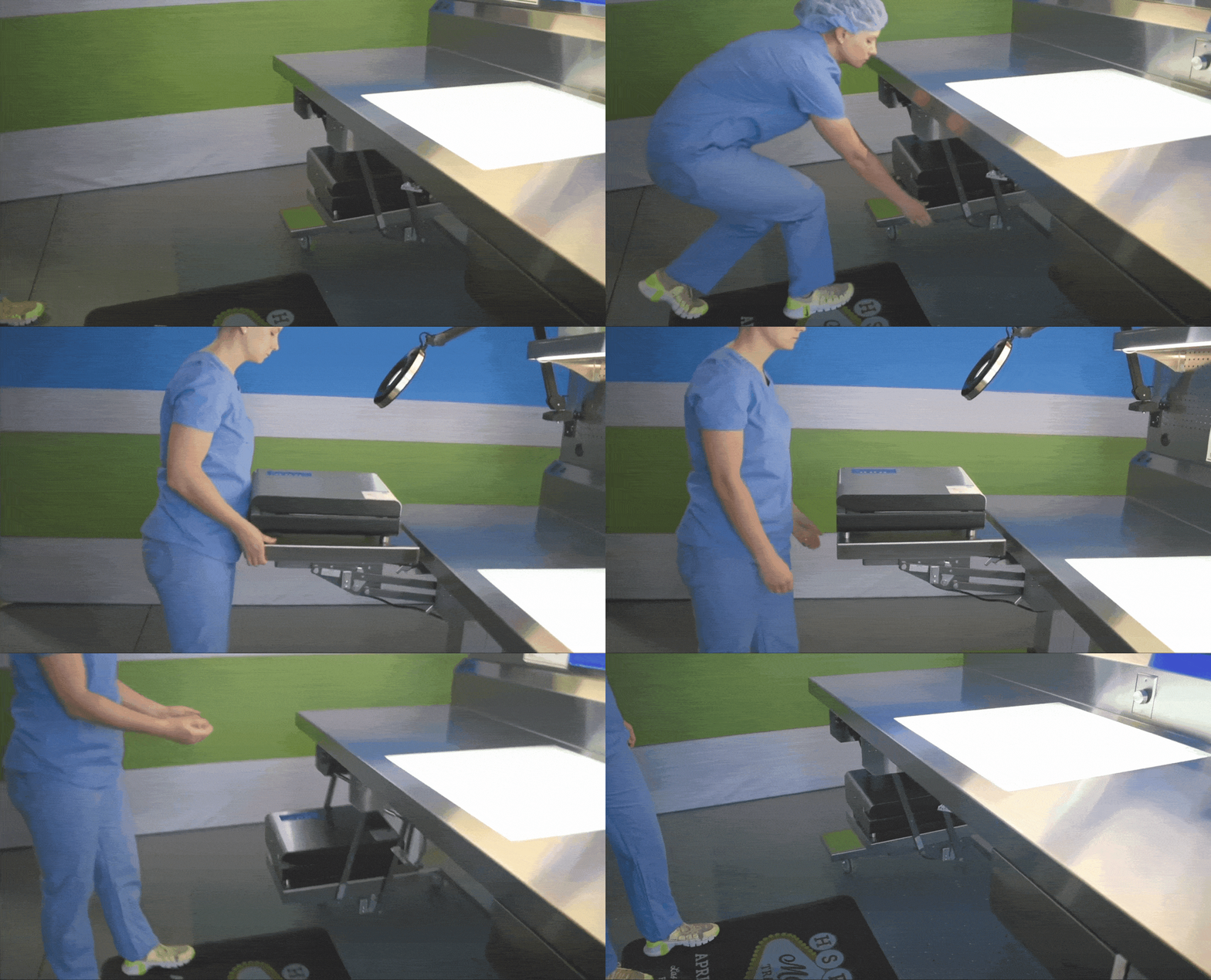
Heat sealers: every department has at least one, and they often require whole working areas dedicated to their use and functionality. However, with stow-away options available, there are now ways to safely and effectively consolidate peel packing preparation into an organized workspace. Real estate on counter tops is finally freed up for packing!


Robotic Peel Pack Pouch Holders

Robotic arms are lengthy and peel packing them can be a cumbersome task. With pre-cut options now available, this now calls for extra storage space in our departments. These boxes often come at the cost of extra room, most of which we don’t already have. Having a designated, off-the-counter storage slot for these supplies makes having them at the workstation a more feasible and efficient process.


Scale Shelves

Tray weight compliance can be an ever-looming concern in fast-paced environments. With inspection and verification going beyond visual cleanliness, having the right equipment in the right spot helps aid in a comprehensive approach to instrument tray accuracy and overall quality.


Visual Inspection

Borescope, magnification, specialized lighting, rulers and more! Each of these tools have a part in the visual inspection process when it comes to instrument cleanliness, instrument accuracy and sterile barrier preparation. Having any of these tools separated from the other will lower completed inspection points while increasing your non-compliance variable. Consider staging all these tools together into comprehensive stations.


Other Foot Traffic Multipliers

There are several reasons for interruptions to our job that we can’t always avoid or prevent. However, there are times when workflows and responsibilities can be adjusted to reduce foot traffic and interruptions for the whole department. We just have to know where to look!


Phone Calls

Young adult female technician is taking call on cell phone in hospital operating room. Team of surgeons are operating on patient in background.

Having a rotating point of contact responsible for the phone calls during the shift can reduce confusion and response times and ensure that anyone not assigned to the phone that day can continue on with their work without interruptions. Instead of having everyone pause to see who answers, one person is responsible for taking the call.


Washer/Sterilizer Loading

Some departments may benefit from having a “floater(s)” position that has a team member become the ‘runner’ for the department, keeping mechanical equipment unloaded to reduce bottlenecking at transition points in the process. Having this assigned responsibility eliminates the guess work and keeps things running seamlessly without constantly interrupting each phase of the process.


Supply Restock

Every workstation will eventually need to be restocked, working this into your daily open and close assignments can help better prep your teams and get them started on the right foot and keep  a steady rhythm for their day.

Whether it’s updating your workstation layout, adding new space-saving accessories or creating point of contacts to specific job functions, each can play a part in influencing our department foot traffic, throughput and ultimately the quality outcomes of our reprocessing practices.


Did some of these ideas get you thinking about how your department’s time is being used? Learn how design efficiencies at the workstation can greatly improve productivity for you and your team!

How The SPD Drives OR Goals: The Hidden Engine of Success

Every successful surgery begins long before the patient enters the operating room. Behind the scenes, the sterile processing department works tirelessly to ensure that every instrument is clean,

A sterile processing technician holding a tray of surgical instruments over a decontamination sink.

functional, and ready for use. Without an efficient SPD, even the most skilled surgical team can face delays, complications, or safety risks. The truth is simple: a well-run SPD is the backbone of a high-performing OR.

The importance of this collaboration cannot be overstated. As highlighted in Infection Control Today, “SPD and OR professionals must work together as a well-oiled machine to ensure that surgical instruments are cleaned, sterilized, and available when needed1. Without this partnership, inefficiencies and miscommunications can lead to severe consequences for surgical teams and patient outcomes.

The Connection Between SPD and OR Success

OR directors and managers rely on sterile processing to deliver sterile, functional instruments in a timely manner. Any inefficiencies in reprocessing can lead to delayed procedures, increased costs, and compromised patient care. When the SPD run smoothly, surgical teams can count on having the right instruments at the right time, ensuring optimal efficiency and minimizing last-minute disruptions.

For SPD leaders, keeping up with OR demands while adhering to strict compliance and quality standards is a constant challenge. Without the right processes and tools, meeting OR expectations can become overwhelming, leading to bottlenecks and inefficiencies that ripple throughout the hospital.

SPD departments not only support the OR but also serve multiple other departments across the hospital. Often, SPD teams are juggling priorities and reprocessing needs for various services throughout the day, requiring seamless coordination and flexible workflows to ensure all departments receive the instruments they need when they need them.

Common SPD Challenges Impacting OR Efficiency

  1. Reprocessing Bottlenecks: When sterile processing lacks the right workflows or equipment, instrument turnaround times slow down, delaying procedures and creating scheduling conflicts in the OR. Additionally, improper point-of-use (POU) treatment can exacerbate these bottlenecks. If instruments are not properly cleaned or prepped at the point of use, residual bioburden can harden and complicate the cleaning process during reprocessing, ultimately lengthening turnaround times. According to AORN, effective POU care, such as the use of cleaning solutions and proper handling, can significantly reduce contamination and improve efficiency in the SPD process. 2
  1. Instrument Availability Issues: Missing, damaged, or improperly reprocessed instruments can lead to last-minute scrambles, increasing stress for surgical teams and potentially compromising patient safety.
  2. Communication Gaps: Ineffective coordination between SPD and OR teams can result in miscommunications about instrument needs, reprocessing priorities, and surgical case requirements.

Strengthening Collaboration Between SPD and OR Teams

To bridge these gaps and improve surgical outcomes, SPD and OR teams must work together to enhance workflow efficiency, compliance, and communication. Here are some key strategies:

  • Implement Streamlined Workflows: Optimizing SPD processes ensures instruments are reprocessed efficiently and accurately, minimizing delays and improving OR readiness.
  • Enhance Quality Assurance Measures: Ensuring thorough instrument inspection and testing before they reach the OR helps prevent disruptions and maintains surgical precision.
  • Invest in Tools that Support Compliance and Efficiency: Ergonomic workstations, inspection stations, and advanced reprocessing solutions can help sterile processing teams manage workload demands while maintaining adherence to industry standards.
  • Improve Cross-Department Communication: Regular meetings, shared tracking systems, and clear protocols for urgent requests help SPD and OR teams stay aligned on priorities and expectations.


Supporting OR Goals Through Improved SPD Processes

To meet the evolving needs of modern surgical teams, sterile processing departments benefit from solutions that enhance efficiency, ergonomics, and compliance.


Optimizing Workstations for Productivity & Technician Well-beingA SPD technician working at a sterile processing workstation

Sterile processing workstations designed to improve workflow and reduce technician strain allows sterile processing to work more effectively, ensuring instruments are processed accurately and without delays. Adjustable and well-organized workspaces contribute to technician comfort and efficiency, supporting a high-functioning reprocessing department. This reduces fatigue and the risk of errors, directly benefiting OR readiness.


Ensuring Safe Handling with Weight Compliance Solutions

Maintaining instrument trays within weight compliance guidelines supports safer handling for both SPD and OR teams. Mobile solutions that allow for efficient weighing and tracking help A sterile processing technician weighing a tray on a mobile scale cartdepartments optimize instrument sets, reducing excessive weight and improving overall workflow. By ensuring trays meet industry standards, sterile processing helps OR teams handle instruments safely and efficiently, preventing unnecessary strain or injuries.

Beyond ergonomics, the 25-pound weight limit also plays a crucial role in sterilization effectiveness and drying time. According to the Association for the Advancement of Medical Instrumentation (AAMI) standard ANSI/AAMI ST77:2006, excessive weight can compromise sterilization and drying, potentially delaying instrument readiness. This is particularly important given the OR’s push for rapid turnover. When trays exceed the 25-pound threshold, they may take longer to dry, affecting SPD’s ability to meet immediate-use steam sterilization (IUSS) needs and impacting overall surgical efficiency.3

By adhering to weight limits, departments not only improve safety but also ensure that trays are properly sterilized, dried, and ready for use, ultimately enhancing both compliance and operational flow.


Enhancing Quality Assurance with Inspection Tools

Proper inspection and visualization tools ensure only clean, functional instruments are sent to the OR, preventing disruptions caused by damaged or incomplete sets. High-quality inspection stations A sterile processing technician inspecting a flexible scope with a borescopecontribute to patient safety by ensuring compliance with reprocessing standards and reducing the risk of surgical delays. Investing in advanced visualization and magnification tools allows SPD technicians to identify defects and bioburden before instruments reach the OR, maintaining the highest level of quality.


Protecting Delicate Instruments During Reprocessing

Sterile processing requires careful handling to prevent damage to surgical instruments. Protective liners and soft-surface solutions help sterile teams safely manage delicate tools, reducing the risk of breakage or malfunction that could lead to last-minute OR shortages. Sending instruments out for repair not only reduces an OR’s available inventory but also increases department budget spend on repairs. By implementing best practices for safe instrument handling, SPD helps minimize repair needs, keeping costs down while ensuring that every surgical procedure starts with fully functional, high-quality tools.


Streamlining Reprocessing with Automated Flushing

Automated flushing systems ensure consistent, thorough lumen flushing, minimizing the risk of biofilm buildup and preventing delays due to incomplete instrument cleaning. By standardizing the flushing process, SPD can reduce human error and increase efficiency.


Ensuring Accurate Reprocessing with Timing Systems

Reliable timing systems help SPD track soaking and cleaning durations, ensuring instruments are reprocessed according to manufacturer guidelines and best practices. These tools promote accountability by preventing early removal or extended soaking of instruments, reducing the risk of OR delays and safeguarding patient outcomes.


A strong SPD is the backbone of OR success. By optimizing sterile processing workflows, healthcare facilities can ensure a seamless surgical experience, from preparation to procedure completion.


Works Cited

  1. “The Importance of SPD and OR Working Together.” Infection Control Today. https://www.infectioncontroltoday.com/view/importance-spd-and-or-working-together.
  2. “Why Do We Perform Point-of-Use Instrument Care?” AORN, https://www.aorn.org/article/why-do-we-perform-point-of-use-instrument-care.
  3. ANSI/AAMI ST77:2006

The Weight of Standardization: The Goal, The Change and The Process

Standardization. A word widely used in healthcare today to define the goal of consistent and reliable care across the healthcare industry. Having standardized processes, equipment and workflows can lead to greater efficiencies, fewer questions regarding procedures and can open up avenues for “cross-training” of staff to fill in for staffing variances across departments and system wide facilities.

Hospitals go through accreditation processes such as Joint Commission or Nursing Magnet designations to showcase the importance and accountability towards standardized, high-quality care. Sterile processing department’s across the United States reference standards and guidelines, such as ANSI/AAMI and AORN, or manufacturer instructions for use (IFUs) to ensure they are complying with current standard practices and processes to achieve the appropriate and safe outcomes our patients expect.

However, standardization hasn’t come without its fair share of scrutiny and concern including the debate that it can create transactional experiences, discourage autonomy in personalized care and A decontamination technician flushing a flexible endoscope with a syringepotentially lead to adverse outcomes as a result. (Sinsky, et al 2021) There are pitfalls and imperfections within any mode of practice, and humans are at risk of falling into a rhythmic, box checking mode. At the core, a strong standardization program is intended to “create efficiencies that generate the additional time needed for personalized care.” (Sinsky, et al 2021)

  • For example, flushing with syringes can be a standardized approach to manual cleaning. However, this practice has several variabilities that lead to inconsistent outcomes and approaches including: No user does it the same, and sometimes the same user can do it differently at the start of their day as opposed to the end of the day when fatigue sets in.
  • Syringes come in varying sizes
  • Both volume and pressure can’t be finely controlled by technicians, especially in a fast-paced environment

Determining what, how and when in standardization can be a tricky endeavor to navigate. A creative way to ensure that our standardization leads to greater efficiency and opens doors to more personalized approaches can be done by working your considerations backwards. Starting with what you want your team to achieve and tracking back to the place of improvement can help determine action items, and account for needed flexibility to ensure accurate and impactful quality of care.


The Goal

Goals are built based on several scenarios or situations. This measure for improvement will originate from things like new standards, identified gaps in practices, or new trends that prove the need for added or updated quality assurance measures.

ANSI/AAMI ST79: 4.3.1 addresses education and standardized work to protect reprocessing professionals from potential hazards, ensures the appropriate education and training are presented to each person, and sets the expectation for safe and appropriate medical device reprocessing.

Education, training, and standardized work practices decrease the risk of operator error during reprocessing and help ensure that personnel are conversant with the latest data and techniques. Education and training are an important aspect of any program intended to protect employees from a potential safety hazard. Without it, the employee might not recognize unsafe conditions or work practices and might not know how, when, or why to employ protective measures. The health care organization’s policies and procedures are a necessary part of any education and training program, and all personnel should be familiar with and adhere to these policies and procedures. Documentation of education and training is required by accrediting agencies.”

The goal is the desired outcome, such as a determined metric (ie. X number of trays sterilized per day), percentage of accuracy (X% reduction in bioburden findings) or a process upgrade, such as a move from a manual process such as manual flushing, to an automated flushing device.

Setting goals without understanding the nuance of your teams, processes, volumes and current procedures can lead to slow implementation, poor buy-in or work arounds that can impact time and efficiency, at times making more work where the goal was to reduce it.

The Change

Once the goal is determined, it positions change leaders to understand the scope of impact by looking at the reprocessing cycle from start to finish to understand where and what parts of the process will change.

Implementing standardized practices often results in adjusted workflows beyond the single step or process point, or triggers a change in routines, sometimes in start or close-of day routines. For example, if you were to convert to an automated flushing or automated dosing system, it would lead to incremental testing to ensure functionality, which needs to be accounted for in the daily tasks and assignments.

Limiting the view of the goal into a singular process can lead to oversight of time allocation and necessary resources that are required properly integrate standardized processes, losing the opportunity to truly capitalize on its full benefits.

Considering the changes required and being upfront about the adjustments in responsibility are key objectives to address during initial considerations and matching the goal with the proposed standardized practice or product. When these objectives are not analyzed and reviewed against the larger picture of reprocessing as a whole, it can lead to work arounds or gaps either at the front and proceeding steps to follow, resulting in a loss of effectiveness.

The Process

Understanding the goal and the impact it has on the whole of a process from start to finish can pinpoint how to implement the proposed standardization and best prepare for the upcoming changes. This can include understanding learning curves, new resources that will be made available and understanding how it will change the steps in the process.

Processes can look different. For automated flushing, the steps go from individual, single port flushing, to sorting and hooking up multiple lumens and starting the flushing equipment for a pre-determined amount of time and fluid volume. This now changes what happens with the time that was once committed the syringing process.

  • What are some new ways to utilize the time originally spent flushing?
  • How does the daily maintenance impact the start of your mornings?
  • Is there a cost savings? If so, what other opportunities can now be considered with the budget adjustment?

These questions are not punitive, but an opportunity to consider the other side of efficiency which is the additional time and space granted to expand the benefits of standardization.

Standardization, when done correctly, can create autonomy and a personal touch that healthcare calls for where it is most needed. Standardizing work can set appropriate expectations and create opportunities to focus our time, development and energy into the nuanced tasks that require a personal touch and flexibility. Together standardization and personalized care can lead to a more robust quality management system within sterile processing and endoscope reprocessing departments, making processes more intentional and reliable.

Interested in other resources to help you improve your department? Check these out resources out!


Education:

The Cost of Cutting Corners Blog: Earn 0.5 Free CE

Luminosity Requirements in Instrument Reprocessing Blog: Earn 0.5 Free CE

Additional Resources:

Ergonomic Audit Checklist

Luminosity Compliance Checklist

References

Sinsky CA, Bavafa H, Roberts RG, Beasley JW. Standardization vs Customization: Finding the Right Balance. Ann Fam Med. 2021 Mar-Apr;19(2):171-177. doi: 10.1370/afm.2654. PMID: 33685879; PMCID: PMC7939702.ANSI/AAMI ST79: 2017

How to Mitigate Productivity Concerns Caused by Inefficient Manual Processes in Decontamination

Decontamination is a vital and labor-intensive stage in sterile processing departments. While it serves as the first step toward sterilization and safe surgical outcomes, the high volume of tasks involved means that inefficiencies can significantly bog down productivity. Managers often pinpoint decontamination as the key area for productivity boosts, but how can they identify and implement effective solutions? 

In our previous blog, we discussed the productivity pitfalls posed by manual processes in decontamination, including manual cleaning, the manual handling of chemistries, and unassisted visual inspection. These processes contribute to significant productivity drains—slow speeds, inconsistent results, and human error. But what if there were ways to automate and optimize these areas to ensure greater efficiency, consistency, and, ultimately, better patient outcomes? 

1.Ergonomics

Enhance Technician Comfort with Height-Adjustable Sinks

Decontamination sinks that are not height-adjustable force technicians to work in uncomfortable postures, leading to strain and fatigue over long shifts. Height-adjustable sinks allow each technician to customize the sink height to their ergonomic needs, reducing bending and reaching that can cause discomfort or long-term injuries. 

By investing in adjustable sinks, sterile processing and gastroenterology departments can create a more comfortable work environment that enhances efficiency. When technicians and nurses are less fatigued, they can maintain focus and precision in cleaning, leading to better overall reprocessing outcomes. 

Reduce Strain with Wrist Rests

Long hours of scrubbing and handling of instruments in decontamination can place significant strain on technicians’ wrists, increasing the risk of repetitive motion injuries. Wrist rests provide ergonomic support, reducing pressure on the hands and wrists during extended cleaning sessions. 

Incorporating wrist rests at decontamination sinks promotes better posture, reduces fatigue, and helps prevent musculoskeletal disorders (MSDs). By prioritizing technician well-being, SPDs can maintain productivity while ensuring staff comfort and long-term health. 


2. Efficiency

Eliminate Syringe Flushing with Automated Flushing Devices

Automated flushing systems provide a solution to the slow, manual process of syringe flushing. By integrating an automated system, technicians ensure consistent and thorough flushing with minimal effort.  

These systems reduce the risk of human error, ensuring each instrument is cleaned to the same standard every time. The automation also speeds up the process, cutting down on the time spent flushing instruments and preventing the need for reprocessing due to inconsistencies in manual flushing. This leads to more efficient manual cleaning, freeing up technicians to focus on other tasks and saving money. 


Say Goodbye to Manual Chemical Handling: Automated Dosing Pumps 

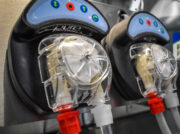
Automated dosing pumps eliminate the need for manual measuring and mixing of cleaning chemicals, ensuring that decontamination sinks are consistently supplied with properly concentrated detergents and disinfectants. These systems accurately dispense the exact amount of cleaning solution needed for each task, preventing variations that can occur with manual mixing. 


By removing the risk of over- or under-concentrated solutions, automated dosing systems help maintain the effectiveness of cleaning agents while reducing chemical waste. This not only improves cleaning consistency but also enhances technician safety by minimizing direct handling of concentrated chemicals. When integrated into decontamination sinks, these systems streamline workflows, reduce errors, and ensure compliance with manufacturer Instructions for Use (IFUs) and industry standards—ultimately supporting a more efficient and effective cleaning process. 


3. Lighting

Enhance Inspections with Technology: Borescopes and Task Lights

Borescopes offer a magnified view of hard-to-reach areas in instruments, enabling technicians to spot debris and contaminants that would otherwise be missed with the naked eye. The high-resolution image provided by borescopes ensures that even the smallest particles are detected, enhancing the thoroughness of inspections and preventing missed contaminants that could lead to reprocessing. 

Implementing borescope inspections in decontamination rather than assembly provides a key advantage: identifying damage or residual debris before instruments progress further in reprocessing. If an instrument enters a washer with unnoticed damage or contamination, the entire cycle may be wasted—costing valuable time and resources.  

Additionally, many instrument manufacturers’ Instructions for Use (IFU) require visual inspection during decontamination. For example, some arthroscopy shaver IFUs specify that inspection must occur before further cleaning or sterilization. ANSI/AAMI ST91 also recommends that visual inspection and cleaning verification be completed before instruments move into an Automated Endoscope Reprocessor or sterilization. By integrating borescopes in decontamination, SPDs can align with IFU and industry guidelines while ensuring instruments are thoroughly inspected early in the process, ultimately preventing delays and improving overall efficiency. 

Additionally, task lighting designed specifically for inspection areas ensures optimal illumination, reducing shadows and improving visibility. With adjustable, bright lighting, technicians can more adequately see contaminants in every corner, making visual inspections more accurate and efficient. 

Maximize Visibility with Light Hood & In-Basin Lighting

Proper illumination in decontamination sinks is critical for ensuring thorough cleaning and inspection. Light hoods provide broad, overhead illumination, reducing shadows and glare in key work areas.  

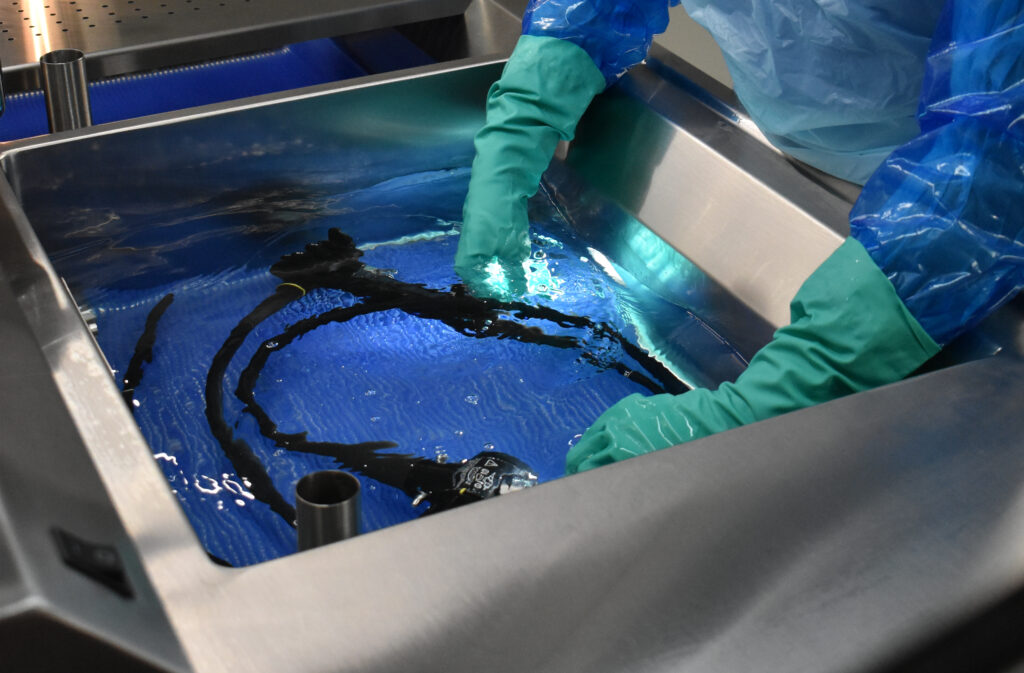
In-basin lighting enhances visibility during critical decontamination tasks, such as leak testing for flexible endoscopes. Proper illumination within the basin allows technicians to clearly observe air bubbles that indicate leaks, ensuring accurate testing results. Without adequate lighting, small leaks may go unnoticed, potentially compromising patient safety and requiring costly repairs. By integrating in-basin lighting, SPD and GI can improve the precision of leak testing, reduce the risk of missed damage, and enhance overall instrument quality assurance. By incorporating both overhead and in-basin lighting, sterile processing and GI can create a more ergonomic, efficient workspace that supports thorough cleaning, reduces strain on technicians, and improves overall instrument quality before the next stage of reprocessing. 


Manual processes in decontamination create inefficiencies that slow down workflows and strain sterile processing teams. The key to overcoming these challenges may lie in technology. By implementing automated solutions for syringe flushing, chemical dispensing, and visual inspection, GI and SPD can eliminate common bottlenecks, reduce errors, and enhance overall efficiency. 

 These improvements not only help departments keep pace with rising reprocessing demands but also contribute to higher-quality outcomes and a safer, more ergonomic work environment. 


Investing in smarter, more efficient processes ensures that productivity concerns become a thing of the past. Ready to optimize your SPD?

Contact us today to explore solutions tailored to your team’s needs. 


The Age of Quality Assurance: A Complete Guide to Quality Assurance in Endoscope Reprocessing

Albert Einstein once famously said, “Without changing our patterns of thought, we will not be able to solve the problems that we created with our current patterns of thought.” This perspective is fitting for a scientist who revolutionized our understanding of physics and the very fabric of nature. The hallmark of successful scientists, theorists, and professionals across all fields is their unyielding curiosity and willingness to ask new questions. These inquiries are the driving force behind groundbreaking discoveries, innovative methodologies, and lasting advancements.

In the realm of instrument reprocessing, particularly with flexible endoscope reprocessing, there is a constant stream of new questions being posed. Recent discussions have highlighted the convergence of rising adverse events, a rapidly evolving gastroenterology landscape, and an impending surge in colonoscopy procedures. If we fail to adapt and rethink our current practices, we risk becoming entangled in a complex web of challenges.


The Important of Quality Assurance in Endoscope Reprocessing

This might be why the industry has embraced quality assurance in recent years. Its ability to ask questions and provide potential answers can help untangle this mess. Quality assurance is a formalized attitude and methodology to embrace safety, data, preventative activities, training, and a commitment to error-free reprocessing, and in endoscope reprocessing, takes on other unique characteristics.

Quality assurance is a patient safety matter, firstly. Any means to prevent patient harm is a binding law. Cori Ofstead and associates also estimated in a 2017 study, that the impact is a financial one, too, with estimates to reprocess a single endoscope from $114.07 to $280.71. Hands-on time further estimated over 76 minutes of a technician or nurses time. The risk to patient, cost and labor all depend on quality.


Major Areas of Quality Assurance in Endoscope Reprocessing

Pre-Cleaning

Pre-cleaning outcomes are the foundation to quality endoscope reprocessing outcomes. The Centers for Disease Control starts its Essential Steps for Flexible Endoscope Reprocessing at bedside, for its importance in preventing the formation of biofilm.

Some of the most important investments that improve pre-cleaning quality outcomes is training and measures of accountability. When nurses and technicians have a harmonious relationship, pre-cleaning is often done effectively and consistently, reducing the demand on manual cleaning. The stronger the foundation, the stronger the building.

Delays in the journey from pre-cleaning to manual cleaning also increase the risk of biofilm formation, lowering quality outcomes. Methods to ensure items move quickly from pre-cleaning to manual cleaning may include timers, trackers, and others means to ensure pre-cleaning happens within 60 minutes of the procedure. Tags and written reminders can also be a helpful, visual cue without compromising transport containers or bags.


Leak Testing

For endoscopes which require leak testing, this critical step ensures damage is caught before time is spent on further reprocessing, or further damage can be extended to the scope. ANSI/AAMI ST91:2021 offers a couple recommendations to ensure quality leak testing outcomes:

“Automated leak testers should be placed on a calibration schedule to verify the leak tester is producing the correct pressure. Manual handheld leak testers and leak tester tubing should be inspected for damage, leakage, and pressure output (kPa). Pressure verification should be performed for each type of leak tester in the facility each day that endoscopes are used; calibration ensures that an endoscope will be challenged with the proper pressure each time when being tested for leaks. Documentation of testing results should be recorded. The manufacturer’s written IFU for testing each type of leak tester (manual or mechanical) used in the facility should be followed to ensure they are properly functioning.” 7.4.1 Leak Testing, ANSI/AAMI ST91:2021

Leak testing can be complicated in areas with poor lighting, particularly during wet leak testing. Investing in underwater lighting can enhance the ability to see small damages to endoscopes, and pull scopes for repair early, before damage gets worse. Investing in basins the right size for endoscopes is also important; over-coiling can hide holes, and result in false passes.

ST91 also recommends manual dry leak testing for at least 30 seconds, and manual wet leak testing for 60 seconds. Rushing leak testing can result in lower quality outcomes.

Manual Cleaning

Manual cleaning should follow immediately after leak testing to further prevent biofilm formation, and the drying of soil.

Three C’s form the backbone of effective manual cleaning outcomes:

  1. Copious amounts of fluid
  2. Contact time & correct use of detergents
  3. Correct brushing technique, prioritizing single-use brushes, when possible

Endoscopy and sterile processing departments should consider investing in technologies, training, and improvements which focus on these 3 key areas. For example, investments in automated cleaning solutions which flush, leak test, or dispense detergent can be great for busy departments, so long as departments write in policies to verify equipment performance, and hence, quality outcomes.

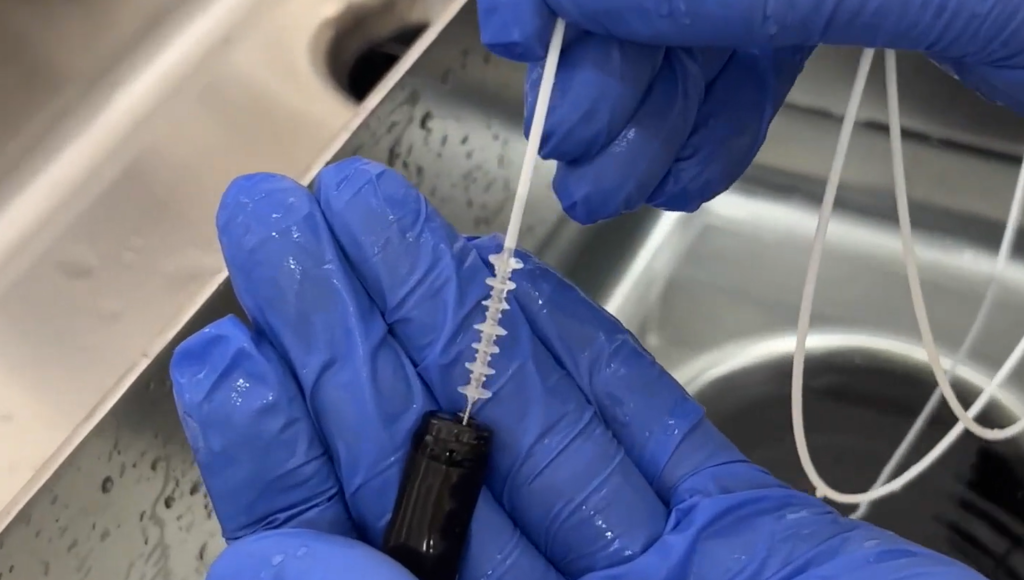
Brushing with tools that are validated to provide high-quality outcomes is a great potential enhancement. Brush technology and design varies widely. Try sourcing brush technologies that have validated performance from independent sources, and which fit the endoscope inventory. Quality begins with preventing lapses, not finding them.

Other quality assurance measures include biochemical cleaning verification tests to ensure detergent is being dosed appropriately, with temperature gauges to ensure they operate within proper ranges.


Visual Inspection

In a 2024 Ofstead and Associates study, it was estimated that visual inspection was one driving reason for a facility to reduce repair costs from $1.2M per annum to $724k, and cut the average cost per repair in half. It’s one helpful argument to help departments prioritize spending on inspection technologies.

Borescopes and task lights both have a place here. ANSI/AAMI ST91 references the following regarding visual inspection:

“Flexible endoscopes, accessories, and associated equipment should be visually inspected for cleanliness, integrity, and function before use, during the procedure, after the procedure, after cleaning, and before disinfection or sterilization (AORN, 2018e [39]).” 7.8.2 Visual Inspection

“The internal channels of a flexible endoscope that are accessible can be inspected by a borescope or other appropriate inspection method.” – 7.8.3 Borescopic Inspection, ANSI/AAMI ST91:2021

Investing in borescope technology is just one means to ensure quality outcomes in endoscope reprocessing. While its not enough to determine soil levels, it can identify residual water and poor drying technique, brush fibers and failing brush quality, or damage, potentially resulting in negative patient outcomes.

PureClear™ Visualization Station

Determining where and how to inspect using borescope technology is also important. ST91 offers multiple recommendations for when

in the process borescopes can be helpful. Creating a clinical team of stakeholders to do a risk assessment can help make this decision clearer for your team. Regardless of where, investing in the power requirements and organizational tools to get borescope stations ready is key. Borescopes can either sit cluttered and messy in a corner, or be fully integrated into stations with other quality assurance tools such as ATP testing.

ANSI/AAMI further recommends testing duodenoscopes with a 10x magnifier. Elevator channels continue to present cleaning risks. Be prepared to address this recommendation with enhanced visualization technology.


Cleaning Verification Testing

With the 2021 update for ST91, a new category emerged; high-risk endoscopes:

“High-risk endoscopes…and/or those that are of complex design (e.g., duodenoscopes, linear ultrasound (EUS) endoscopes, bronchoscopes, endobronchial ultrasound (EBUS) endoscopes, ureteroscopes, cystoscopes and as determined by the facility) shall be monitored with cleaning verification tests after each cleaning. Manual cleaning of flexible endoscopes that are not determined to be high-risk should be verified using cleaning verification tests when new endoscopes are purchased and at established intervals (e.g., at a statistically significant frequency based on the number of procedures performed).” 7.8.4 Cleaning Verification, ANSI/AAMI ST91:2021

Visual inspection alone is not enough to ensure high-risk endoscopes have undergone quality cleaning practices. Organic soil and microbial contamination lead to biofilm formations on and within endoscopes. Regular use of technologies such as protein testing, adenosine triphosphate tests (ATP) and others help test that minimum benchmarks of contamination are controlled. They can also provide trending data over time, to show if cleaning outcomes are improving.

Departments also need to verify that testing equipment is working and effective. Having this step written in department SOP’s is critical.

High-level Disinfection / Sterilization

Whether liquid chemical high-level disinfection (HLD) or low-temperature sterilization practices are in effect, both require monitoring.  Have all valves and caps underwent consistent HLD processes? Is there a spill kit plan in case of accident? Is the process for using solution test strips or chemical monitoring systems well trained, effective, and accurate?

Drying

Endoscopes should never be stored wet. Biofilm and microorganisms thrive in dark, damp and undisturbed environments, leading to potential infection hazards. Ensuring pressure-related instrument air or HEPA-filtered air are used according to IFU is critical here. When storing, methods that circulate filtered air through channels are preferred.


Taking the Next Steps in Quality Assurance Improvements

There is no shortage of questions to ask when it comes to improving quality cleaning outcomes in endoscope reprocessing. Where to start? How much to invest? Who can I count on to believe in the changes I want to make?

Putting together a group of stakeholders who might be impacted by quality assurance programs is a great place to start. Identify needs, opportunities and the implications of certain QA program components.

Measure and assess data points to identify where in the endoscope reprocessing cycle QA improvements will have the biggest impact. Starting with the most impactful change can be powerful to earn additional resources for other QA initiatives. Starting small is another approach, particularly if departments are anxious about additional steps or new technologies.

Putting together means to measure the quality outcomes before and after QA initiates are implemented is also essential. Don’t enter the journey without the end destination in mind. Set goals with stakeholders and revisit them often to ensure the compass’ needle hasn’t moved.


The foundation of great answers lies in the power of asking great questions, and quality assurance programs provide a prime platform to do just that:

  • Where is this quality issue arising?
  • Could additional training in this area enhance cleaning outcomes?
  • How can quality assurance programs empower and support my team in achieving their goals?

There are numerous starting points for this journey, but the most crucial step is choosing to begin. Leverage available resources, consult with experts, engage stakeholders, and collaborate with peers to navigate this path to success. By fostering a culture of inquiry and continuous improvement, you’ll be well-equipped to elevate your practices and achieve outstanding results.

Looking to explore more topics related to endoscope reprocessing? Explore all our Reprocessing Reports related to GI, here!

Works Cited

  1. Essential Elements of a Reprocessing Program for Flexible Endoscopes – Recommendations of the Healthcare Infection Control Practices Advisory Committee
  2. A Glimpse at the True Cost of Reprocessing Endoscopes: Results of A Pilot Project
  3. ANSI/AAMI ST91:2021

Hidden Dangers and High Stakes: The Lurking Endoscopy Crisis

“I went to get a routine colonoscopy and because of that I am going to be in turmoil mentally,” said one patient. “It’s sleepless nights, near panic attacks at times….” For healthcare administrators, this reads like a stake to the heart. Due to suspected lapses in endoscopy procedures at one Eastern U.S. facility, someone did find themselves facing these heartbreaking comments after routine colonoscopies went wrong.

There might be a few questions that come from reading reports like these:

  • “Could I have been involved in one of these events as a patient, provider, or as a loved one?”
  • “How many events aren’t being reported?”
  • “How many other people might have been affected?”
  • “What did we do wrong here?”
  • “What’s going to get this to change?”

Rising Adverse Events as Reported by the FDA

It’s shocking but true that adverse events within gastroenterology continue to be reported at all-time highs. The United States Food and Drug Administration considers an adverse event as any undesirable experience associated with the use of a medical product in a patient, or when there is concern about a product’s quality, authenticity, performance or safety.

A 2022 report released by Lawrence Muscarella, PhD and President of LFM Healthcare Solutions reported more than 10,000 adverse events related to contaminated flexible endoscopes between 2014 and 2021. As of Q4 2024, the FDA posted 8,903 adverse events in just three months, a 14% increase over the same time period from 2023 (you can find frequent updates from Cori Ofstead on quarterly findings like these in social posts, here).

The reason for each adverse event seems to be limitless. Reasons range from distal endcaps falling off in patients, balloon catheters being stuck inside biopsy channels, or clogged channels from insufficient reprocessing. Lapses often occur during manual processes, such as point-of-use cleaning, flushing, brushing, or visual inspection. Even the most well-trained reprocessing departments are likely to have lapses; tools can be insufficient, processes can be rushed, or nurses and technicians can get interrupted in their work. Regardless of the why, the trend in rising adverse reported events to the FDA is alarming.

The hardest part of this equation to define are the costs associated with adverse events. Adverse events are broad and cover a large array of issues, and studies to get firm financial data associated with these events are rare. As adverse events continue to climb, it’s likely that their financial impact will come into clearer focus as well.


Rising Demand – the Future of Colonoscopies

If adverse events are not addressed, the issue will grow. By evaluating colonoscopy procedures alone, the United States can expect to see growing surgical volume. It is estimated that roughly 15 million people receive a routine colonoscopy procedure each year. By the American Cancer Society’s estimate, over 1 in 3 adults over the age of 45 are not receiving regular colonoscopies. This indicates that nearly 30 million people are routinely skipping colonoscopy screening. Imagine the burden of an estimated 45 million annual colonoscopy procedures on the United States healthcare system!

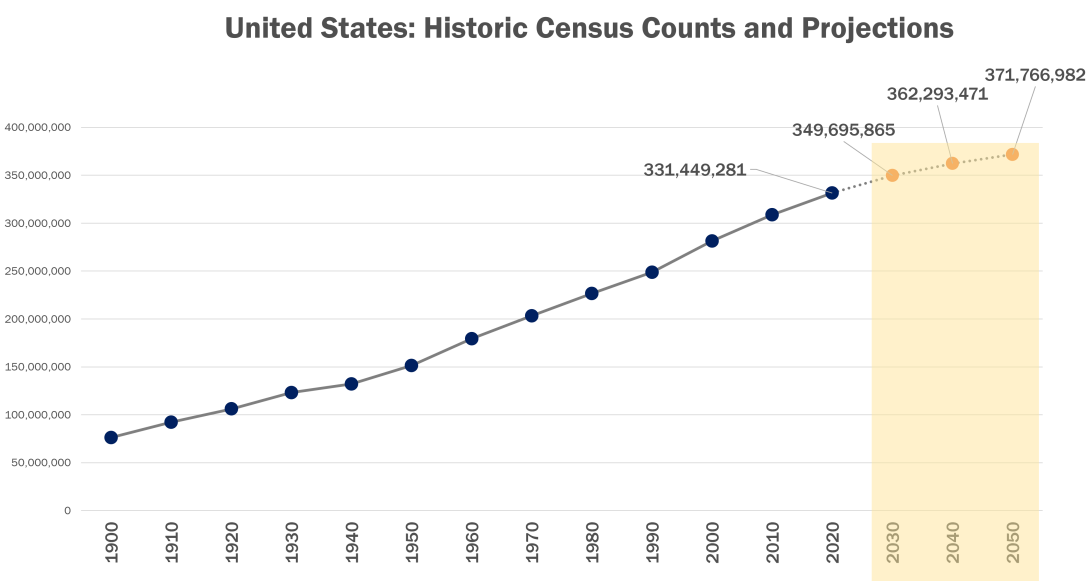
The Weldon Cooper Center for Public Service, a part of the University of Virgina, published expected population projects for the United States through 2050. While the United States’ population growth rate is slowing, it is quickly aging. This can be expected to further add demand and strain on routine colonoscopies over the next 30 years. It is expected that by 2030, more than 20% of the population will be over the age of 65 and nearly half the United States’ population will be in their 40s or older.

Can the gastroenterology industry solve two problems at once: a rising trend of adverse, negative events, and an influx of demand on its hospitals and ambulatory surgery centers, all within the next 5 years?

US Historic Census Counts and Projections

Image credit belongs to the University of Virginia Weldon Cooper Center for Public Services, 2024. The direct use of this graph can be found, here

Shifting Sands – How Endoscope Reprocessing is Changing

Among rising adverse events and patient demand, the sand under many GI professionals’ feet is shifting. New endoscope technologies are popping up faster than can be adapted to. The discussion between reusable and single-use gets more complex during each round of discussion. Further, staffing shortages, exacerbated by COVID-19, continue to impact productivity.

According to the 2024 GI Reprocessing Landscape Report, over 28.42% of participants cited that the most important area to focus efforts on in 2024 was IFU compliance. Together with Training & Certification and Cleaning Verification, over 67% of reported responses indicated a focus on improving competencies with reprocessing, quality assurance, and efforts to overachieve IFU requirements were most important. When asked what the most important problem to solve was, Processes led responses with 19.88%, shortly followed by compliance at 19.30%. It’s clear these challenges led GI and sterile processing professionals to seek improved processes that provide guardrails and security around quality.

The endoscope reprocessing environment will continue to evolve in many exciting, positive ways. It’s fun to speculate on what’s on the horizon for gastroenterology, and some developments are sure to surprise! When participants were asked what they see when they look ahead, 33.29% in the 2024 survey cited compliance, guidelines, and IFU requirements to be one of the most challenging opportunities moving forward for the industry. With what the industry has reported, it’s easy to understand why this is top of mind.


Endoscope processing is at the heart of debate, conversation, and change. What’s most important to keep in mind is that endoscopy procedures generally result in positive outcomes and are a routine, safe practice that catch early signs of cancer. However, any lapse in patient safety requires thorough investigation; what can be done more effectively for a patient’s safety, should be.

Following adverse events in endoscope reprocessing is not pessimism, it is awareness. Identifying areas for improvement by seeing where lapses occur can help sterile processing and gastroenterology professionals take control over their own quality outcomes. Awareness is the start to identifying, and ultimately, making lasting change.


Looking for more information about endoscopy reprocessing outcomes? Download our free, GI Landscape Report, where hundreds of gastroenterology professionals share their insights from the floor of the patient room, and we turn them into actionable insights!


Works Cited

  1. Vanderbilt endoscopy patients at risk of contracting HIV or hepatitis after reported issue
  2. Product Problems | FDA
  3. https://www.ormanagement.net/Infection-Control/Article/09-22/Reports-of-Endoscope-Contamination-Rose-Significantly-Since-2014-New-Analysis-Says/68366
  4. https://www.linkedin.com/posts/activity-7282446227445559296-IyMC?utm_source=share&utm_medium=member_desktop
  5. How well do colonoscopies prevent colorectal cancer? What you need to know – Harvard Health
  6. Data and Progress – American Cancer Society National Colorectal Cancer Roundtable
  7. National 50-state population projections: 2030, 2040, 2050 | Cooper Center
  8. US hospitals pass on most of the costs of errors – PMC

Staffing Challenges: How to Build a Candidate Funnel for your Department

In December 2024, Pure Processing’s Voice of the Customer Committee met to discuss a topic that’s never out of style in sterile processing: staffing and staffing challenges. Our VOC members discussed many facets of staffing and retention, from how to train new employees, to how to enhance culture and boost retention, and lots in-between. One topic caught the attention of every VOC member; something that a vast majority sterile processing department in the country would benefit from: creating a funnel of candidates to fill their open positions.


Creating Cohorts

The key to creating a constant funnel of candidates for sterile processing departments is to create cohorts; groups of people that will train and learn together. By creating cohorts, you can deliver uniform information and training to all of them at once, reducing cost and efforts associated with individual training.

The VOC members identified two primary ways to create a cohort.

1: Local schools

High schools are often looking for ways to get their students more experience and exposure to various professions. SPD Managers can reach out to counselors and career centers at local schools to identify when career events might be held. Managers can attend these events to begin recruiting students that might be interested in working in a hospital.

However, SPD Managers may not have the time, means, or authority to initiate a program like this in their own. Approaching the human resources department can begin opening doors and getting SPD Managers assistance in the creation of a program.

There are certainly other positions that need to be filled throughout the facility, so having HR help you approach school counselors and career centers with a facility-wide approach can help demonstrate the benefits to both the facility and the school much more clearly.

What do these high school student cohorts look like?

One VOC member partnered with a co-op option for seniors at their school. These co-ops allowed the students to attend classes in the morning and spend the afternoons working in an occupational setting. Students would spend about 20 hours per week working in the facility. Over the course of the semester, they would learn valuable skills and processes associated with SPD. If they enjoyed the work, many would end up increasing their hours over the summer following their senior year, setting them up for full-time employment down the road.

There are some things to consider, however. Another VOC member noted that there are certain OSHA guidelines that may restrict how and where students are able to work. It’s important to familiarize yourself with this information and ensure they’re doing work they’re legally able to. One VOC member expressed this thought regarding the limited scope of work students could do:

“Sure, maybe they can’t work in decontamination; they might be a runner, or work in prep & pack. The important thing is that they’re getting exposure to instruments, exposure to processes. Exposure to sterile processing.”

2: Building your own cohort

Other VOC members noted that you don’t need to partner with a high school in order to start building cohorts to create your candidate funnel. In fact, you don’t need to go further than your current facility! One VOC member currently operating an in-house cohort program explained his approach:

“ I always start in the facility. Valets, dietary, maintenance staff, doesn’t matter. If I see someone in the hospital hustling and doing their current job well, I walk right up to them and ask them if they’re interested in making a change.”

Another explained that they’re open to anyone, stating:

“Start training people from Jiffy Lube!”

It’s clear that these VOC members have confidence in their ability to mold people into excellent SPD candidates, but where does that confidence come from? Creating a great educational program for cohorts to participate in and “graduate” from. Here’s the general outline of one VOC member’s cohort training program:

  • 24 weeks total
  • 18 weeks with classes
    • Three days in class
    • Two days in clinicals in the area of the department they’re currently studying
  • Six weeks getting their hours to sit for the exam

Over the course of 24 weeks, this VOC member’s program can take someone that doesn’t have experience with sterile processing and get them through the CRCST handbook, well-versed in department processes, and the required of hours they need to sit for the CRCST exam.

After those 24 weeks, a new cohort begins the program.


Benefits of cohort-style recruiting

One VOC member made an interesting observation on sterile processing career trends:

“You’re not going to see this generation working 30 years in SPD anymore. You’re just not. Some will, but many will spend 4-6 years in SPD and then likely move on, either to another part of the hospital or into a different industry. That’s okay!”

He explained that the key is for sterile processing departments to evolve with the needs and trends of the people they’re trying to hire. That means adapting and finding new ways to bring them in.

Another member pointed out:

“Right now there are managers across the country that just want to hire someone and throw them in decon. That’s the current model, and that’s not working.”

It’s important to view new hires that lack sterile processing experience like students, rather than bodies contributing to productivity metrics. You may take a productivity hit on the front end, while spending the time getting cohorts of candidates off the ground, but putting this initial effort in helps avoid lost productivity associated with high turnover rates and distractions for experienced, high-performing team members.


Tips from the Voice of the Customer Committee:

  1. Work with school counselors and career centers
  2. Recruit from within your facility
  3. Be aware of OSHA guidelines associated with younger employees
  4. Get HR in the loop and advocating for you
  5. Demonstrate the organizational benefits of cohort programs to admin to get buy-in
  6. Treat cohorts as students, not productivity robots
  7. Have a clear, enticing career ladder
  8. Recognize that you’re going to lose great teammates, it’s important to be able to find another one.

While there are certainly other means of finding candidates, our VOC members swore by their cohort programs and the impact that they have. A well-oiled program can expect to produce 3-5 solid FTE candidates per rotation. Some cohort members will decide the work isn’t for them, and that’s okay! The members that decide to stick with it and go for a full time position in the department will be well-versed, well-trained, and ready to begin contributing.

Interested in other VOC content? Click here to dig into other insights from the VOC!


About: Voice of the Customer Committee

The Voice of the Customer Committee is a panel of healthcare and instrument reprocessing professionals who have graciously donated their time to share their expertise and guidance on current challenges faced by the instrument reprocessing community. Through sharing their insights, experiences, and best practices, we have been given the opportunity to share these findings with our readership. We’d like to thank our VOC members for their outstanding input and insights, as well as their time! Thank you for your continued partnership, and all you do.