
What Impacts Workflow, and Its Impact on Department Outcomes

Workflows can be found in any industry. The Cambridge Dictionary defines workflow as “the way that a particular type of work is organized, or the order of the stages in a particular work process.”

This step-by-step progression is what creates processes and generates outcomes. There are many factors that impact the output from a workflow & its processes. It is critical to patient safety and staff success that each factor be considered during a workflow evaluation and planning phase to ensure desired outcomes are achieved and potential challenges are mitigated.

Limited Space

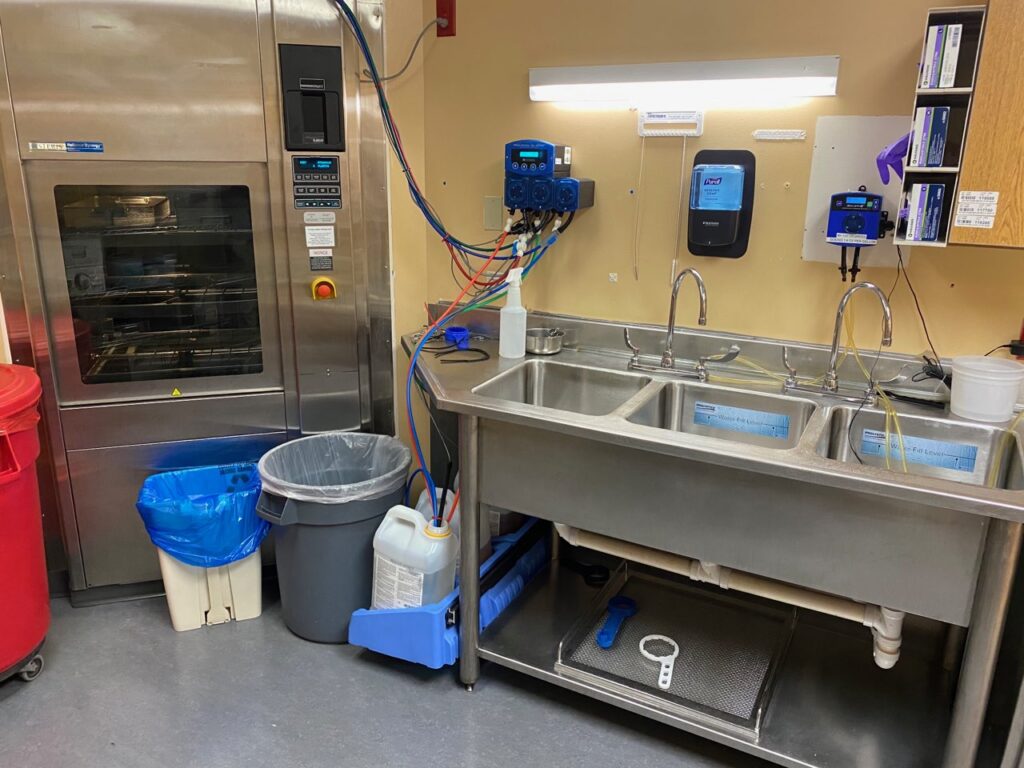
Real estate in sterile processing and GI departments can be lacking and improvisions can occur that will lead to missteps or risk of contamination at certain points of a process. However, limited space can also impact overall safety outcomes for both staff and patients.

ANSI/AAMI ST79 Section 3.3.6 speaks to the importance of planning out your space and equipment based on the volume of work to be done there:

Ergonomic factors affecting worker safety and comfort should be considered when designing workspaces in the decontamination area, including…

b) adequate space to maneuver, queue, and unload carts or other transportation means at times of average daily peak workload;

Without the space required to queue up and maneuver around staged case carts or instruments on the assembly side can lead to frustration or injury.

Clutter, Overcrowded Workspaces
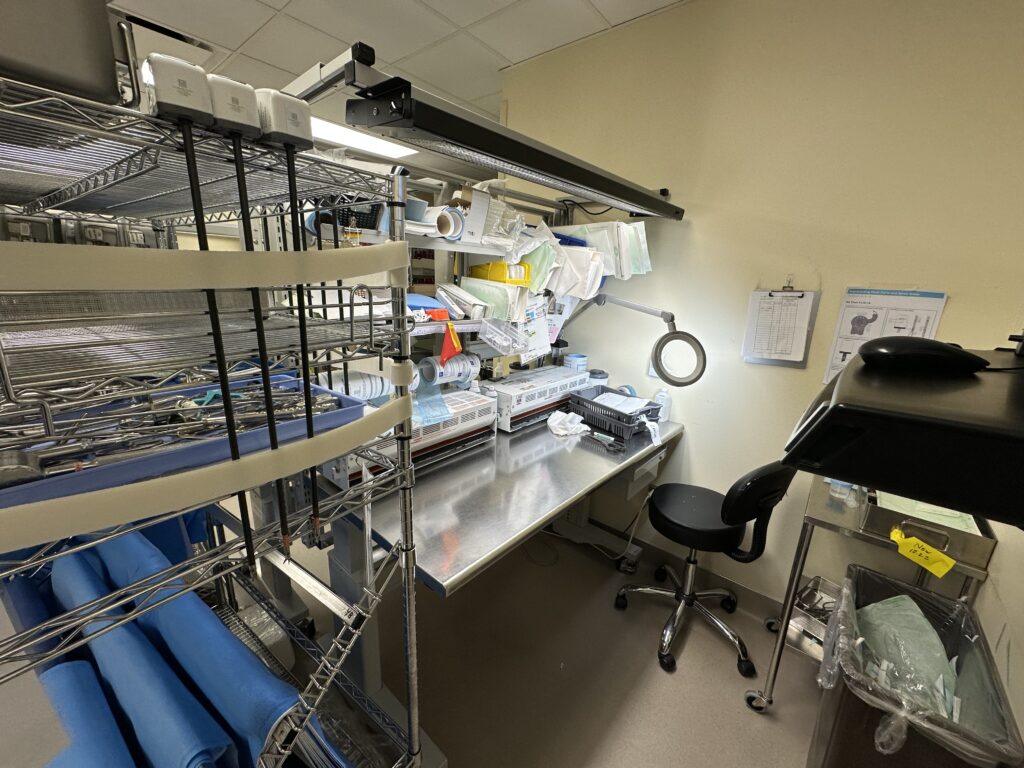
Clutter and overcrowded workspaces can also take up mental space. Frustration, distraction and delays can all be attributed to the condition of the spaces in our workflows. Cluttered workspaces lead to discrepancies, gaps and overall non-compliance. Some studies have also been cited to show that clutter or overcrowded spaces can lead to higher stress levels. (IH, 2018)

Often, workstations are shared spaces, which can mean that each person will interact with the workspace slightly differently than the last. Without a reset of the work area, clutter will continue to accumulate.

Additionally, clutter can develop over time as new technologies and resources get added to a work area. A constant state of adding without subtracting what is no longer relevant can also lead to overcrowded workstations. This also leads to safety risks including fire hazards, dust collection and mold formation. (IH, 2018)

As things collect and pile up, real estate decreases while stress and safety risks increase.

Poor Organization

Organization can encourage compliance and even guide a workflow. Conversely, disorganization can have the opposite effect. Disorganization lends to confusion, misplaced steps and unclear expectations. Rather than focusing on the task at hand, the mind and eyes wander to other tasks or distracting messes that can lead to longer productivity times, lower throughput and diminished employee morale.

Staff who spend as much time cleaning up, reorganizing or making sense of disorganized stations in a workflow increase the risk of making mistakes or losing inventory and tools.

Siloed Workflows

Carol Cain, in the handbook, Patient Safety and Quality, discusses the pitfalls of viewing workflows as separate processes:
“Most often, when workflow processes are looked at in isolation, the processes appear quite logical (and even efficient) in acting to accomplish the end goal. It is in the interaction among the processes that complexities arise. Some of these interactions hide conflicts inthe priorities of different roles in an organization, for example, what the nursing team is accountable to versus the physician team and its schedule. Organizations also adapt workflows to suit the evolving environment. Over time, reflecting on organizational workflows may show that some processes are no longer necessary, or can be updated and optimized.” (NIH, 2008)

When we don’t consider what is happening before or after a specific portion of the process, we lose vital information that can impact how a workflow is maintained. Interdepartmental partnerships are another great example of workflow processes that influence outside of specific sterile processing or GI practices. Transitional workflows, such as instrumentation moving from decontamination to assembly, also influence outcomes and efficiency as instruments progress through the process. Evaluating where workflows overlap can break down these silos and improve the outputs from both workflows.

Workflow development takes the study of time, environment, space and outcomes fully understand what the impact is going to be on the department and the intended outcomes.

Interested in learning more about workflow and processes? Check out these additional blogs to take a deeper look!

Thief of Time: Workflow Optimization’s Role in Time Management

Don’t Let the Work Around Become the Workflow – Optimizing Your Department with Data

References

Cain C, Haque S. Organizational Workflow and Its Impact on Work Quality. In: Hughes RG, editor. Patient Safety and Quality: An Evidence-Based Handbook for Nurses. Rockville (MD): Agency for Healthcare Research and Quality (US); 2008 Apr. Chapter 31. Available from: https://www.ncbi.nlm.nih.gov/books/NBK2638/ https://dictionary.cambridge.org/us/dictionary/english/workflow

ANSI/AAMI ST79:2017 https://www.utphysicians.com/the-stress-of-mess-how-clutter-can-affect-your-workflow/ https://intermountainhealthcare.org/blogs/can-organizing-impact-your-mental-health
The Interconnected Success of SPD: How training, compliance and technology influence each other

Sterile processing departments (SPD) are made up of several different components that lead to outcomes and success. Each component so intricately connected to another that missing one can cause workflows and processes to falter.
These components include training & education, workflow & processes, leadership, culture and technology. Each one naturally interconnects to another to create a comprehensive process and work experience for our sterile processing technicians.

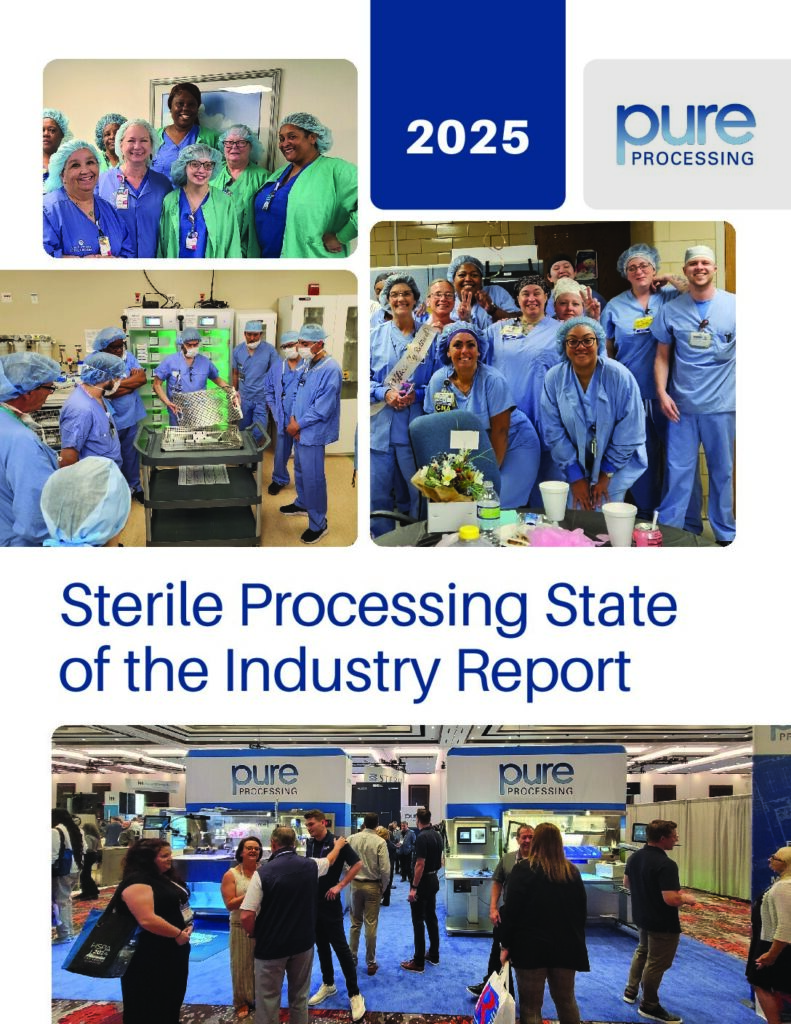
In the 2025 Sterile Processing State of the Industry Survey, it was identified that that components were closely related in the ratings scale; providing insight into a cohesive approach to operational excellence . Click here to download: 2025 State of the Industry Report.

What participants had to say:

Our survey participants shared their experience in open ended responses that gave insight into the survey results. Here is what a couple of them had to say:

“A great SPD is one where staff feel valued, have the right tools and training, and are part of a culture that respects their vital role in patient safety.”

Work culture- I believe this starts with good management.  As long as the leadership team is doing things to support the staff, encourage certification and continuing education, boost morale, and lead by example, the work culture can improve.”


Training & Education:

Training & Education ↔ Workflow & Processes:

Better training goes hand-in-hand with smoother, more reliable workflows. In SPD terms: stronger competencies → fewer workarounds, cleaner handoffs, less rework.

Training & Education ↔ Compliance:

The strongest “training” link. Well-trained teams follow IFUs/SOPs more consistently; audits and spot checks tend to improve when training is timely and protected.

Training & Education ↔ Visual Inspection & Cleaning Verification:

Training shows up in the “verify the clean” layer too—techs who are coached on cleaning validation steps (and why they matter) execute more consistently.

Leadership & Culture

Leadership ↔ Culture:

There were direct correlations between leadership and culture. A leader’s approach to management, change, operational needs and personnel, can impact how a team responds, engages or feels about the overall culture in their department.

Leadership ↔ Work environment:

When thinking of work environment, consider how teams interact with their work. It can be about design, organization, equipment and resources.  How leadership supports the work environment can have direct impact on teams’ perception and engagement with both.

Culture ↔ Work environment:

Work culture is the collective perspective a team has towards the responsibilities, purpose and goals within the department they work in. This can both influence and be influenced by the work environment. Work environment can promote stability, assurance and guidance, whereas disorganization and dated resources can have the exact opposite effect.

In summary, where leadership is rated stronger, the climate feels healthier and more professional. This cluster tends to move together improving one usually nudges the others.

Technology as an operations amplifier

Technology ↔ Workflow & Processes:

Technology when implemented correctly and in the right place can improve workflows and initiate more compliant processes.

Technology ↔ Compliance:

Where we have adequate technology and proper education we have integrated compliance. This can include software and automation, but can also encompass resources like improved material or design technology.

Technology ↔ Visual Inspection & Cleaning Verification:

Modern/maintained tools (tracking, washers/ultrasonics with good QA signals, sterilizers with clean BI logs, usable software) are associated with better process flow and adherence.”

From a voice in the 2025 State of the Industry Report:

“A great SPD is one where staff feel valued, have the right tools and training, and are part of a culture that respects their vital role in patient safety.”

“Work culture- I believe this starts with good management.  As long as the leadership team is doing things to support the staff, encourage certification and continuing education, boost morale, and lead by example, the work culture can improve.”


What these patterns likely mean

Training is a high-leverage fix. Because it aligns with workflow and compliance, raising training quality/frequency is a fast way to lift multiple outcomes at once. Think: monthly in-services, competency ladders, and protected time, then watch workflows and audit results improve.

Leadership sets the ceiling. The leadership–culture–work environment block is very tight. If culture issues are sticky, don’t skip the leadership layer: visibility, response SLAs, “you said / we did,” and recognition rhythms tend to unlock broader gains.

Technology removes friction. The tech–workflow link suggests that uptime, usability, and the right informatics (e.g., scanning, tracking, clear dashboards) reduce chaos and help SOPs “stick.”


How to use this right now

If you want to move Workflow & Processes: pull Training and Technology levers first; they correlate most with workflow success.

If compliance is wobbling, pair Training refreshers with point-of-use job aids and verification practices; the data says that combo travels together.

If culture feels rough: Invest in leadership behaviors (close-loop responses, predictable huddles, recognition). Expect culture and work environment to lift alongside”

The multi-faceted operations within a department don’t have to feel complex or daunting. The right focus and actions can expound the positive effects it has our SPD teams and their morale.


2025 Sterile Processing State of the Industry Report: Executive Summary

Pure Processing’s annual report captures what sterile processing teams are seeing across the United States. This year’s survey includes 732 participants and remains 100% anonymous. Below are the major themes and highlights for 2025.

About the participants

Roles represented include technicians, managers, supervisors, lead techs, educators, directors or chiefs, coordinators, and others, with a near even split in GI experience. Certification levels remain high, led by CRCST, with many holding additional credentials.

Entering the industry

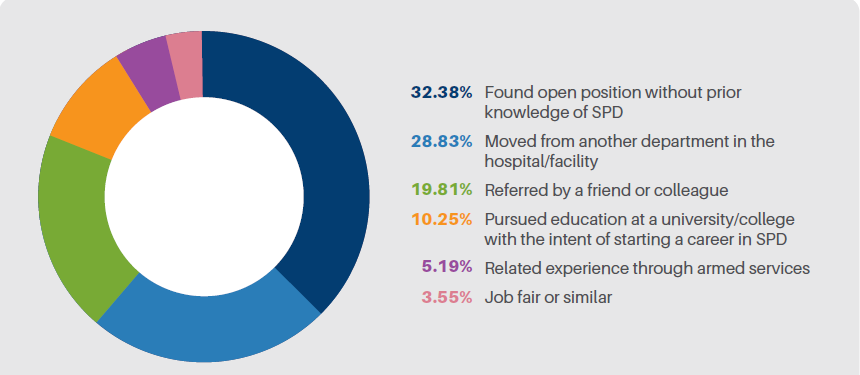
Pathways into SPD include moving from another department 28.83%, referrals 19.81%, pursuing SPD education 10.25%, armed services experience 5.19%, and job fairs 3.55%. The largest single group found an opening with no prior SPD knowledge 32.38%. Combined, 60.00% entered via internal moves, referrals, or deliberate pursuit of SPD.

What SPD professionals enjoy about the work

Respondents emphasized helping patients and making a difference, contributing to surgery and patient safety, hands-on technical work, teamwork, learning and continuous education, pride and purpose, and job stability.

Problems departments face

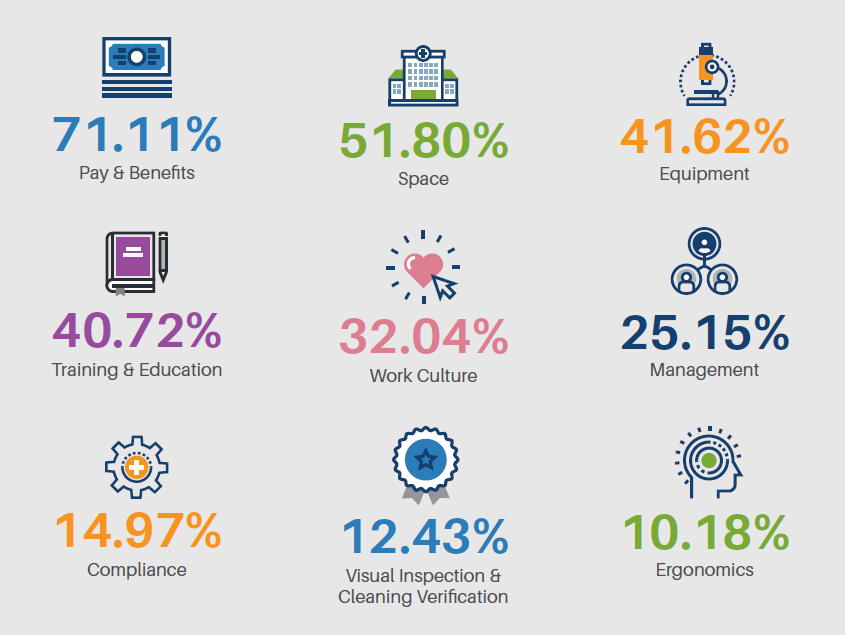
Top problems reported were Pay and Benefits 71.11%, Space 51.80%, Equipment 41.62%, Training and Education 40.72%, Work Culture 32.04%, Management 25.15%, Compliance 14.97%, Visual Inspection 12.43%, and Ergonomics 10.18%.

What should be easy to fix

Participants pointed to quick wins in Workplace Culture and Professional Respect 28%, Training and Education 22%, Pay and Benefits 21%, Equipment and Preventive Maintenance 12%, Communication, Teamwork and Management Support 12%, and Compliance and Standards 5%.

Most important problems to solve

Equipment Issues 22.70% topped the list of priorities, followed by Training, Education and Competency at 15.40%, Pay and Benefits at 15.00%, Culture and Work Environment 14.00%, Leadership, Communication and Accountability 8.80%, Space and Layout 8.60%, Staffing, Retention and Compensation 8.20%, and IFUs, Compliance and Policies 7.40%. Culture-related responses showed the highest frustrated sentiment share within this group.

Departmental ratings snapshot

Average ratings were Compliance 6.9, Leadership 6.7, Visual Inspection 6.7, Workflow and Processes 6.5, Work Environment 6.5, Technology 6.4, Ergonomics and Technician Comfort 6.3, Culture 6.0, and Training and Education 6.0. Several categories had double-digit shares of respondents rating them excellent, while poor ratings were less common.

Education trends

Top resources remain in-services 71.92%, HSPA resources 76.90%, publications 61.20%, vendor programs 34.74%, local chapter events 25.16%, social media 17.53%, and local colleges 7.47%. Influence matters: where an Educator leads, Training and Education scores are higher than where a Manager, Director, or Supervisor is most influential. Reported averages were Educator 6.5, Manager 6.0, Director 6.3, and Supervisor 5.8.

What makes a department great to work in

Five themes stood out: supportive team and camaraderie 40%, sense of purpose and pride in patient safety 34%, respectful and supportive leadership 26%, resources and reliability 16%, and growth, training and development 8%.

Why people leave aside from compensation

Top reasons included lack of appreciation 29.71%, management style 14.61%, physical demands 15.42%, lack of upward mobility 15.26%, work and life balance 9.58%, lack of accountability 9.58%, and the nature of the work 5.84%. Even so, 86.85% would recommend a career in sterile processing.

Safety and injuries

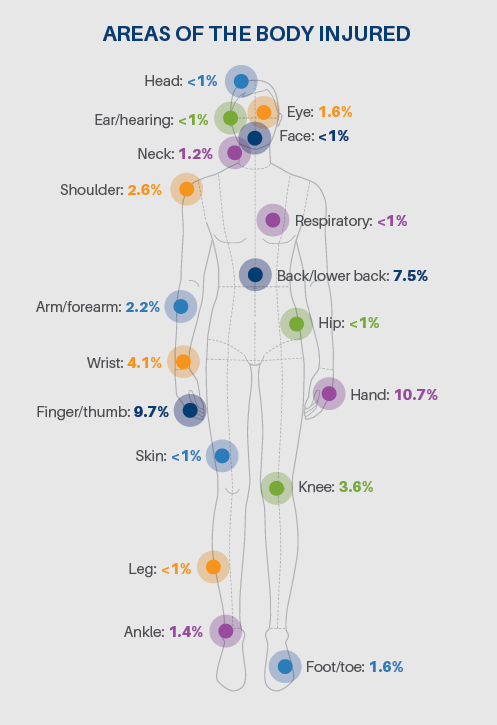
41.43% reported being injured at some point in their SPD career. Common injury types included cuts and lacerations 17.4%, strains and sprains 8.3%, and burns 5.7%. Mechanisms included sharps handling 11.4%, lifting or moving heavy items 7.1%, and hot equipment or steam 4.1%.


Record-keeping and AI adoption

Record-keeping methods included pen and paper 35.58%, digital 15.22%, and a combination 49.20%. Compared to 2024, pen and paper usage dropped by roughly 4 percentage points, and digital rose by just over 4. AI adoption was reported by 7.85% of departments, with use cases spanning tracking integration, inventory management, inspection technology software, analytics and reporting, writing SOWs and SOPs, tray assembly, content creation, and task management.

Looking ahead

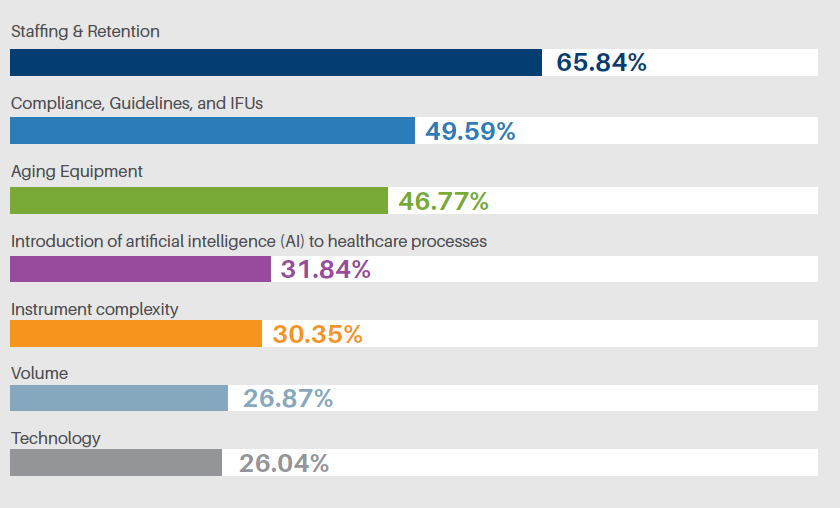
Participants expect continued pressure around Staffing and Retention 65.84%, Compliance, Guidelines and IFUs 49.59%, and Aging Equipment 46.77%, along with AI introduction 31.84%, instrument complexity 30.35%, volume 26.87%, and technology 26.04%.

Thank you to everyone who contributed. Your input helps departments benchmark, plan, and improve.

Click here to read the full report, explore all the insights, and earn 1 Free CE.

2025 Sterile Processing State of the Industry Report: Actionable Insights

The annual Sterile Processing State of the Industry Report offers a powerful snapshot of what frontline teams are facing nationwide. With insights from over 700 SPD professionals, this year’s report is packed with real-world experiences and hard-earned wisdom. Based on these findings, here are actionable strategies leaders can implement today to drive meaningful change.


Find great people where they already are

Many professionals still discover SPD through internal pathways or personal networks. In 2025, 60.00% reported entering SPD by moving from another area in their facility, through a referral, or by deliberately pursuing the field. Meanwhile, 32.38% found an open role without any prior knowledge of SPD.

Actionable insight: keep external recruiting active, but also tap internal departments and your team’s networks for candidates who fit.


Build around what SPD pros enjoy most

Free-response themes highlight why people love the work: helping patients and making a difference, contributing to surgery and patient safety, hands-on technical work, teamwork, continuous learning, purpose, and job stability.

Actionable insight: reflect these motivators in job postings, onboarding, recognition programs, and career ladders to attract and retain aligned teammates.


Turn the most common problems into focused projects

Top reported problems in 2025 were Pay and Benefits 71.11%, Space 51.80%, Equipment 41.62%, Training and Education 40.72%, Work Culture 32.04%, Management 25.15%, Compliance 14.97%, Visual Inspection 12.43%, and Ergonomics 10.18%.

Actionable insight: address one domain per quarter and publish a simple plan with owners, dates, and outcomes so the team can see progress.

Quick wins the team believes are fixable

When asked what should be easy to resolve today, respondents pointed to Workplace Culture and Professional Respect 28%, Training and Education 22%, Pay and Benefits 21%, Equipment and Preventive Maintenance 12%, Communication, Teamwork and Management Support 12%, and Compliance and Standards 5%.

Actionable insight: standardize monthly huddles, set and share a rolling in-service calendar, update preventive maintenance schedules, and close the loop on suggestions in writing.


Prioritize the “most important” problems first

The issues participants said matter most for departments to solve were Equipment Issues 22.70%, Training, Education and Competency 15.40%, Pay and Benefits 15.00%, Culture and Work Environment 14.00%, Leadership, Communication and Accountability 8.80%, Space and Layout 8.60%, Staffing, Retention and Compensation 8.20%, and IFUs, Compliance and Policies 7.40%. Culture carried a notably higher share of frustrated sentiment, which suggests cultural problems can cascade into other challenges.

Actionable insight: pair an equipment improvement plan with culture, communication, and accountability commitments so processes and people move together.


Improve training outcomes by naming an owner

Training and Education ratings are higher when an Educator drives the program. Where the Educator was named most influential, Training and Education averaged 6.5, compared to Manager 6.0, Director 6.3, and Supervisor 5.8.

Action items: name an owner, protect time for frequent micro in-services, tie each module to specific IFUs or SOPs, verify competency, and share a simple “you said > we did” update monthly.


Use department ratings to focus improvements

Average ratings this year: Compliance 6.9, Leadership 6.7, Visual Inspection 6.7, Workflow and Processes 6.5, Work Environment 6.5, Technology 6.4, Ergonomics and Technician Comfort 6.3, Culture 6.0, and Training and Education 6.0.

Actionable insight: if Compliance is strong but Training and Education or Culture lag, link education efforts directly to policy adherence and celebrate wins to reinforce culture.


Modernize record-keeping and explore AI where it helps

Record-keeping methods in 2025: Pen and paper 35.58%, Digital 15.22%, Combination 49.20%. Year over year, pen and paper dropped by roughly 4 points and digital rose by just over 4. AI adoption sits at 7.85% yes and 92.15% no, with use cases in tracking integration, inventory, inspection tech, analytics and reporting, content creation, and task management.

Actionable insight: move from pen and paper to hybrid, then from hybrid to fully digital to make the transition easier . Pilot one AI-assisted task where you already have data, like analytics roll-ups or study guide generation tied to your SOPs.

Reduce injuries with targeted prevention

41.43% reported being injured at some point in their SPD career. Common mechanisms include cleaning and handling sharps 11.4%, lifting and moving heavy items 7.1%, and hot equipment or steam 4.1%. Actionable insight: reinforce sharps handling, add lift aids or team-lift standards for heavy trays and carts, and review hot set handling procedures. Track incidents and share fixes.

Prepare now for the next wave of challenges

Respondents expect greater pressure around Staffing and Retention 65.84%, Compliance, Guidelines and IFUs 49.59%, Aging Equipment 46.77%, AI introduction 31.84%, Instrument Complexity 30.35%, Volume 26.87%, and Technology 26.04%. Actionable insight: budget for equipment replacements on a multi-year timeline, keep competency work tied to specific devices and IFUs, and plan change management around any new technologies.

Click here to read the full report, explore all the insights, and earn 1 Free CE.

When One-Size Doesn’t Fit All

Standardization is a highly sought-after goal: it provides consistency around expectations, practices and outcomes. It’s a common goal across healthcare, from clinical standards to health system enterprises. The intent behind standardization is to improve quality, optimize available resources and reduce preventable errors. However, are there situations where maybe the opposite can occur in standardization? When standardization overlooks nuances resulting in errors, inconsistencies and glossing over specific steps? Standardization can then have a negative effect on our goals.
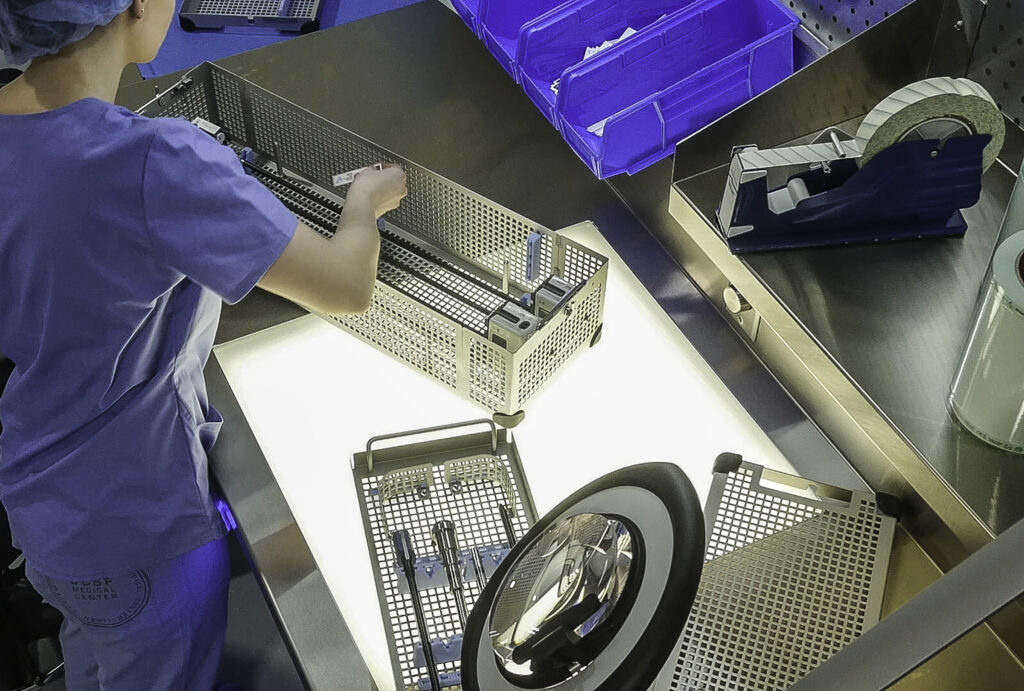
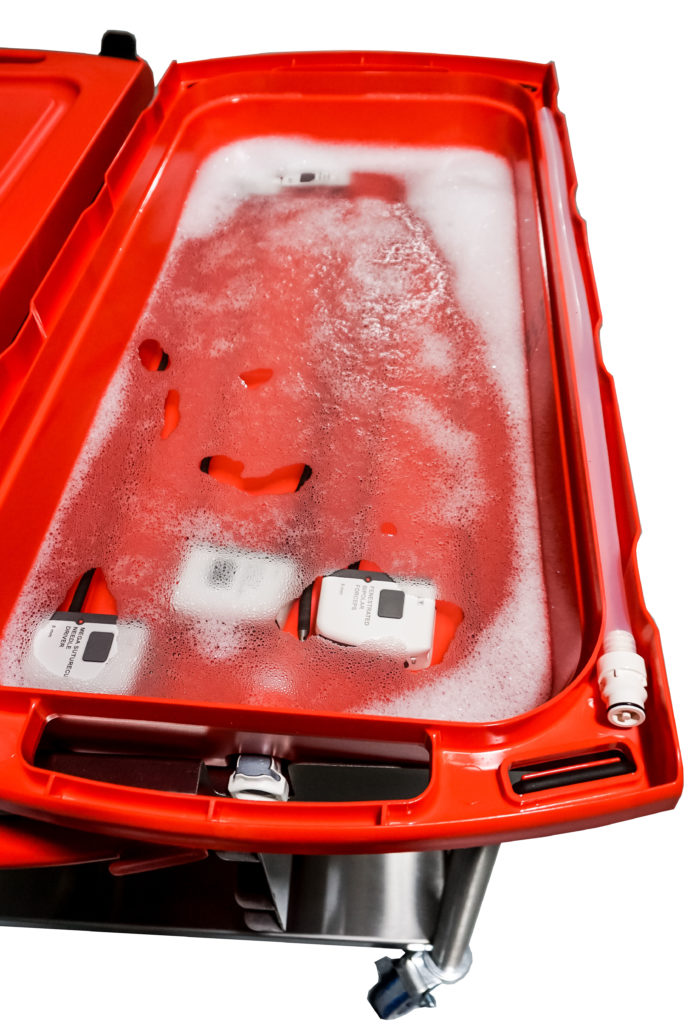
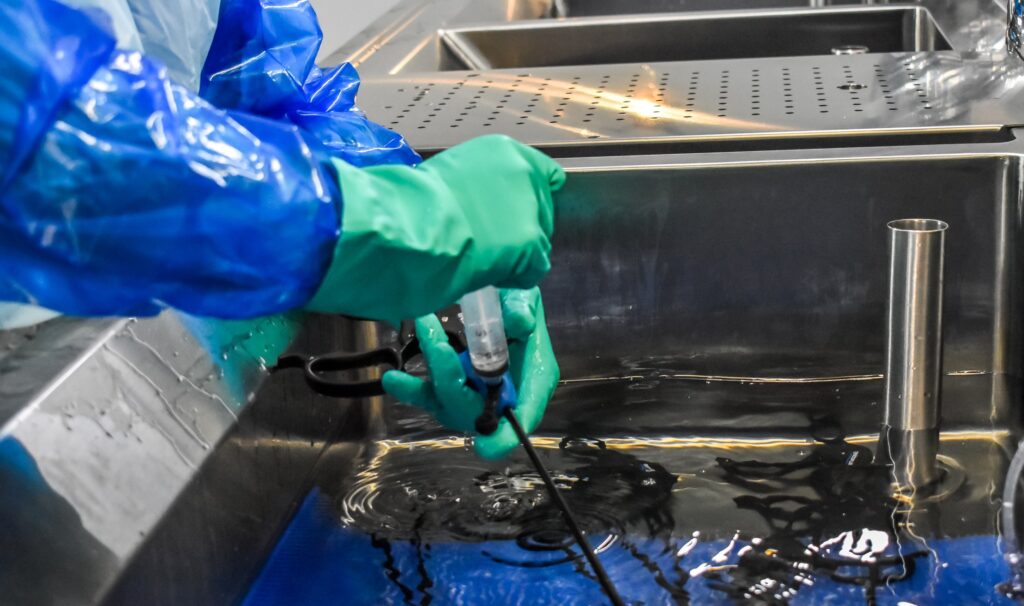
In sterile processing and endoscope-reprocessing departments, standardization initiatives can take on complex meaning when we acknowledge that not all workflows lead to the same outcomes. There are times where nuance plays a critical role in compliance and safety.

Thinking out of the box, we ask the question: would we get a higher return on investments with a specialized workstation than to ‘cookie-cutter’ our way to compliance?

So where does nuance and standardization intersect?

Specialized Processes vs Standardized Workstations

Start thinking of aspects during reprocessing where processes stand out from the norm. There are unique tasks that pop up through the day that require different resources to get the job done. It can include specialized sizes of wrap or peel packs that aren’t normally stocked at a standardized workstation. It can also be the use of a borescope or other quality assurance measure that requires availability for multiple users over the course of a shift, so placing it at a standard workstation reduces its accessibility to the entire department.

A standardized practice may result in specialized work environments in order to ensure its availability and capitalize on available resources.

High Volume Processes

Is there a process you do consistently enough where having specific resources readily available would aid in the throughput? Circumstances where this can be identified can be if you experience a high volume of low-temperature sterilized medical devices where it warrants having a separate setup, like a wrap table or peel-pack workstation. It provides a new way to organize processes and supplies.

Another example would be instrument types that have separate processes than generalized instrumentation. Examples include ocular instrumentation, laparoscopic and robotic instrumentation or loaner instrumentation. All instrument types where policies and processes vary slightly but enough to call for workflow adjustments to eliminate guess work and misinterpretation of requirements for that specific process. Reducing the number of supplies in one location can help mitigate risk of inadvertent mistakes like the use of incorrect indicators, tapes or labels.

High volume, unique processes can overrun standard work areas and create workarounds, or the constant need to reorganize and rearrange to accommodate the changing needs throughout the day.

IFU and Process Compliance

Not all instructions for use (IFU) are created standard; inspection points, tools and steps vary widely. Additionally, the type of instruments we reprocess can increase the number of times a specific task is repeated throughout the day to ensure compliance down to the most nuanced practices.

Where would something like this occur? Loaner trays. Loaner trays come in for a specific time and purpose. Bringing in these sets can require steps to be repeated such as wrapping, traying, weighing and additional data entry that is typically pre-built in our tracking system for owned instrumentation.

These processes can increase the amount of time it takes to process these trays and if supplies and resources are not centralized to a specific location, increase travel and wait time for technicians in an already extended process.

Budget Constraints and Limited Use Case

On the flip side of high-volume case needs, is the limited use case of some tools and inspection equipment. The use of a borescope may be required for certain medical devices being reprocessed, but there isn’t a justifiable volume to justify incorporating it into every workstation in the sterile processing department. Placing a single borescope at a multi-use workstation can limit its availability for use throughout the day and lead to workarounds, and interruptions in order to maintain compliance.

Standardization requires creative thinking, and an understanding that the focus of standardized care is on the outcome, and less on creating a one-size-fits-all process. There is a place for nuance and specialized equipment to ensure all resources are available and at the ready for safe, efficient and quality outcomes.


Curious to learn more about standardization and customization? Check out these links to discover more resources.

https://pure-processing.com/blog/the-weight-of-standardization-the-goal-the-change-and-the-process/

https://pure-processing.com/robotics-implementation-checklist/

Endoscope Manual Cleaning: A Fragile Chain

“A chain is only as strong as its weakest link.”

In an environment where manual cleaning is foundational, this quote is a fitting description of our endoscope reprocessing practices. Routinely auditing our processes keeps us apprised of the ‘weakest link’, where inconsistencies, interpretations and best guesses can negatively impact the quality of care.

Manual cleaning relies heavily on the focus, tenacity and consistency of our sterile processing and endoscopy technicians, all of which can be influenced by disruptions or distraction, often times, outside of their control. When it comes to our manual processes, it’s important to create robust practices that both provide consistency and support our reprocessing professionals, across every endoscope, every time.

In the 2025 GI Landscape Report, 39.37% of participants indicated that IFU compliance was a top consideration for their department endoscope practices. So when it comes to our manual cleaning processes, where do we audit to identify gaps?

Cleaning Chemistries

Cleaning chemistries, including enzymatics and detergents, have dosing recommendations that need to be adhered to for appropriate and safe concentration, as well as effective cleaning.

Point of Weakness: In a place where more isn’t always better, too much enzymatic can leave behind residue. In the same vein, underdosing can reduce cleaning effectiveness leaving behind bioburden and gross soil. Manually dosing provides room for under of overdosing.


Soak Times

Just as much as dosing the right amount of enzymatic or detergent is crucial, so is the appropriate contact time. Contact time ensures

transport container

chemistries have a chance to break down heavily soiled or dried bioburden properly.

Point of Weakness: Soaking times can be determined by both/either the chemistry manufacturer IFU or the medical device IFU. The practice of contact and adequate soaking times rely heavily on kept time and alerts to verify and affirm the right time requirements have been met to achieve the intended results. Facilities without timers or alerts run the risk of breaching soaking IFU.

Brushing

Flexible endoscope channels are long, dark and may be damaged. It’s a place that cannot be easily viewed during the manual cleaning process. Adequate brushing techniques are a must and understanding how brushes work better equips technicians to use them appropriately.

Point of Weakness: Brush contact with the internal channels is done without immediate visual verification, and though flexible endoscope IFU can provide guidance to include brushing until the brush comes clean, the results are still arbitrary and assumed.


Flushing

Flushing channels is a crucial step in the manual cleaning process. Copious amounts of cleaning solutions, water and critical rinse are

essential for effective reprocessing.

Point of Weakness: Manual flushing presents ergonomic strain from the repetitive motions of push and pull to fill and express the syringe when cleaning channels. The strain effects consistency and technician endurance as muscles fatigue during repetitive movements.  Consequently, this also leads to variance in pressure and volume being released from the syringe during the flushing step.

Inspection

Cleaning verification and inspection continues to gain traction in flexible endoscope reprocessing. Flexible endoscopes have many “hidden” areas where bioburden can be difficult to remove, and lead to adverse effects to both the endoscope and the patient.

Inspection incorporates various types of tools and resources including lighting, magnification, borescopes and even cleaning verification tools that measure organic residues such as protein or ATP. Each tool has its own unique intent and purpose.

Point of Weakness: Without adequate and fully comprehensive inspection tools, verification of effective cleaning is near impossible. Magnification can be an aid, but doesn’t visualize internal components. Additional lighting can improve visualization but doesn’t offer focused precision viewing. Endoscope workflows that lack comprehensive quality assurance (QA) steps risk bioburden reside inside channels.


Guess work will break down processes and quality in a swift motion, with an impact that reaches far beyond the decontamination sink. It breaks down each process that follows and if not caught or identified before storage, can lead to adverse effects in the procedure.  Knowing where our weakest links are and improving them sets us up for a stronger processes, sustainable practices and quantifiable assurance of quality outputs.

Curious to learn more about trends and additional insights into flexible endoscopes reprocessing? Download our 2025 GI Landscape Report, here. You can earn 1 free CE credit, too!

Ultrasonic Cleaning: How it Works

Ultrasonics can be found in most sterile processing departments today and are often the first automated cleaning cycle medical devices will be subject to after manual cleaning is complete. The intent of the ultrasonic cycle is to clean and remove soil from areas that aren’t easily accessible via manual cleaning steps like brushing or wiping. These tough to reach areas can include joints, lumens, and crevices; areas where bioburden can build up over time, unseen.

Ever been curious to know exactly how this ultrasonic bath works and what makes it such a critical step in decontamination? We will unpack the definition, the steps and the maintenance, so that you can get the most out of your ultrasonic use!


First, Some Definitions

According to the HSPA Sterile Processing Technician Manual, Ninth edition, the definition of ultrasonics is broken down this way: “Ultra’ means beyond and ‘sonic’ mean sound. When an ultrasonic wave passes through a liquid, it makes the liquid vibrate.” This creates what we know as cavitation. The ultrasound waves create low-pressure bubbles within the ultrasonic bath that implode, dislodging soil from surgical instruments.

Ultrasonic sound waves can range anywhere from 18-100 kHz, with many in SPD within the range of 40 kHz. A study conducted found that 40 kHz provided a “very uniform ultrasonic cleaning field and higher cleaning capability” (HPN, 2024)

When we can define our equipment and processes, we are better able to speak clearly to its intended purpose and use this knowledge to empower and guide our facility practices.


The Process Basics

There are key practices to note when ultrasonic cleaning is part of your workflow. ANSI/AAMI ST79 Section 7.6.4.4 highlights key recommendations on how to effectively and safely utilize ultrasonic cleaning: “Gross soils and detergents should be removed before instrumentation is placed in the ultrasonic equipment. Residual gross soil and detergents left on instrumentation can impact the effectiveness of the ultrasonic cycle and the overall cleanliness of the instrument.”

Instrumentation that is subject to ultrasonic cleaning must be fully submerged in the ultrasonic bath and run on the appropriate cycle length based on the manufacturer IFU.

There are cleaning solutions designed specifically for ultrasonic cleaners. These specific enzymes are formulated to enhance the ultrasound cleaning capabilities and work with the cavitation process to remove gross soil from instrument crevices and areas that cannot be reached by manual methods. Reviewing your equipment IFU will help you determine the appropriate one to use with your specific machine.

After the ultrasonic cycle is complete, instrumentation should be rinsed to remove any residual ultrasonic cleaning chemistries and contaminants before moving on to the next phase of the cleaning process.

There are various types of ultrasonic cleaners available today ranging from table-top to irrigating. It’s important to know the type, features and capabilities that your surgical instruments require and plan appropriately.


Maintenance & Usage Recommendations

Just like the surgical instrumentation we care for, our cleaning equipment also requires care and maintenance. The details of care can be found in our equipment manufacturer IFUs, but universally there are some basic steps that should be taken to care for your ultrasonic cleaners.

Do:

  • Perform routine maintenance such as cavitation testing and cleaning verification tests. You can reach out to your ultrasonic manufacturer for recommended test types and frequency.
  • Cleaning your ultrasonic cleaner on a regular cadence as recommended by the equipment manufacturer.
  •  Keep the lid of your ultrasonic closed during the cleaning cycle to reduce aerosolization from spreading across the department.
  •  Degas your ultrasonic bath each time the cleaning solution is replaced. The practice of degassing removes any trapped air or other gases that may impact the cleaning solution and impede cavitation from occurring.

Don’t:

  •  Avoid placing materials such as glass, soft metal and plastics in your ultrasonic cleaner. Verifying material compatibility ensures that instruments are not damaged, nor does the type of material impact the effectiveness of the ultrasonic cycle.
  • Avoid overloading your ultrasonic baths as this can also impact ultrasonic cycles and hinder contact exposure of the surgical instrumentation with the enzymatic solution.

Ultrasonic cleaning is only as effective as the care we take to prepare and handle both the ultrasonic and the surgical instrumentation subject to its intricate cleaning capabilities.

Ultrasonics are a great tool in our cleaning process. The more we understand the process, the better equipped we are to use its capabilities to its fullest extent.


References

· HSPA Sterile Processing Technician Manual, 9th Edition (2023)

· ANSI/AAMI ST79

· General Ultrasonic Cleaning Questions, HPN 2024 https://www.hpnonline.com/sterile-processing/article/55128962/general-ultrasonic-cleaner-questions

Using Data to Hold Vendors Accountable in Sterile Processing

Marc Finch

In today’s fast-paced surgical environment, the role of sterile processing departments (SPDs) extends far beyond cleaning and reassembling trays. With an ever-increasing reliance on vendor-supplied loaner instrumentation, SPDs are expected to balance precision, efficiency, and compliance, often with limited resources. One of the most powerful tools to manage this complexity is data.

Marc Finch, Senior Surgery Management Consultant at Sullivan Healthcare Consulting and member of Pure Processing’s Voice of the Customer (VOC) council agreed to dig into using data to hold vendors accountable following our June 2025 VOC call. Explore how tracking key performance indicators (KPIs) related to vendor interactions can help SPDs improve outcomes, enforce standards, and build collaborative relationships rooted in accountability.


Track Delivery and Pickup Timeliness

One of the most straightforward and critical metrics to monitor is tray arrival and pickup timing. Many departments implement policies requiring vendors to deliver trays at least 48 hours before surgery and retrieve them within 24 – 48 hours after the case is completed. These timeframes help ensure adequate processing and prevent storage overflow.

Failing to meet these timelines shouldn’t go unnoticed. When vendors repeatedly miss the mark, departments may consider implementing consequences such as delayed tray access, storage fees, or escalation to vendor leadership. Just as importantly, vendors who consistently meet or exceed expectations should be acknowledged as reliable partners.


Monitor IFU and Inventory Compliance

Instruction for Use (IFU) documentation and complete inventory lists are non-negotiables for safe and effective reprocessing. Departments should require that vendors either physically bring the correct IFUs or send them electronically prior to tray arrival. Some organizations also mandate a photo of the tray and a weight check upon arrival to ensure consistency and thorough documentation.

If IFUs or inventory documentation are missing, departments can justifiably refuse to process the trays. Clear documentation of these refusals provides transparency and supports enforcement of policies.


Assess Frequency of Use for Loaner Optimization

If a loaner tray is used frequently, it might make more sense to transition it to consignment. Tracking how often specific trays are brought in can help departments determine whether they’re being over-reliant on one-off loaners. While purchasing may not always be practical, especially given the rate of technology change, consignment can offer the benefits of accessibility and readiness without the burden of ownership.

This data can also open conversations about consolidating trays or adjusting instrument sets based on usage patterns and surgeon preferences.


Evaluate Vendor Responsiveness and Communication

Good vendor relationships are built on trust and responsiveness. With modern loaner software, departments can track how quickly vendors confirm upcoming procedures and respond to requests. Delayed acknowledgments or a pattern of last-minute tray deliveries can lead to inefficiencies, reprocessing delays, and even surgical rescheduling.

When vendors are consistently unresponsive, having the data to show specific instances and trends allows SPDs to escalate appropriately or reconsider vendor relationships altogether.


Inspect Instrument Condition and Rejection Rates

Instrument quality is a serious concern. Departments often encounter trays with cracked containers, instruments marked with non-compliant engraving or deteriorated tape, or pitted and damaged tools. Rejecting these trays is not only appropriate, but also essential for patient safety and compliance.

Establishing a formal process for recording tray rejections, especially if tracked per-vendor, can help drive improvement. Communicating these data trends with vendors encourages proactive quality checks and reinforces shared accountability for safe surgical outcomes.


Use Check-In Data to Streamline and Standardize

Dedicated vendor check-in spaces help consolidate incoming trays and ensure consistent documentation. With time-stamped check-ins, required photo documentation, and IFU uploads, these centralized spaces allow for better tracking and standardization. Some organizations use mounted cameras or integrated software to capture and log every step, reducing the chances of human error or incomplete records.

This structured approach doesn’t just streamline the workflow, it also strengthens the department’s ability to defend its practices, monitor vendor compliance, and reduce operational friction.


Closing Thoughts

Data isn’t just about charts and numbers; it’s about insight, consistency, and leverage. When used thoughtfully, data allows sterile processing departments to create fair expectations, spot issues before they escalate, and ultimately provide better support for surgical teams. As more departments invest in tracking systems and formalize their metrics, vendor accountability will shift from a frustration point to a shared opportunity for excellence.


Interested in more VOC content? Click here!


About: Voice of the Customer Committee

The Voice of the Customer Committee is a panel of healthcare and instrument reprocessing professionals who have graciously donated their time to share their expertise and guidance on current challenges faced by the instrument reprocessing community. Through sharing their insights, experiences, and best practices, we have been given the opportunity to share these findings with our readership. We’d like to thank our VOC members for their outstanding input and insights, as well as their time! Thank you for your continued partnership, and all you do.

Building Stronger Vendor Policies: Accountability, Safety, and Collaboration in Sterile Processing

As vendor-delivered surgical trays continue to be a vital part of hospital operations, the policies governing how and when those trays arrive, and what happens when they don’t, play an essential role

Tami Heacock

in maintaining surgical readiness, safety, and departmental efficiency. Setting clear, enforceable, and realistic policies isn’t just about logistics; it’s about accountability, patient safety, and preserving strong clinical partnerships.

Pure Processing’s Voice of the Customer (VOC) council met in June 2025 to discuss vendor challenges and accountability. Tami Heacock, System Director of Sterile Processing at Lee Health and VOC member, agreed to expand the conversation and go deeper into policy decisions surrounding loaner operations in sterile processing. Here are six key takeaways for designing and implementing effective vendor policies in sterile processing departments.


Set Realistic and Department-Specific Delivery and Pickup Standards

Not every department can accommodate a one-size-fits-all policy. While industry guidelines may suggest 24-hour delivery standards, departments must consider their own limitations, such as square footage, staffing, and storage capacity. For some facilities, 48-hour delivery windows may offer necessary buffer time for inspection and reprocessing, especially when complex trays or new instrumentation are involved.

Similarly, timely pickup should be enforced. Whether your policy allows 24, 48, or 72 hours for vendors to collect trays post-case, set expectations that align with your actual space and processing workflow, and make sure vendors are aware that SPD is not a storage facility.


Require IFUs, Count Sheets, and Pre-Arrival Documentation

Every incoming tray must be accompanied by complete documentation: current Instructions for Use (IFUs), count sheets, and tray images. These elements are essential for safe processing, particularly if the tray has special sterilization requirements like extended ultrasonic bath times or nonstandard steam cycles.

Without this information ahead of time, SPD teams risk using inappropriate sterilization parameters, which could compromise instrument sterility and patient safety. A policy requiring vendors to provide these details, preferably 48 hours in advance, empowers SPD teams to catch red flags before they cause a delay or an incident.


Align Stakeholders and Secure Cross-Department Buy-In

Vendor policies impact more than just SPD. OR teams, risk management, infection prevention, supply chain, and executive leadership all have a stake in ensuring smooth case flow and safe surgical practices. It’s critical to involve these stakeholders from the start, framing the policy not as a punishment for vendors but as a shared accountability tool.

Involving infection prevention, in particular, can be a powerful accelerator. Their advocacy for proper standards and compliance can be the deciding factor in getting resources approved and policy changes adopted.


Introduce Penalties Thoughtfully… And Back Them with Data

When warning letters and suspensions don’t drive compliance, financial penalties can help. One approach is implementing fines (e.g., $250 per tray) for late deliveries that violate policy. However, these must be developed carefully:

  • Legal teams must verify vendor agreements allow for policy enforcement.
  • Recordkeeping must be watertight, using timestamps, vendor signoffs, and digital logs or software.
  • Exceptions should be documented, rare, and not habitual; what starts as flexibility can quickly become expectation.

The most effective fines are those that rarely need to be used. A single instance of enforcement often reshapes vendor behavior.


Strengthen Communication with Surgeons and OR Teams

Sterile processing can’t function in a vacuum. Late trays affect OR schedules, surgeon satisfaction, and ultimately patient care. Keeping surgeons informed of potential delays, ideally well before the day of surgery, builds credibility and encourages their support in vendor compliance conversations.

Clear, specific, and unemotional communication helps avoid misunderstandings. Instead of saying “all the trays were late,” clarify: “8 of the 13 trays for tomorrow’s 7:30 AM case arrived after the deadline.” Avoid exaggeration and always document interactions to build trust and protect against finger-pointing.


Plan Ahead for Accountability, Not Punishment

Ultimately, the goal of vendor policies is not retribution, it’s consistency and reliability. Vendor relationships should be rooted in mutual understanding, not surprise enforcement. That’s why advance notice, clear documentation, and a transparent appeal or communication process are vital.

If penalties are collected, avoid routing the funds directly to SPD to prevent conflicts of interest. Instead, consider donating to employee assistance programs, hospital foundations, or other neutral entities.


Conclusion

Strong vendor policies don’t just protect surgical schedules, they protect patients. By aligning policy with departmental capabilities, engaging key stakeholders, and using data to support decisions, sterile processing departments can foster vendor accountability while maintaining the collaborative relationships necessary for successful surgical outcomes.


Interested in more VOC content? Click here!


About: Voice of the Customer Committee

The Voice of the Customer Committee is a panel of healthcare and instrument reprocessing professionals who have graciously donated their time to share their expertise and guidance on current challenges faced by the instrument reprocessing community. Through sharing their insights, experiences, and best practices, we have been given the opportunity to share these findings with our readership. We’d like to thank our VOC members for their outstanding input and insights, as well as their time! Thank you for your continued partnership, and all you do.